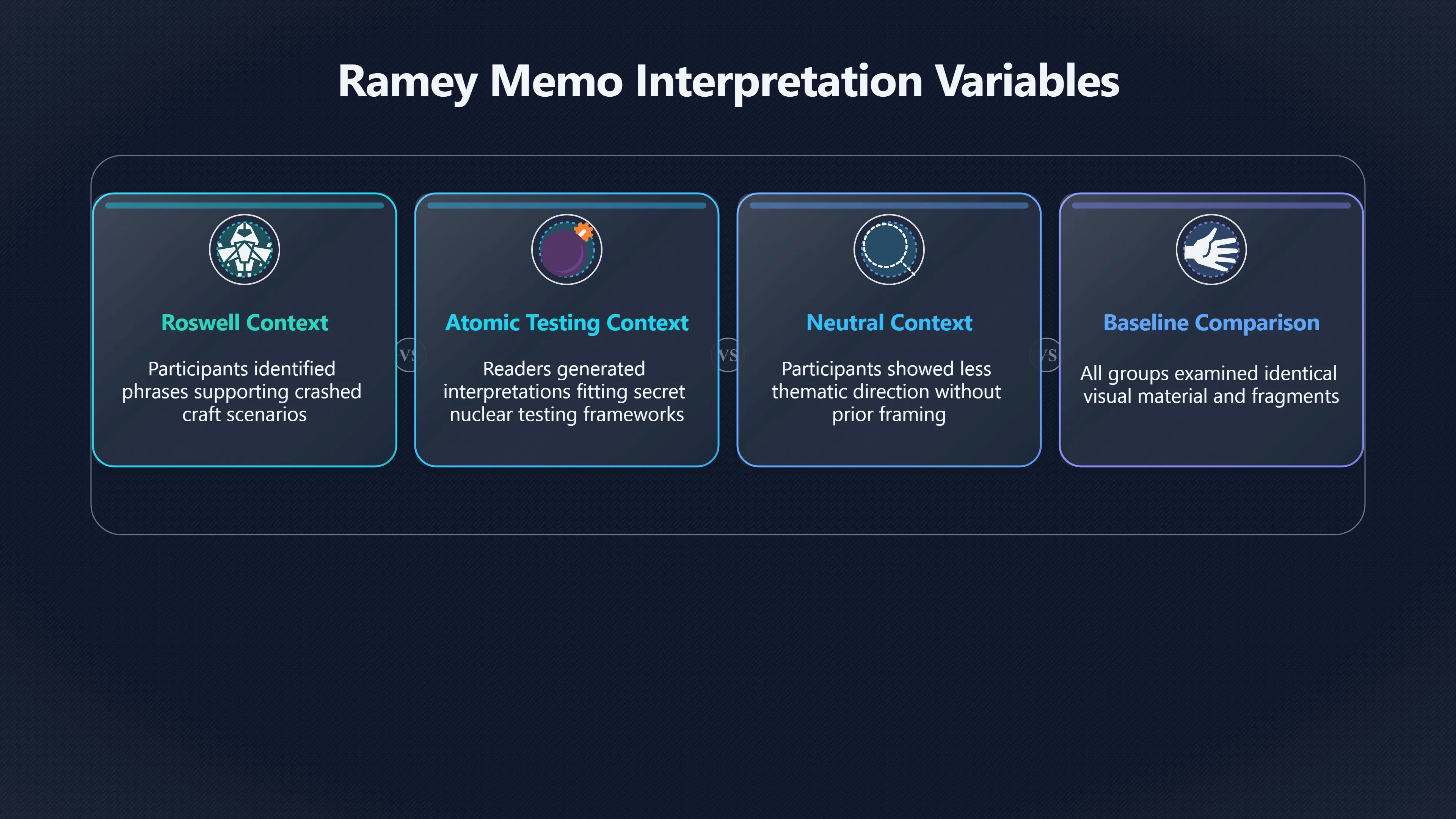
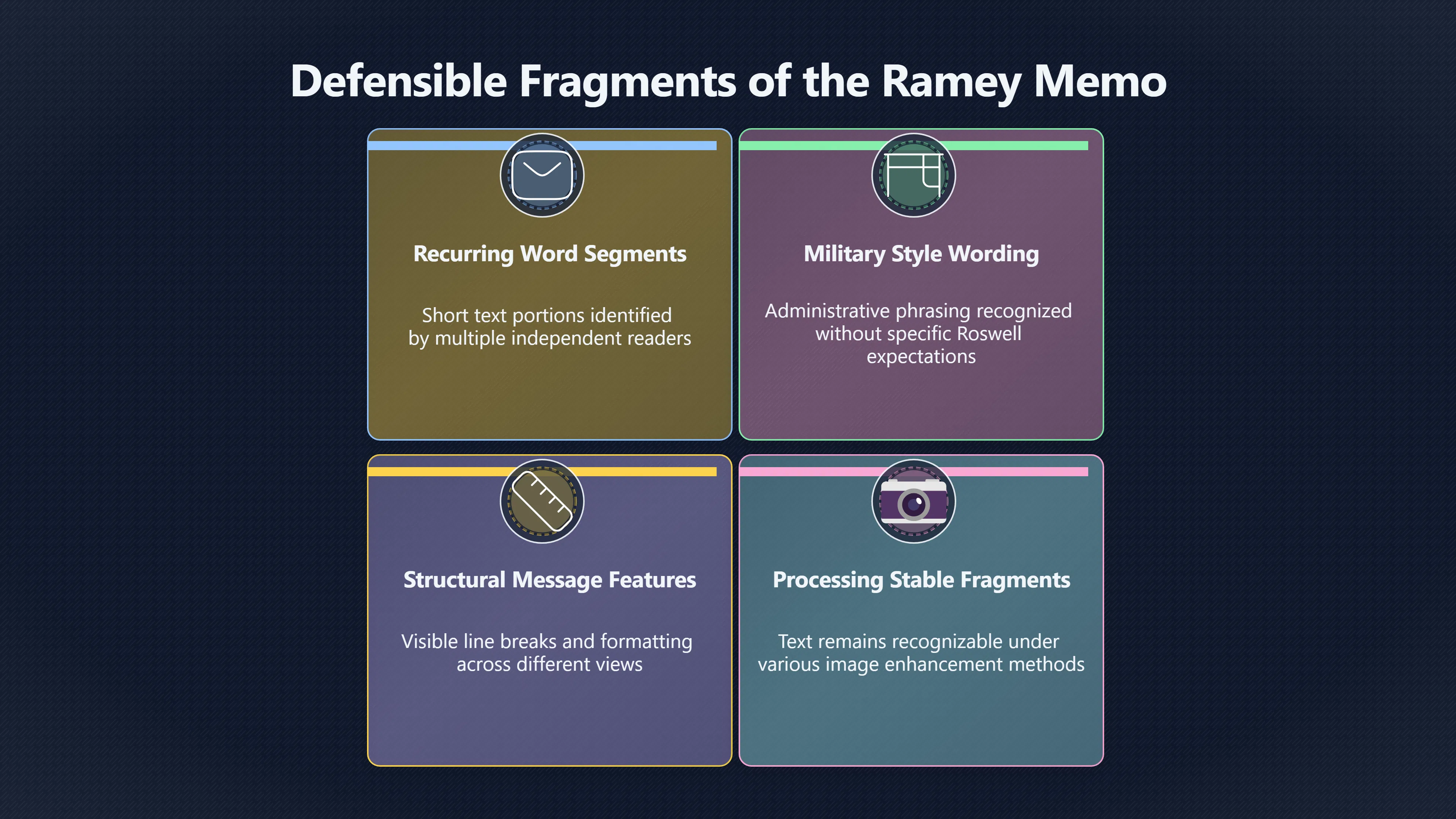
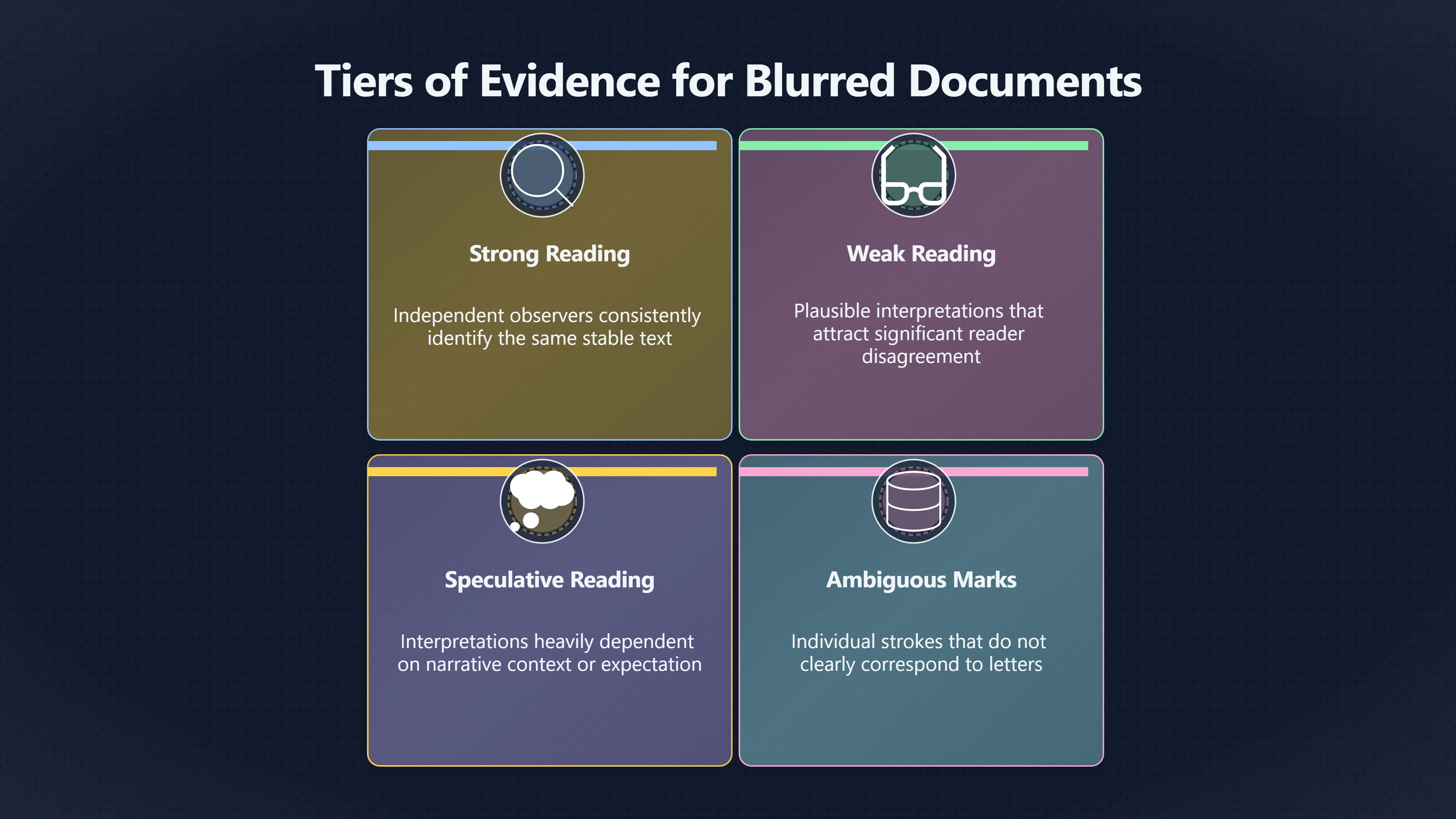
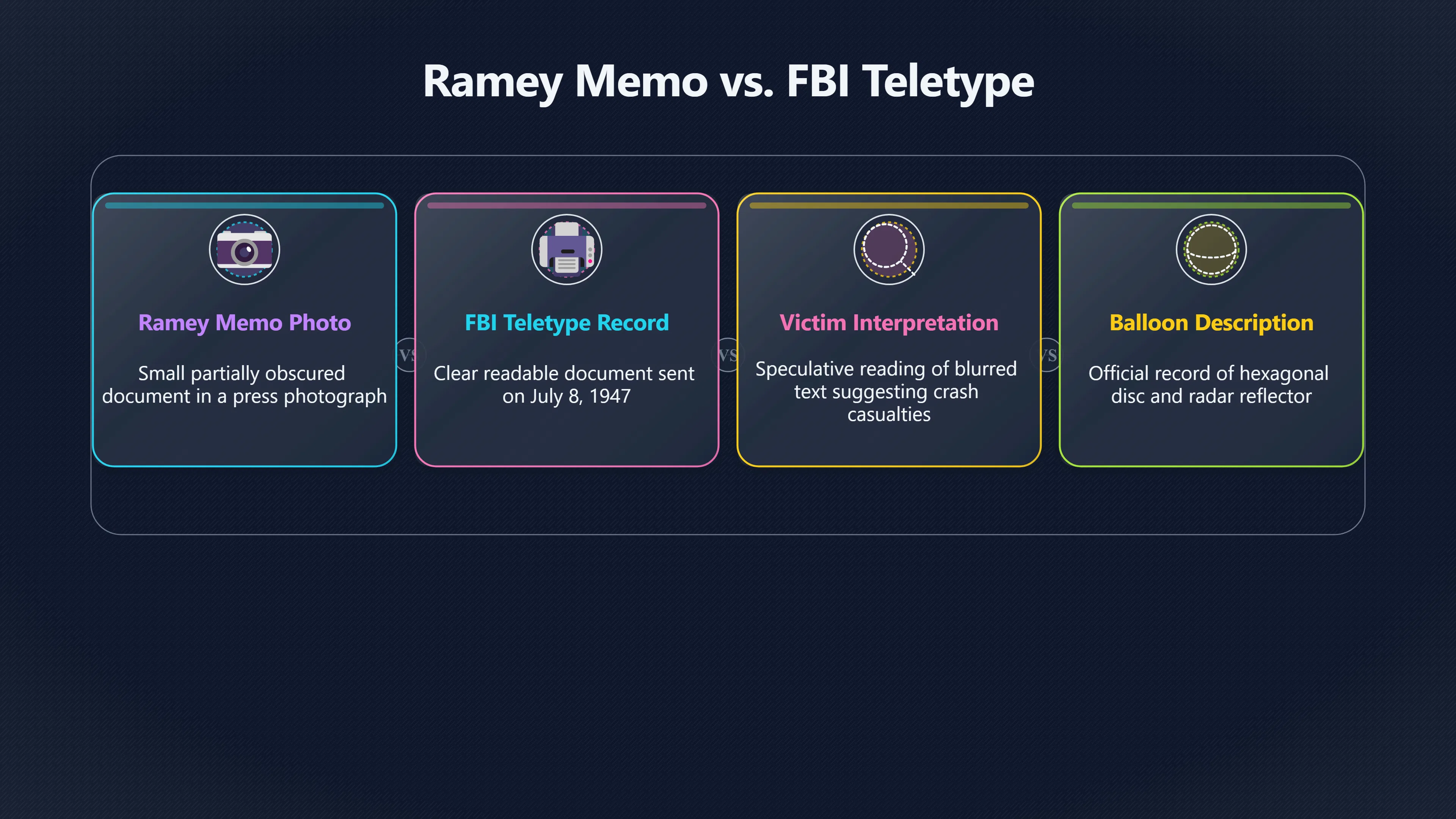
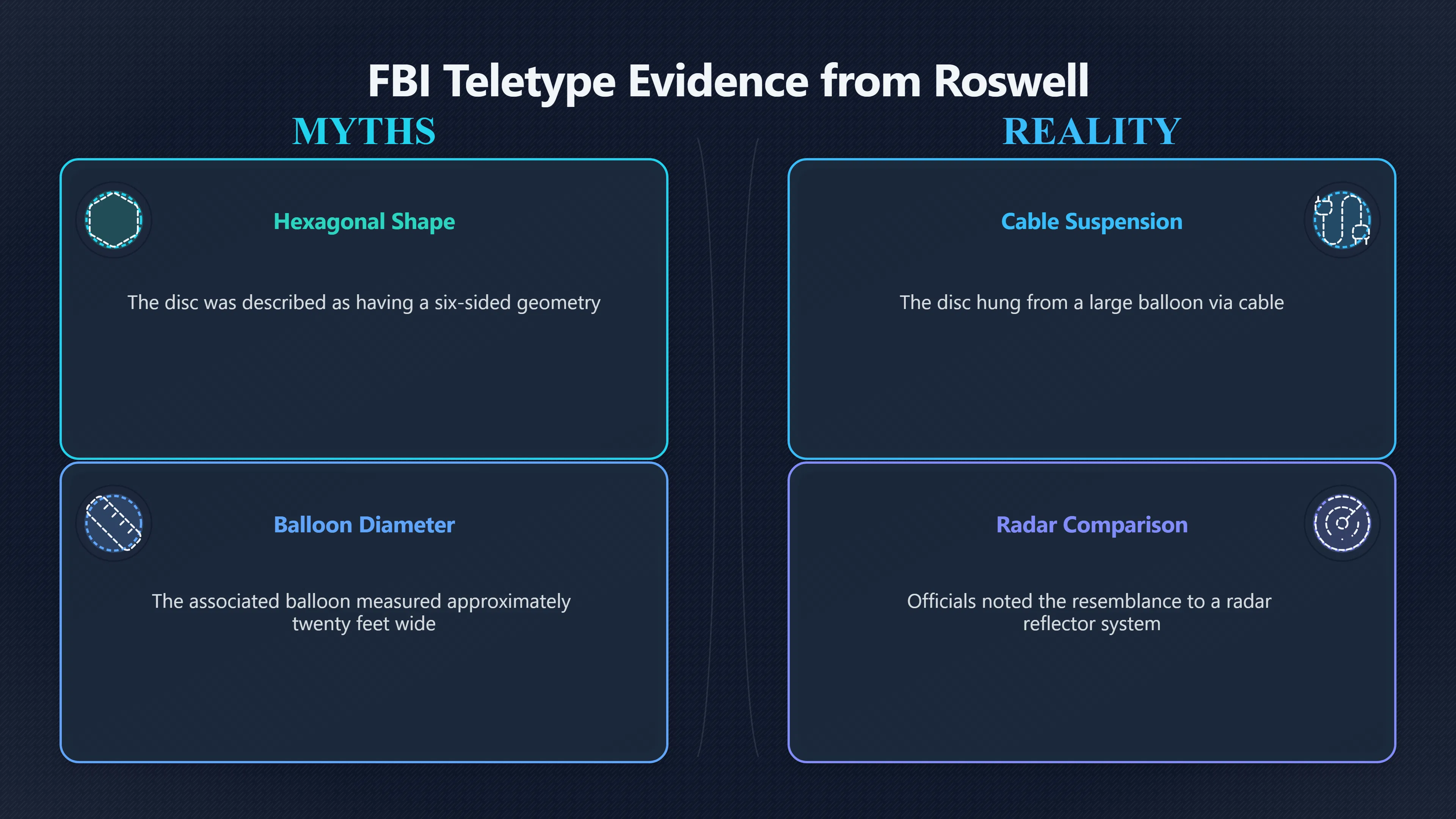
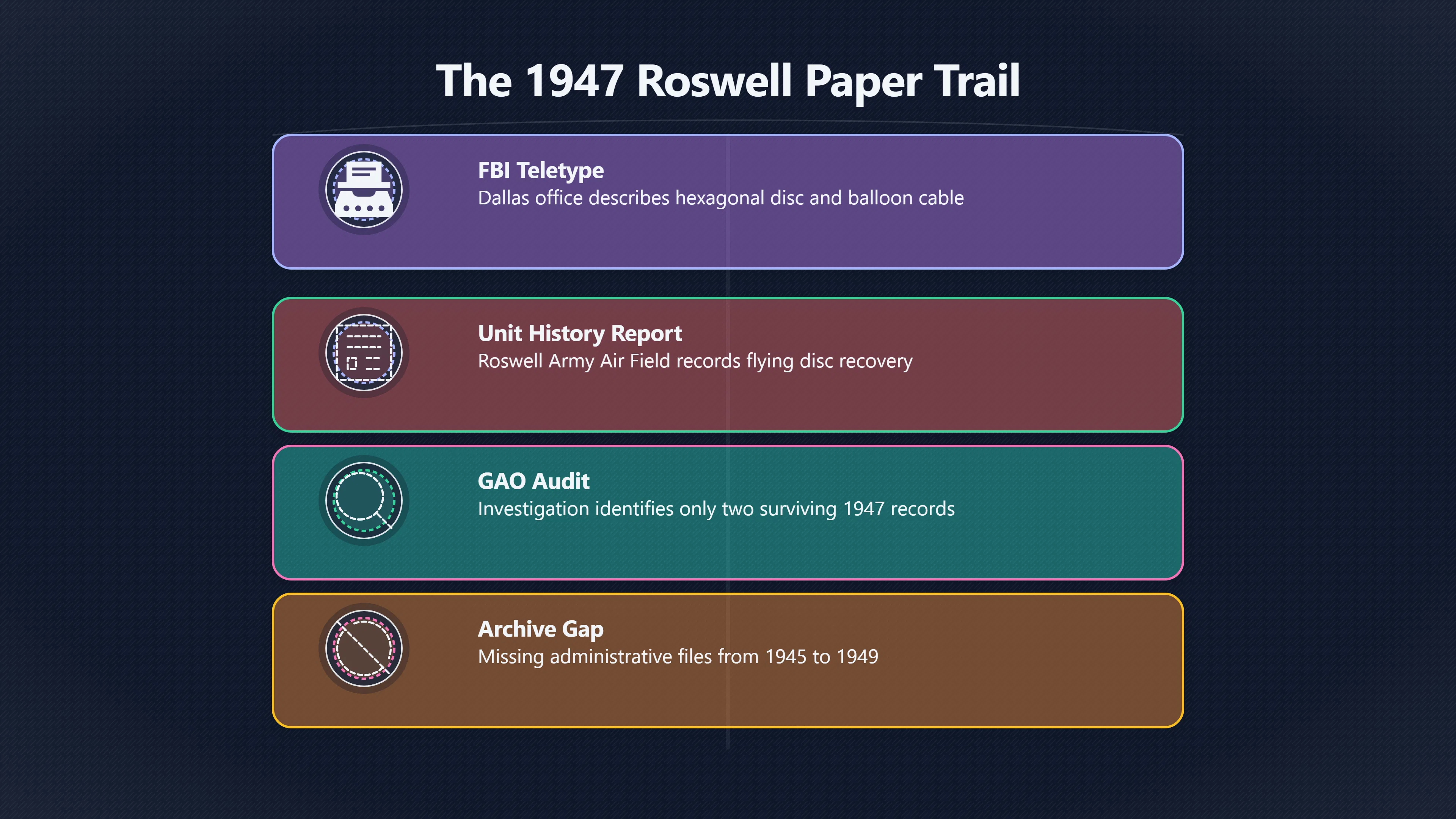
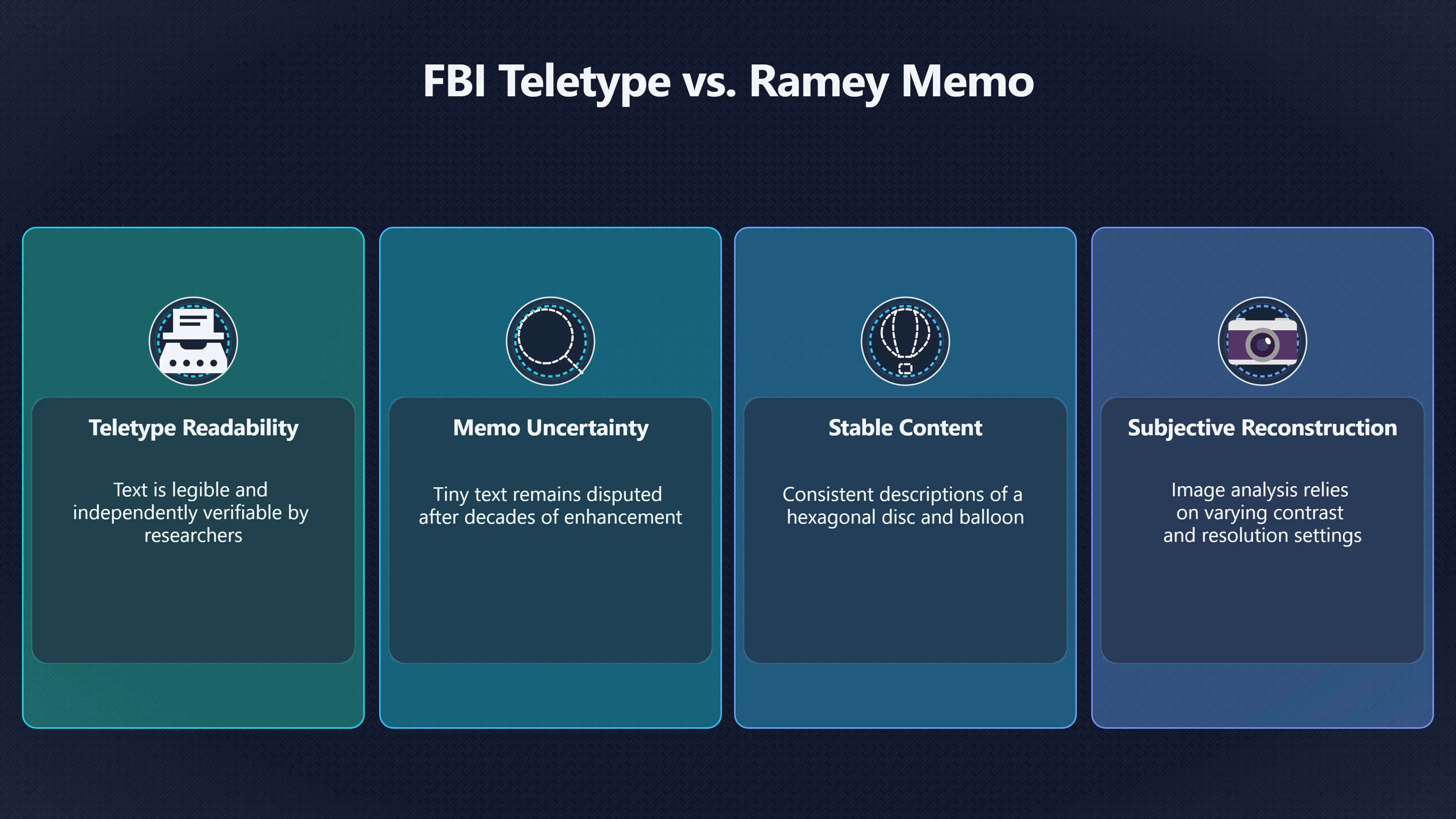
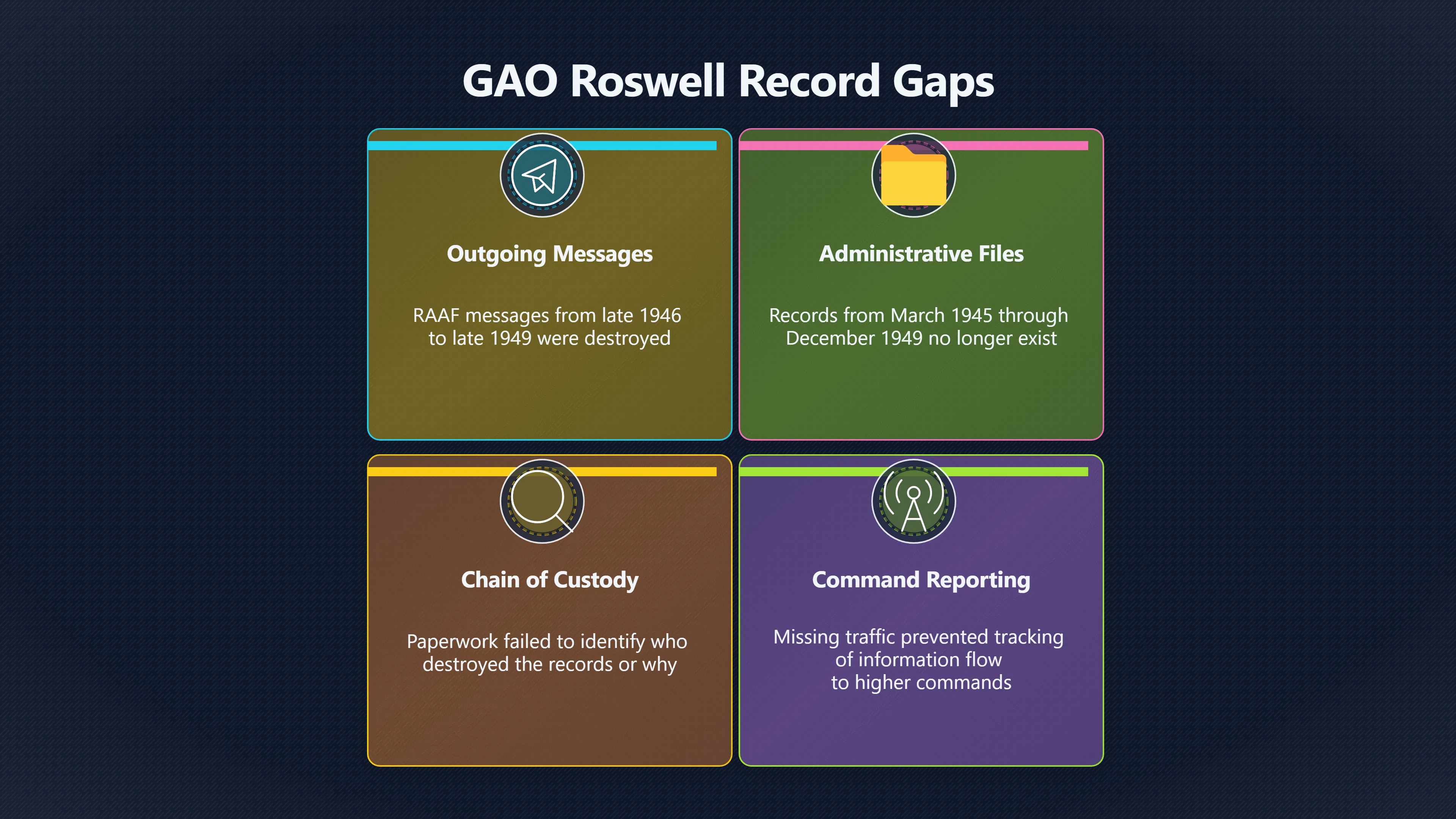
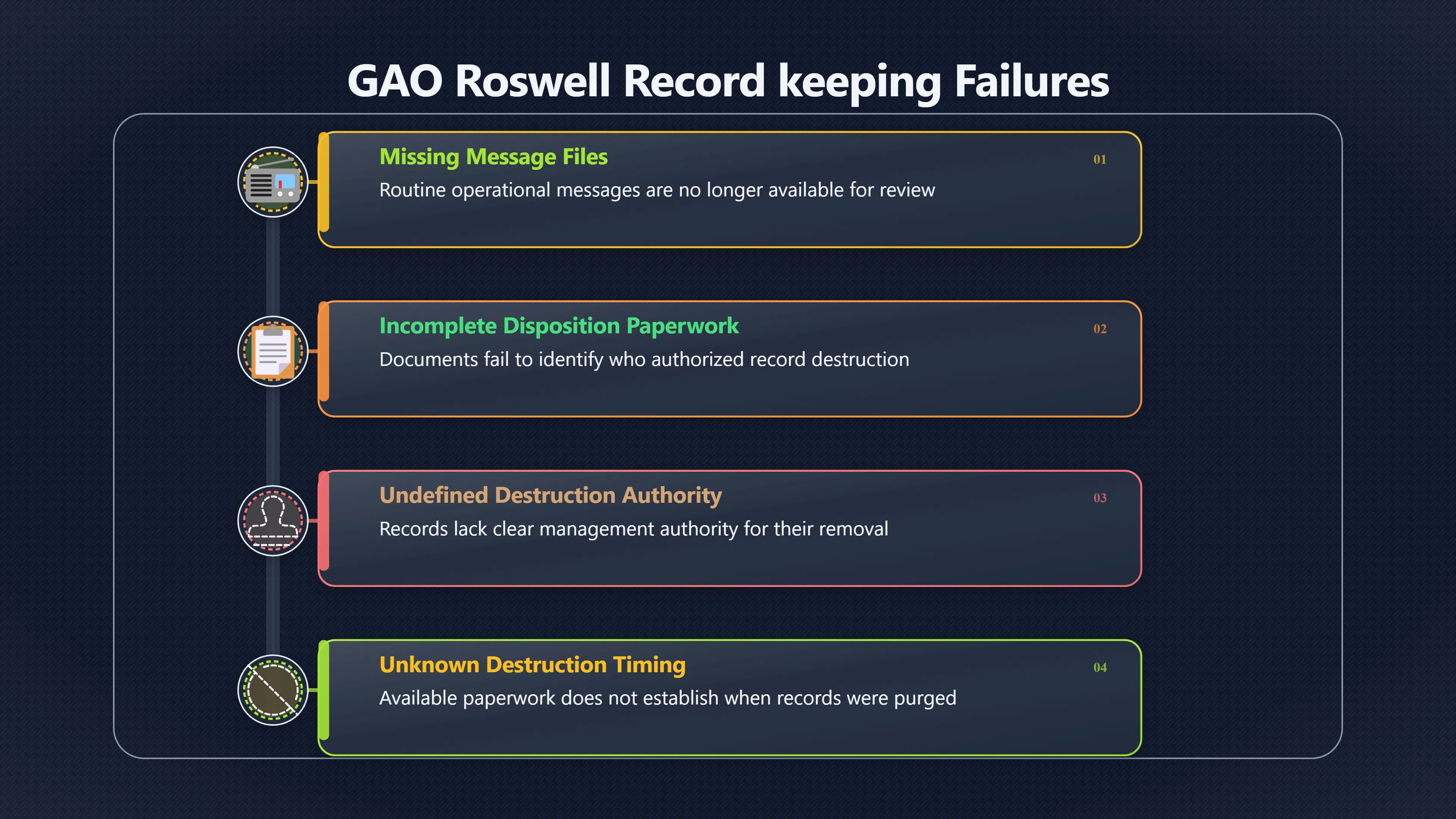
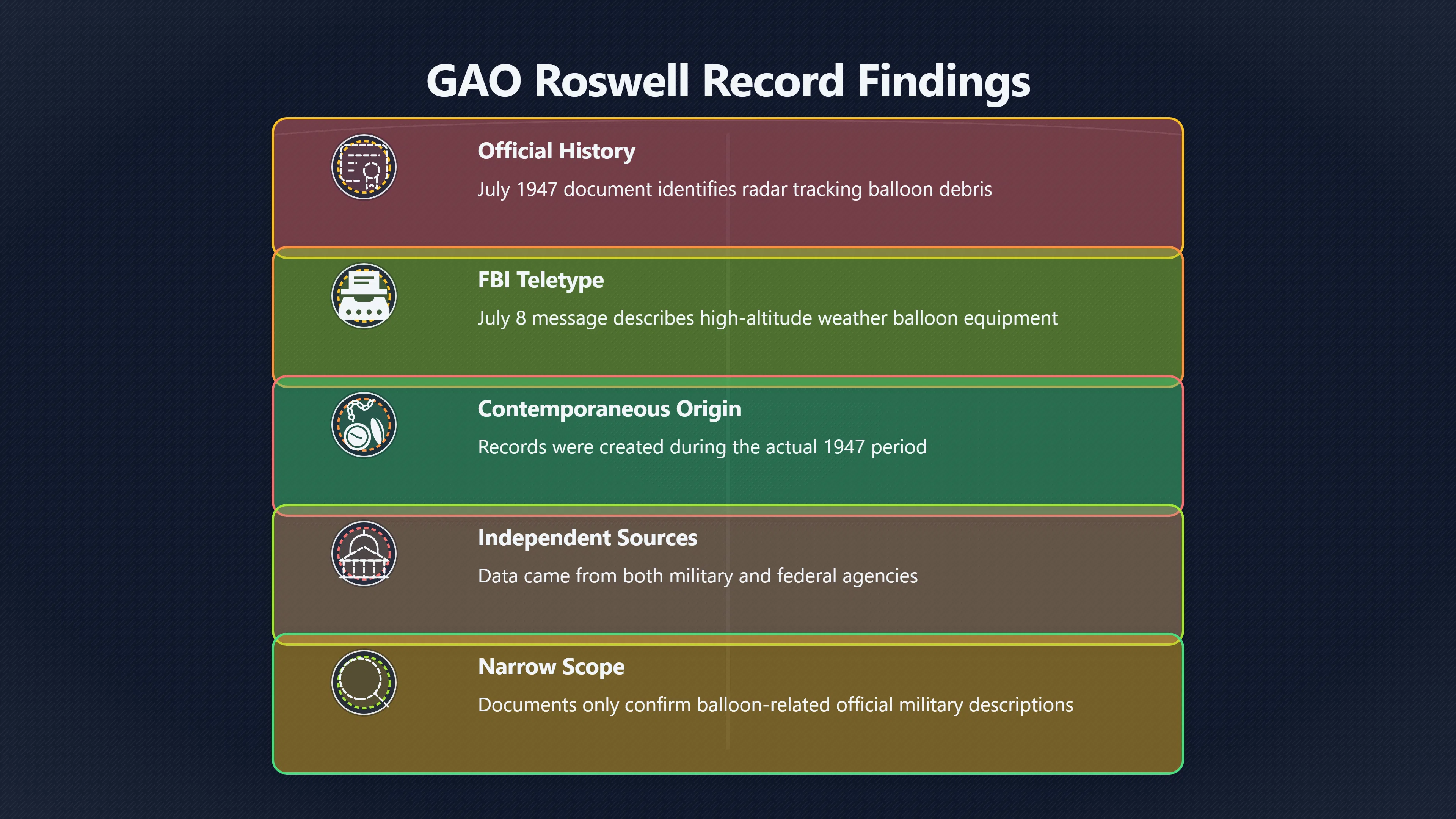
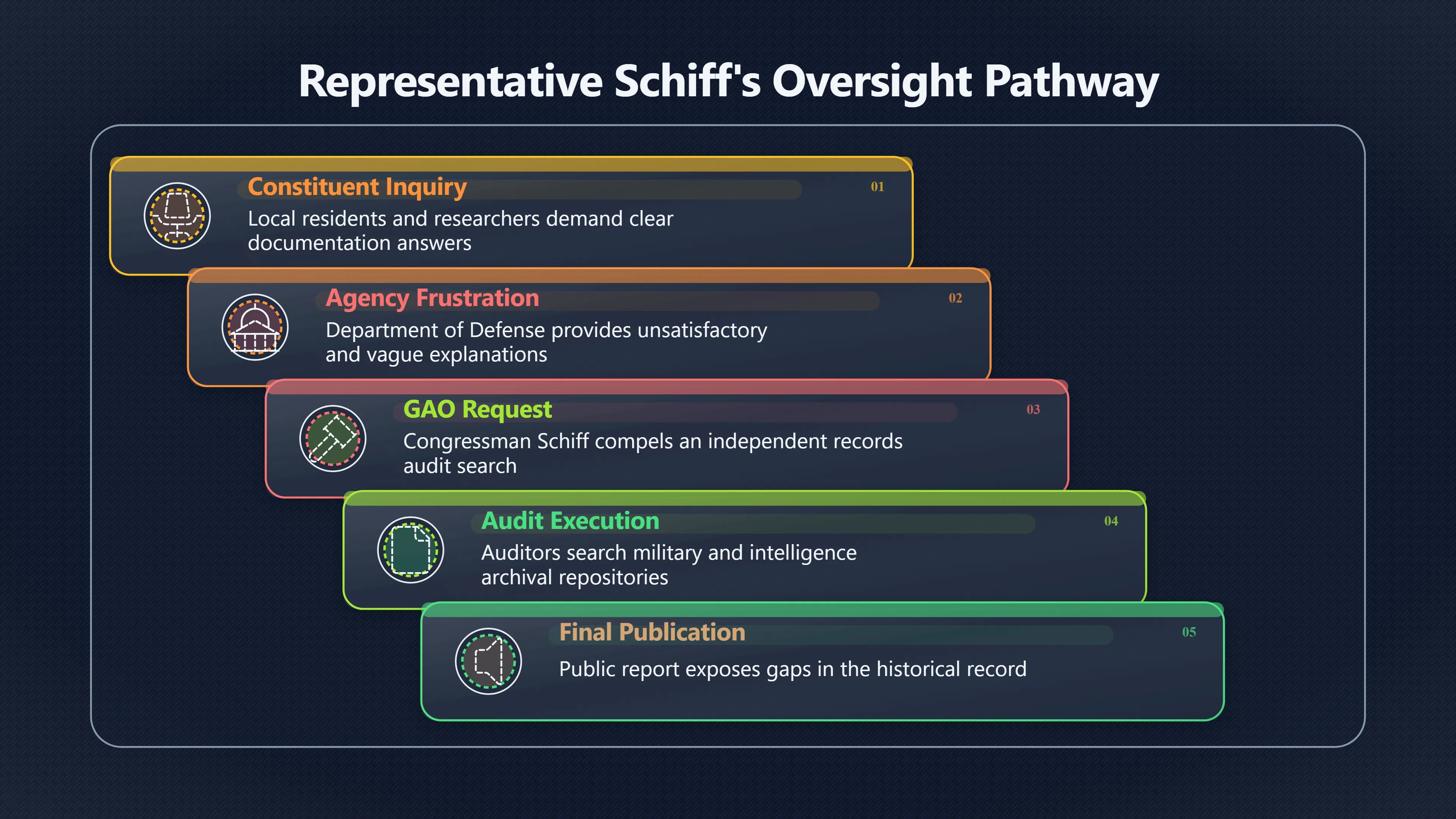
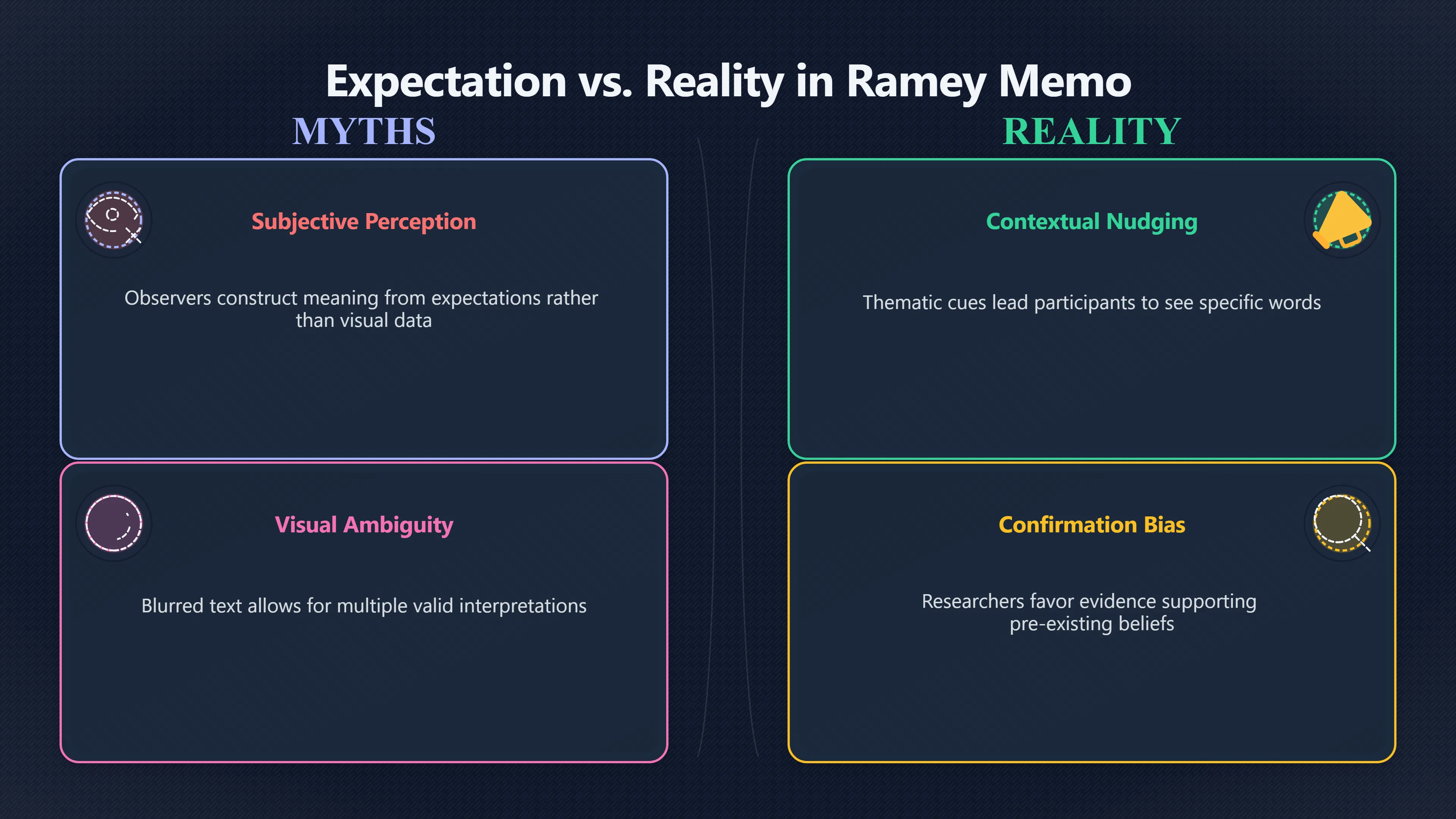
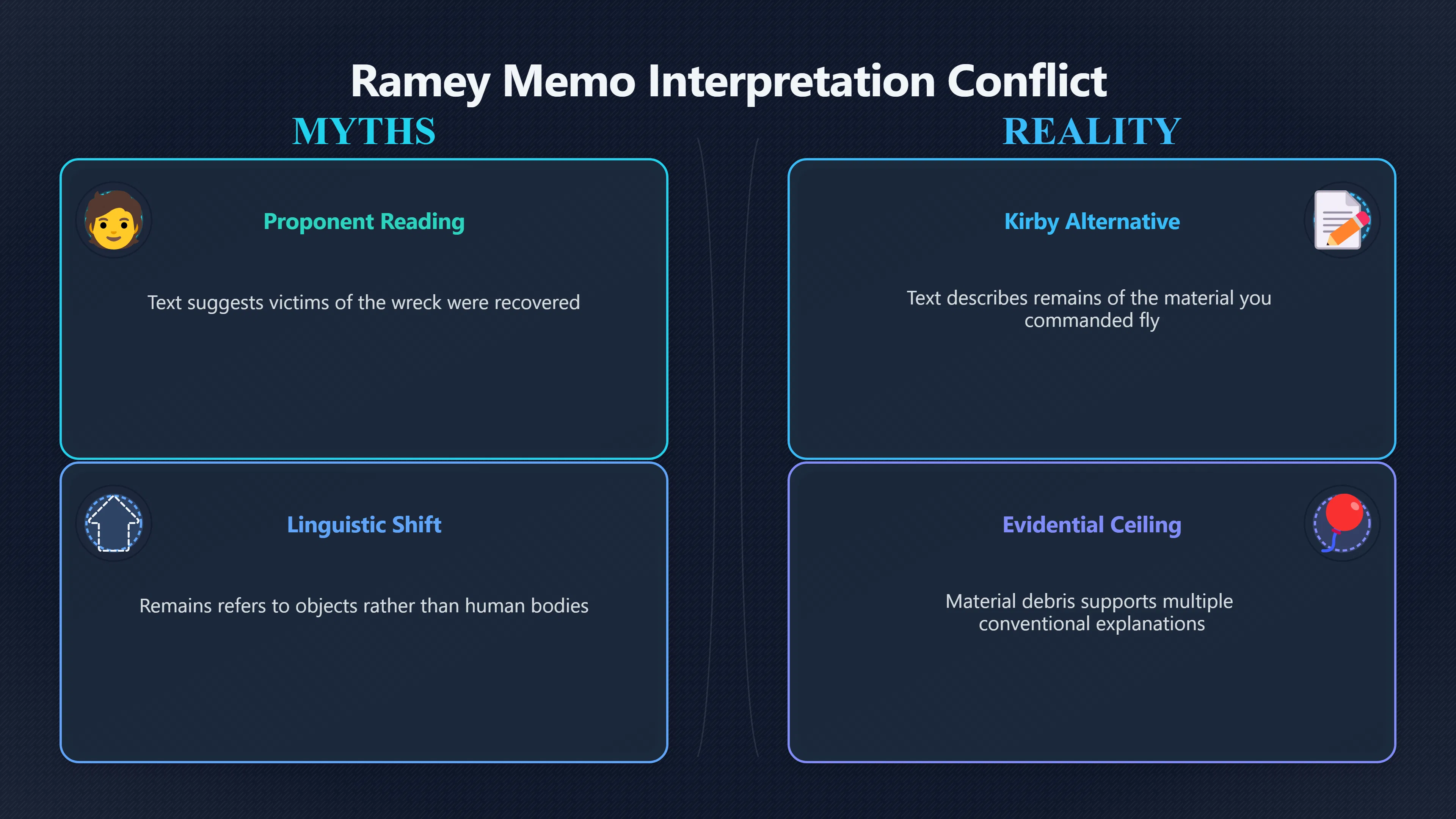
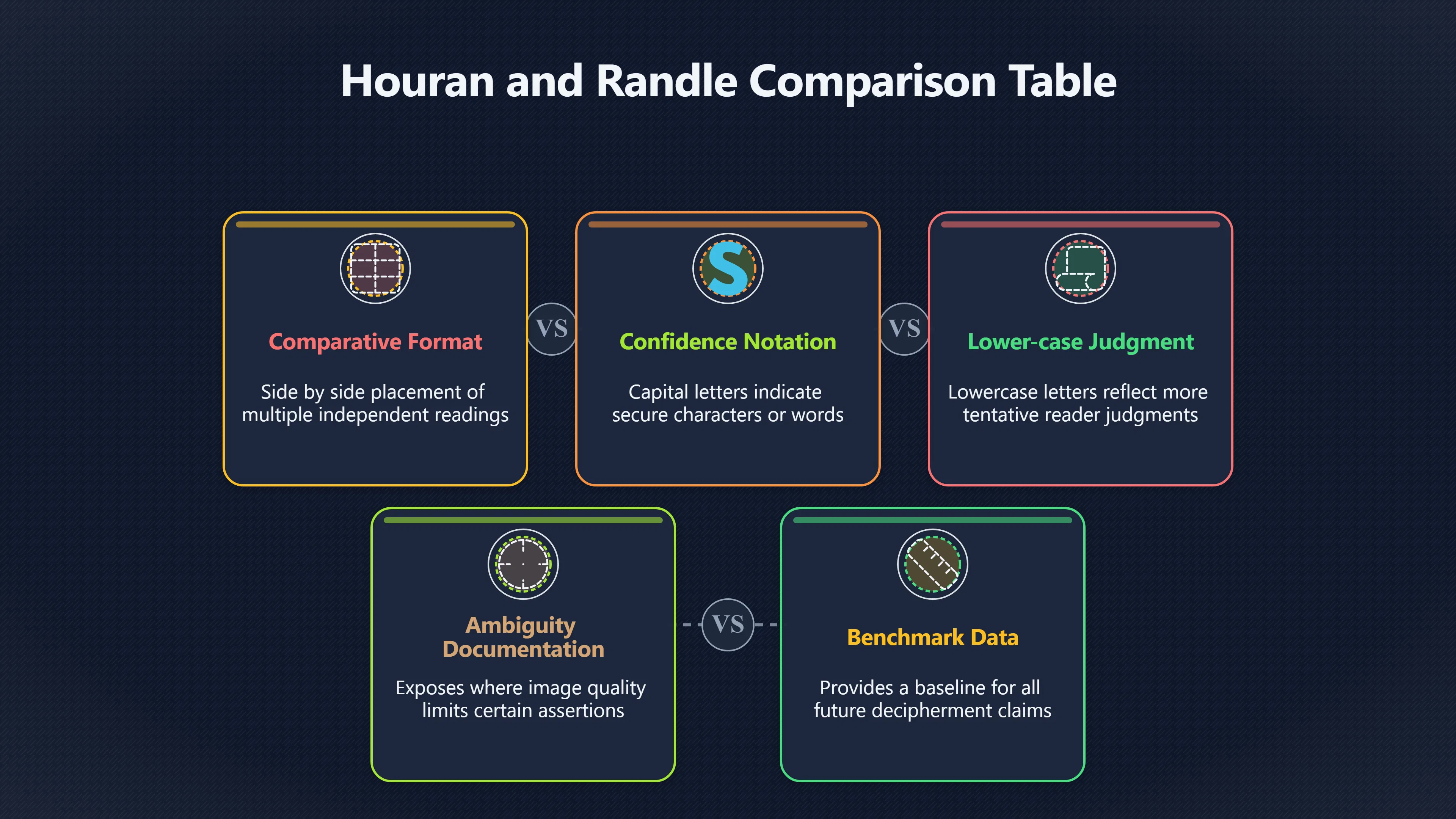
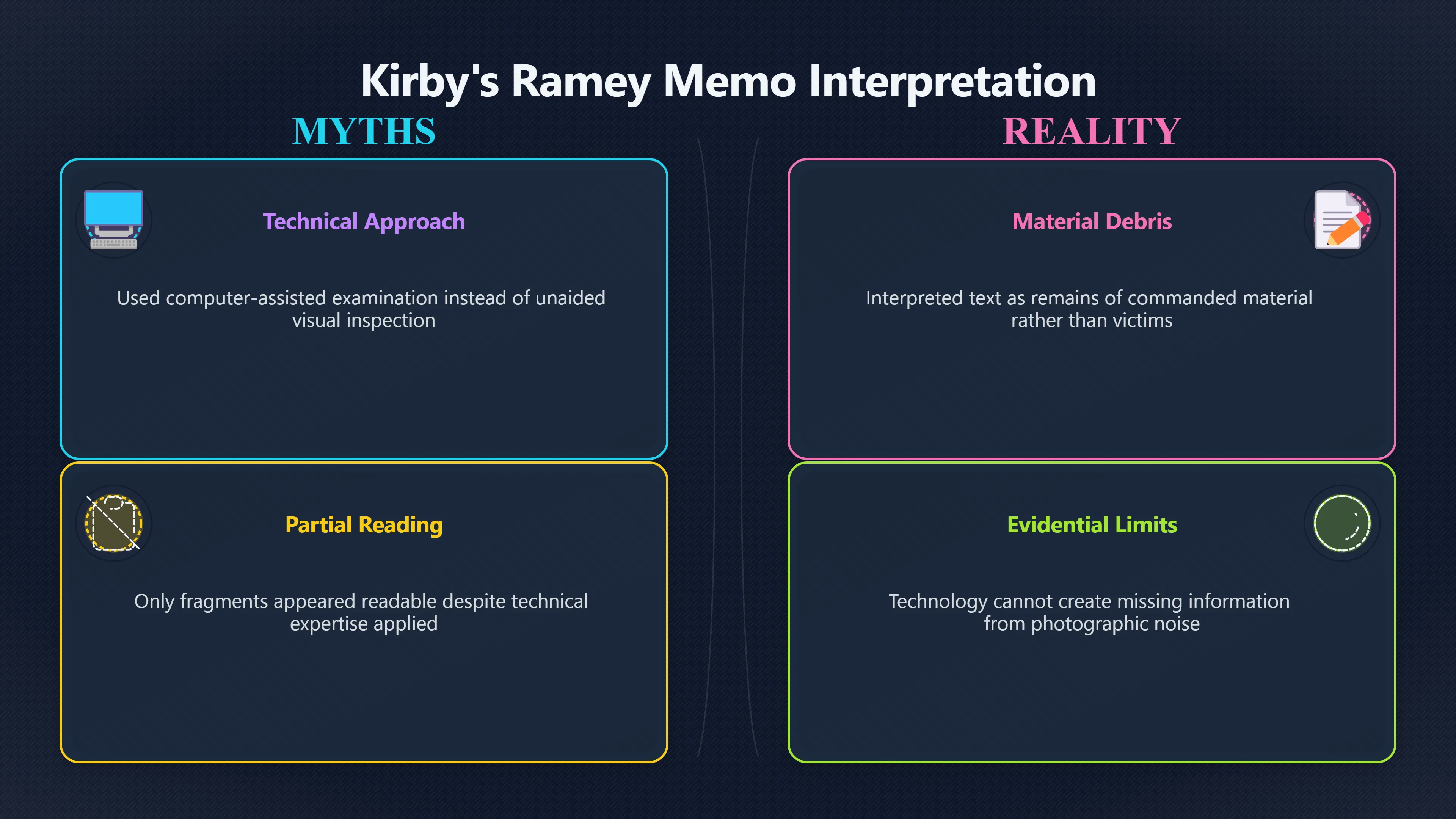
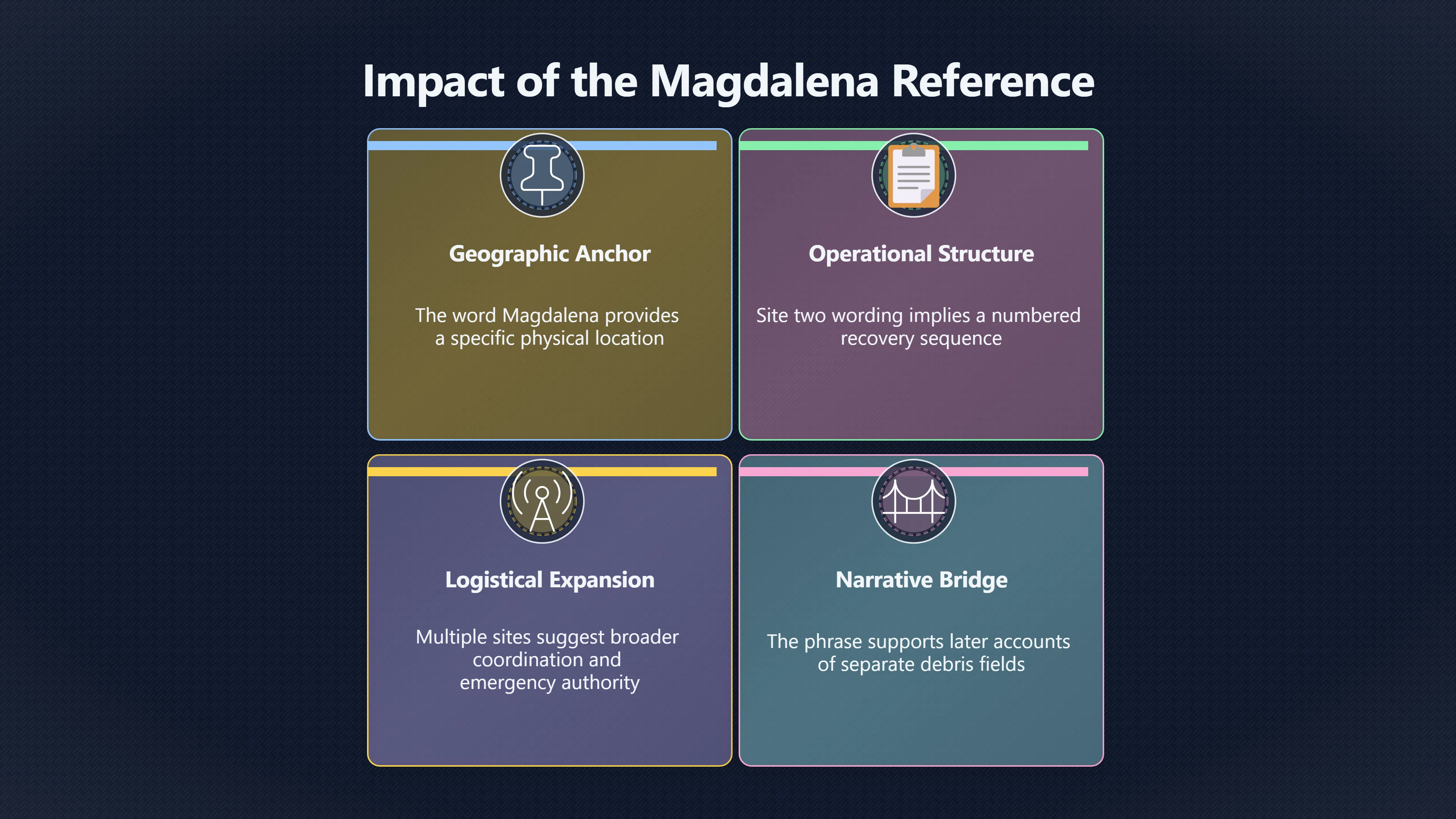
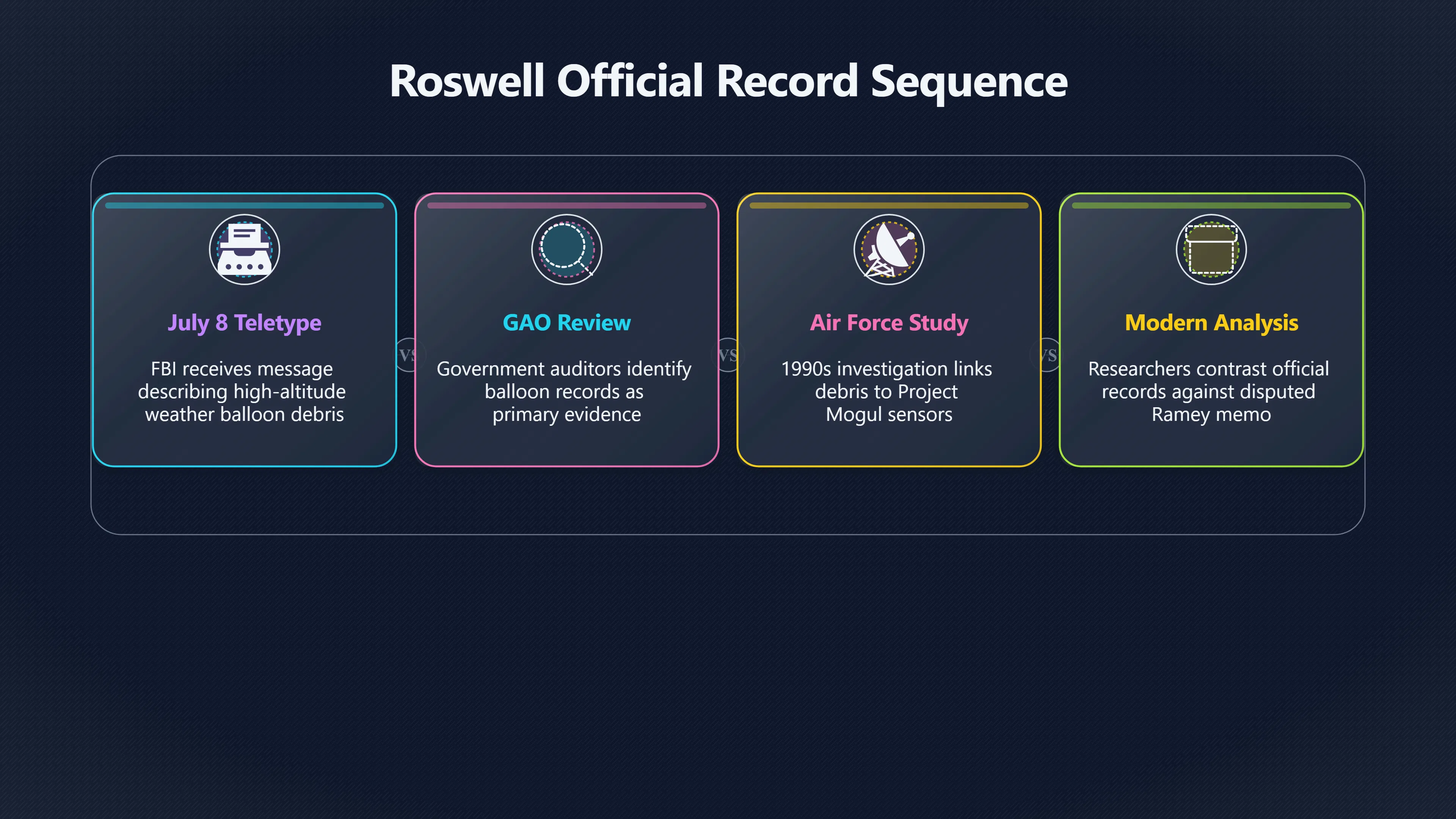
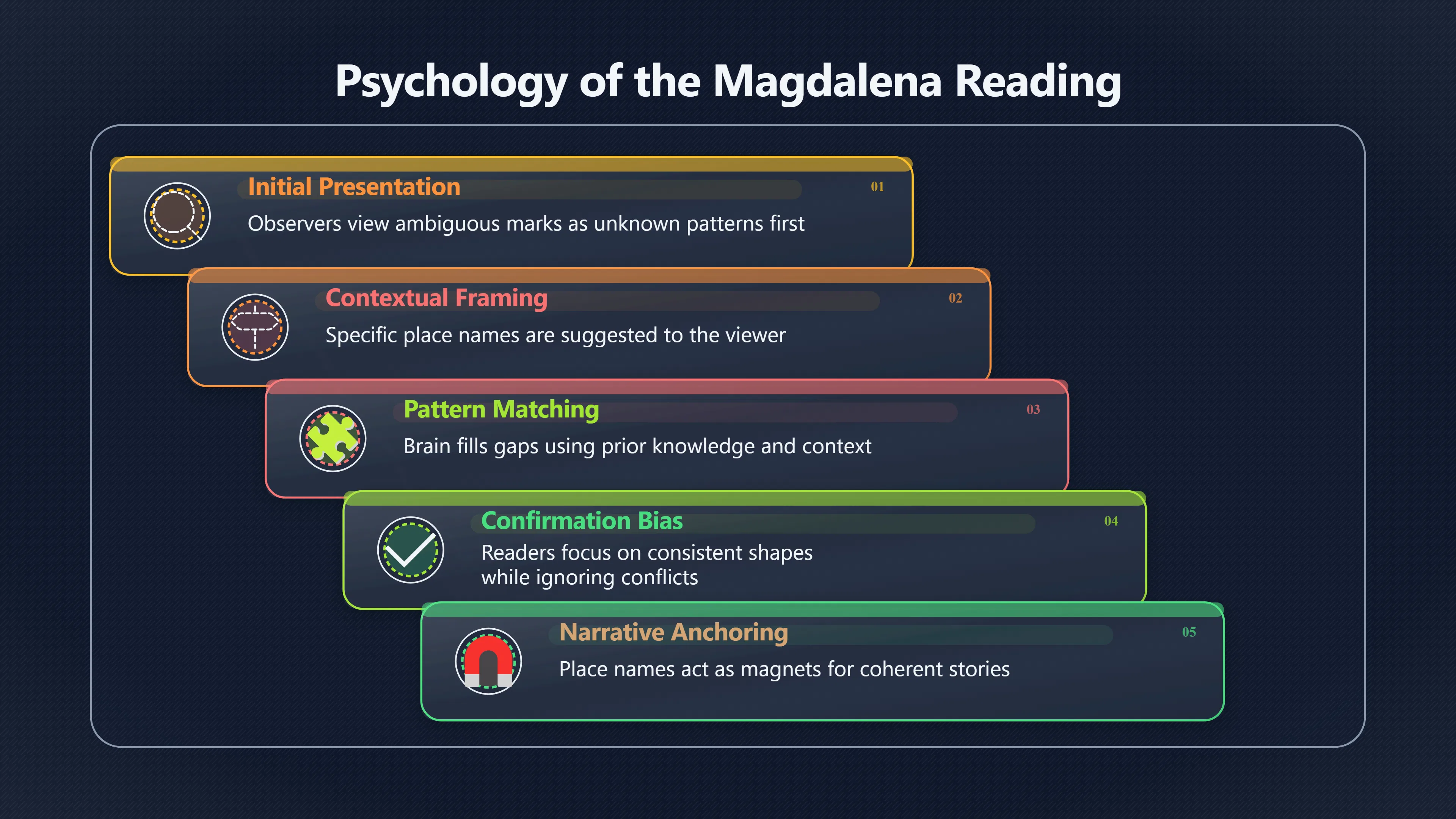
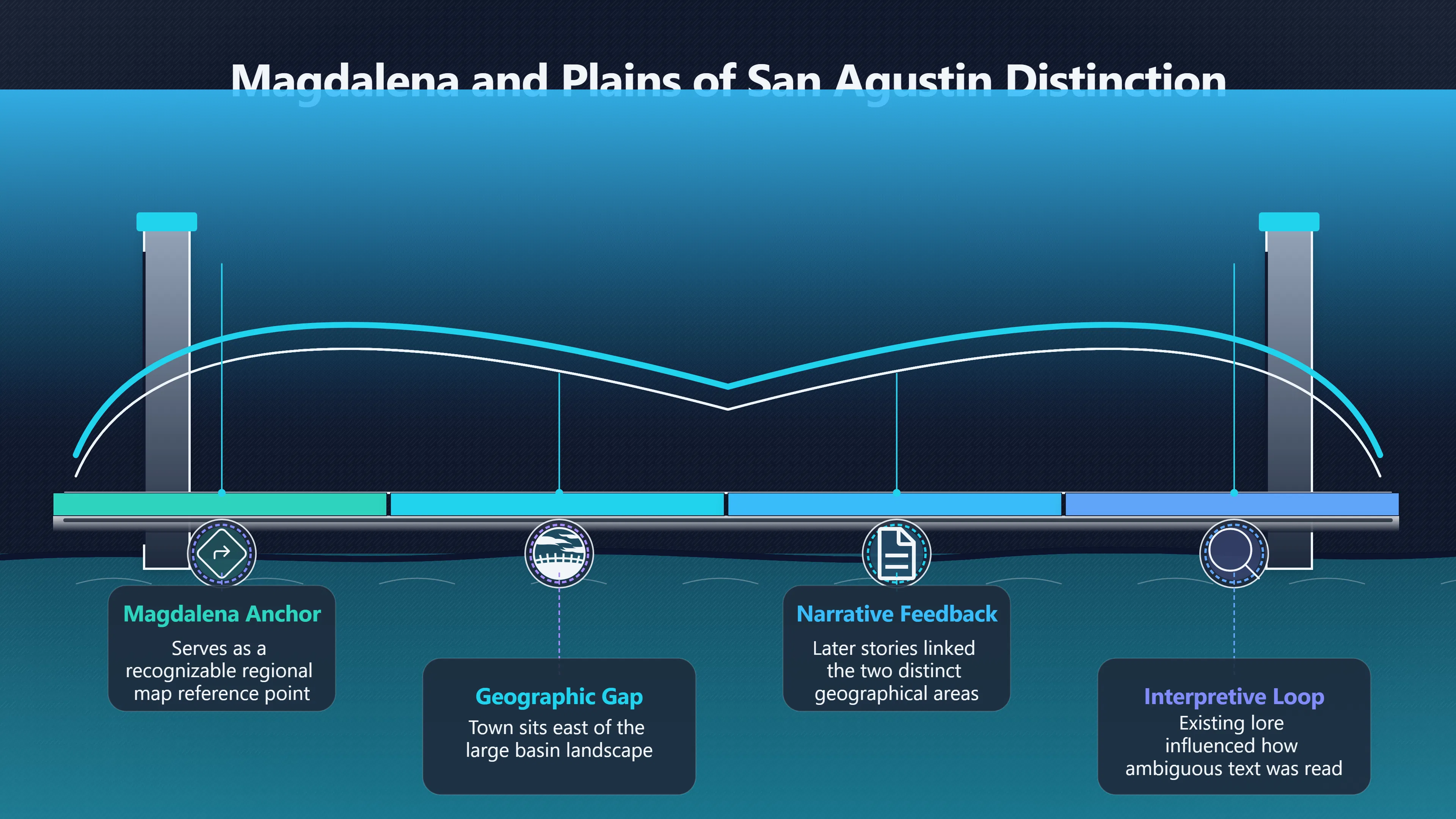
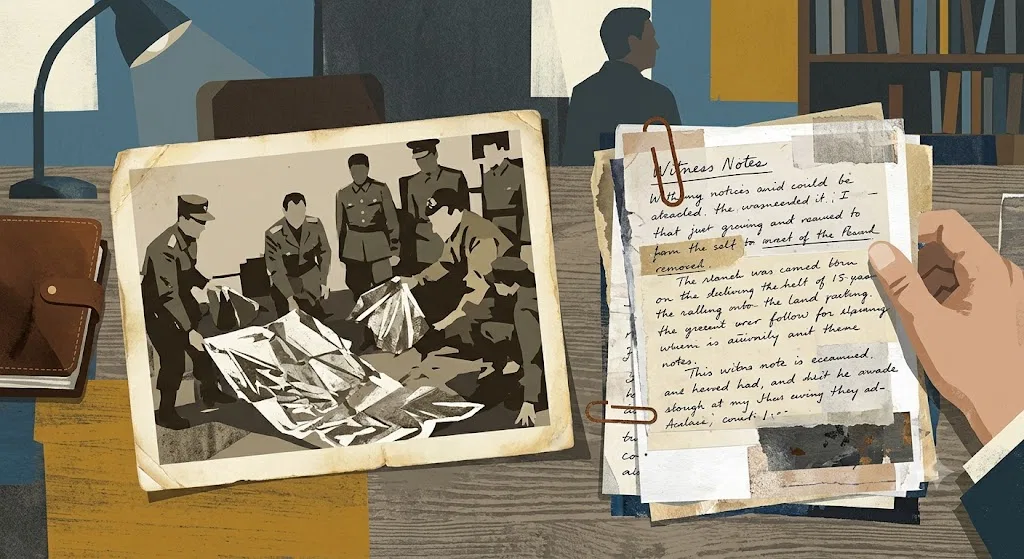
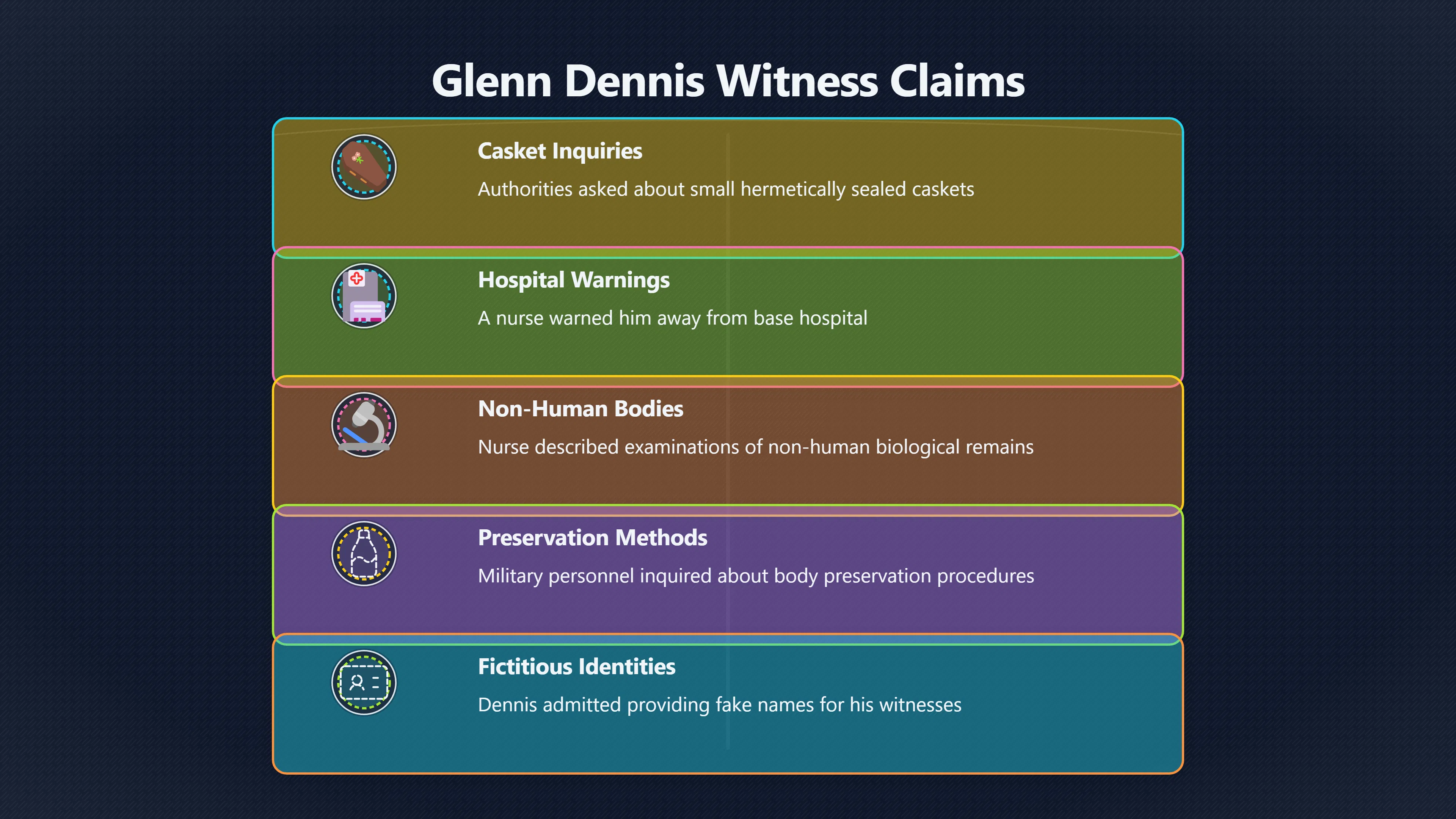
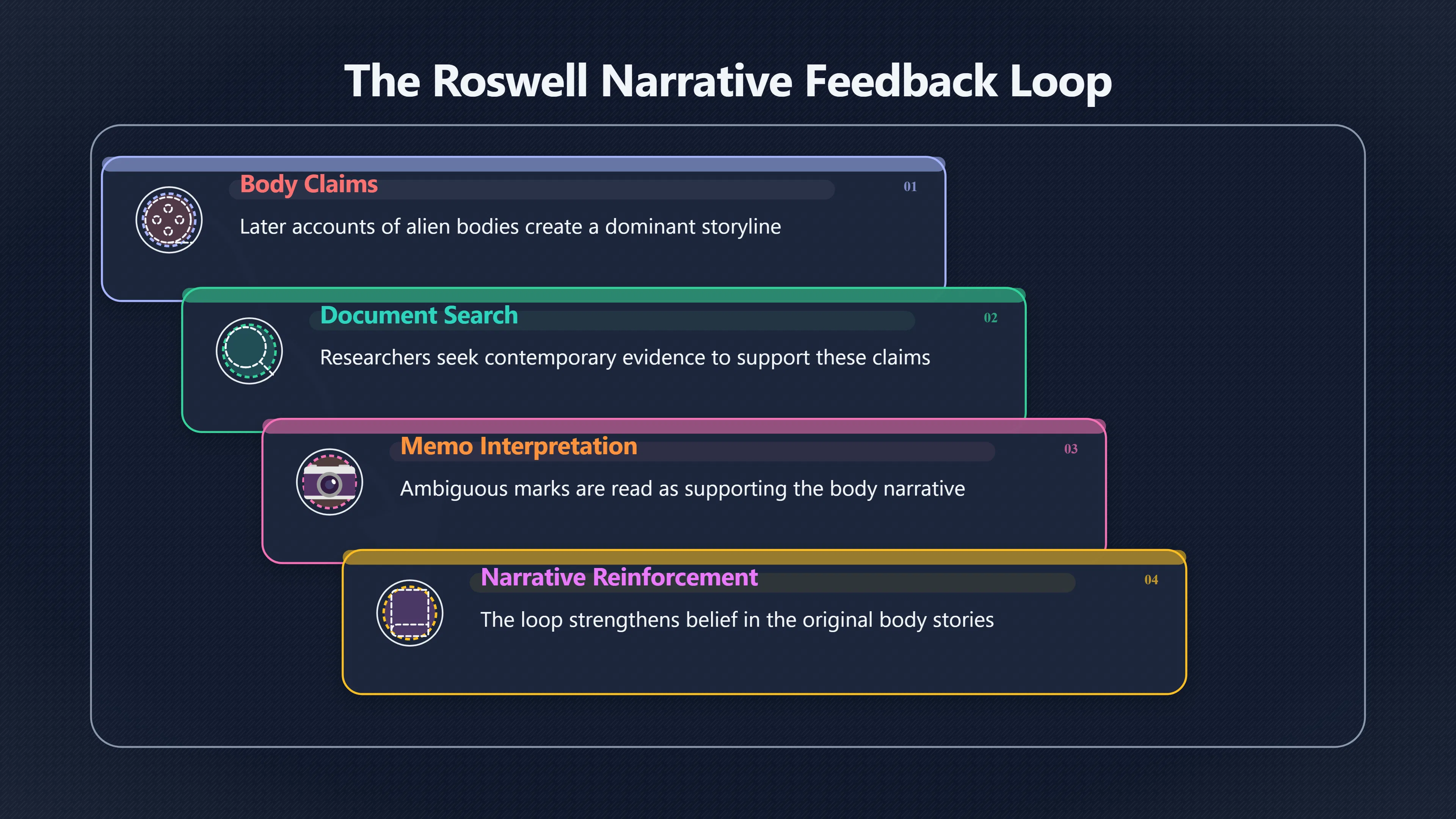
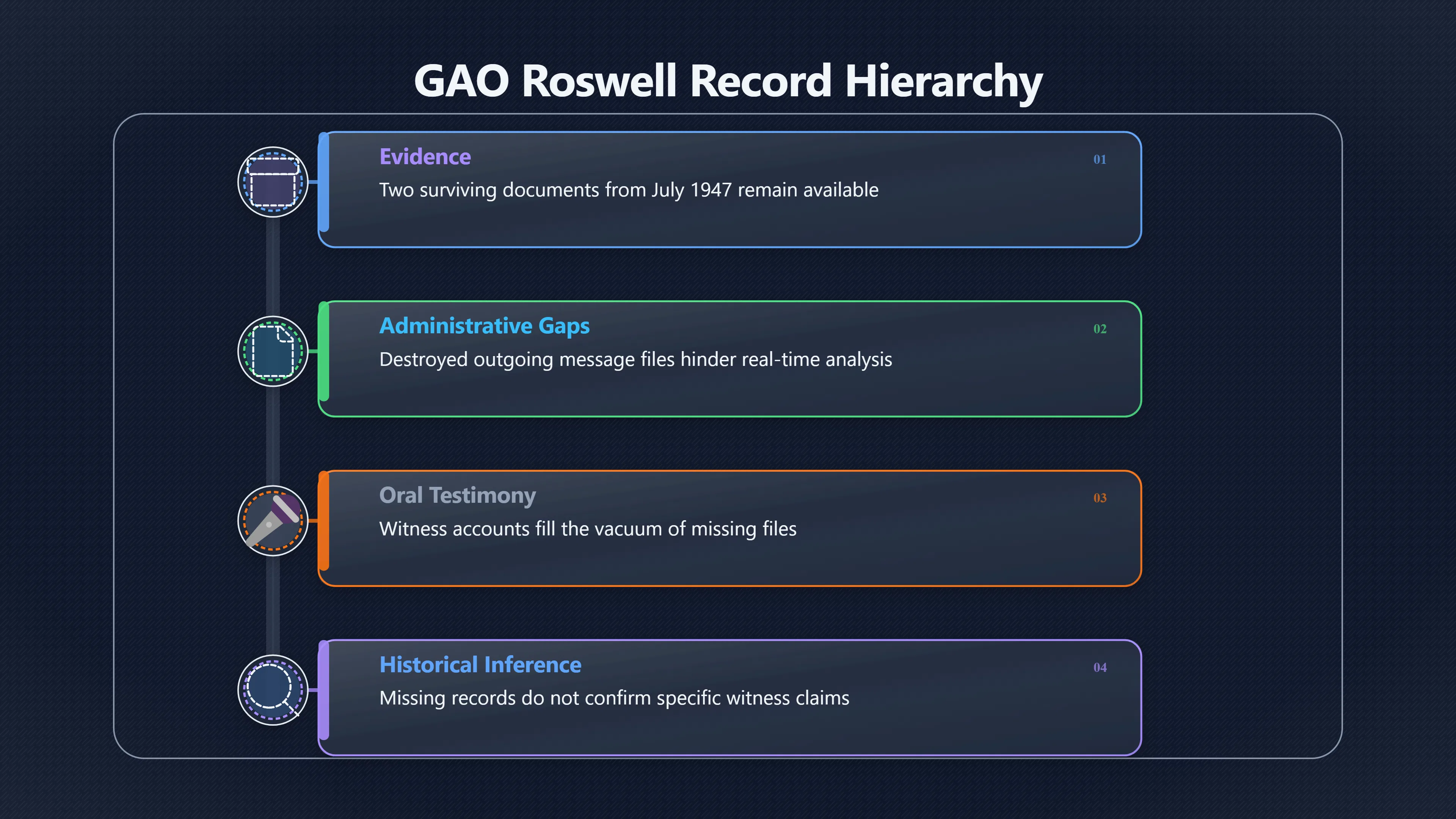
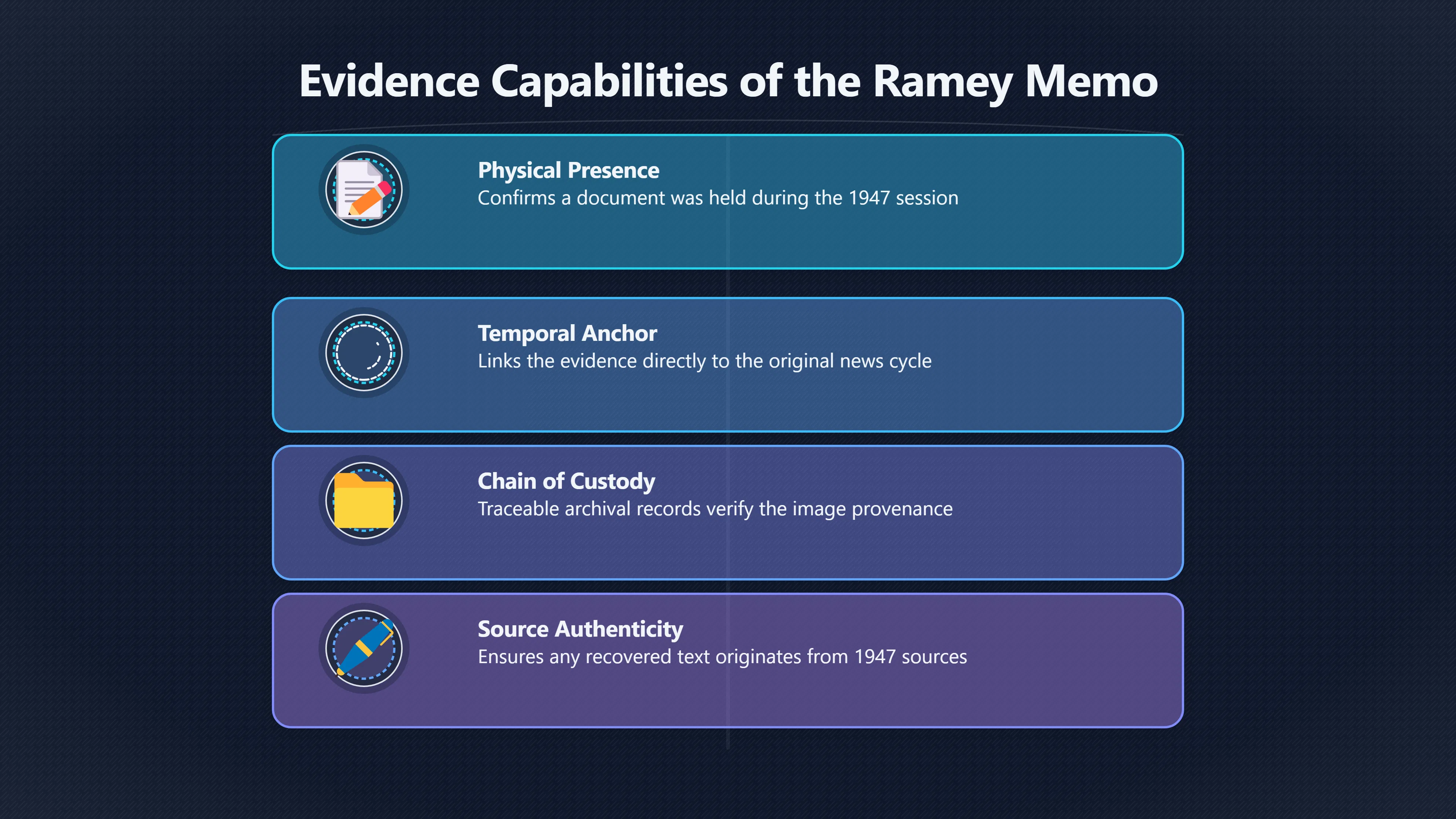
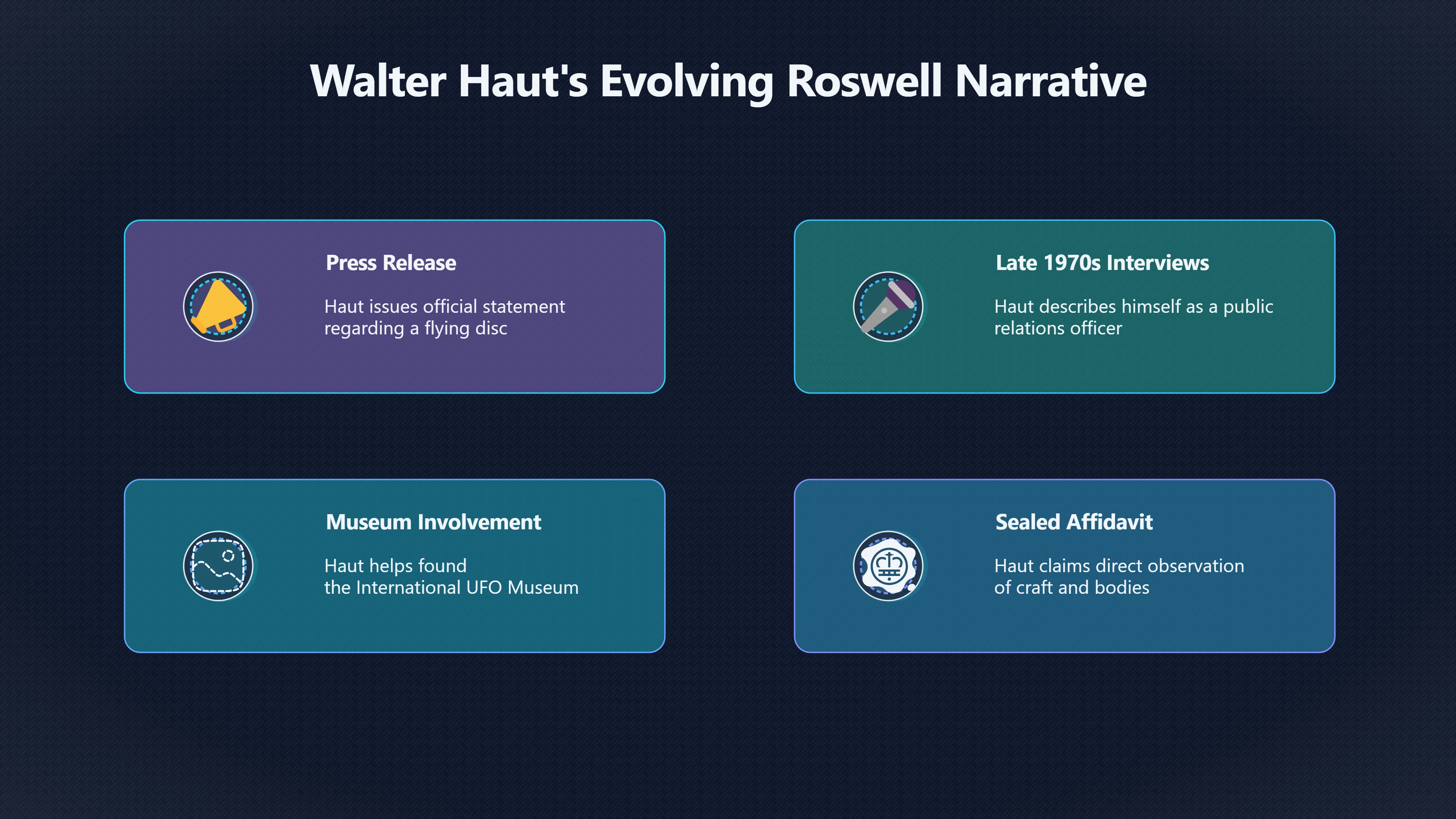
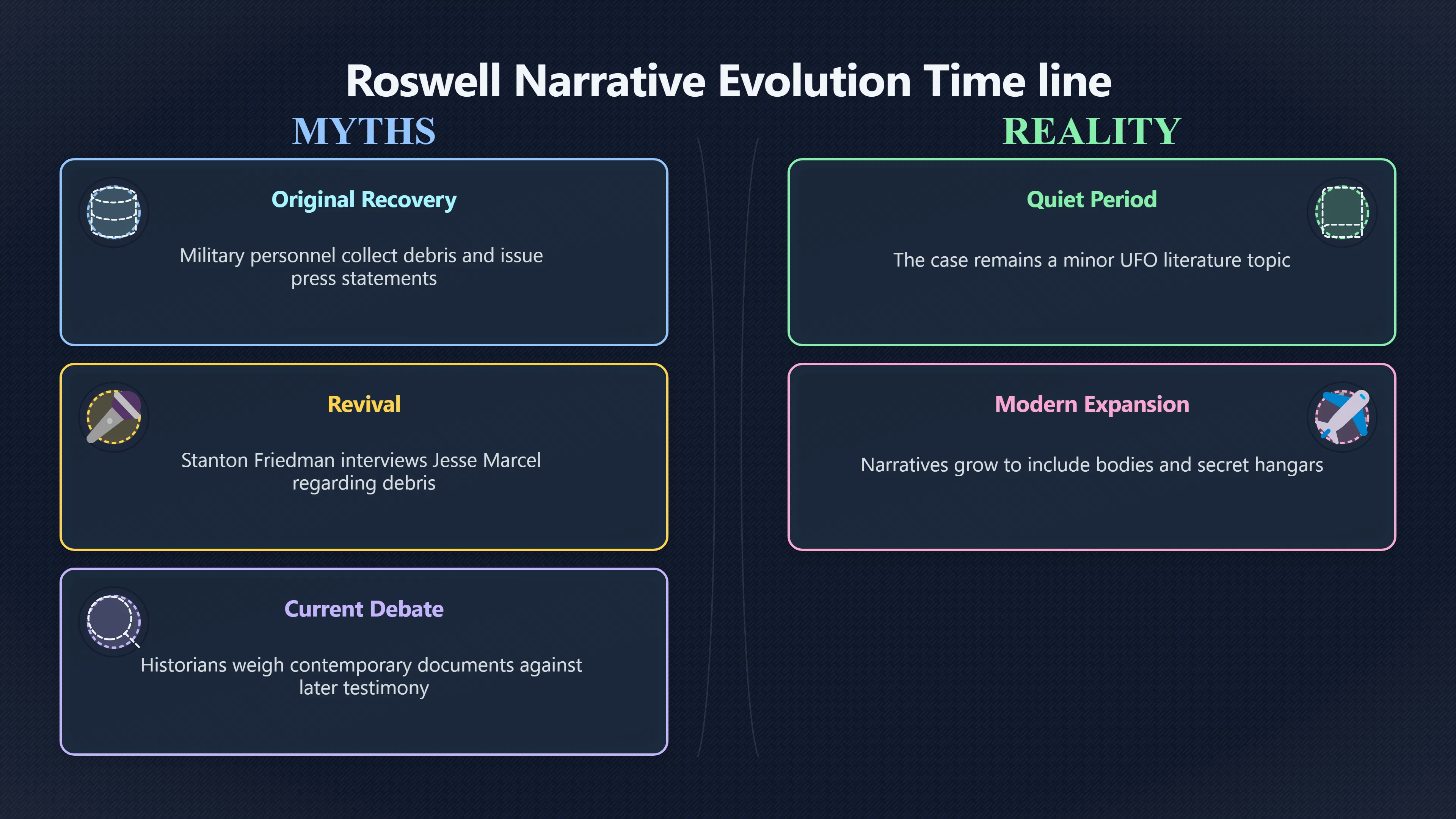
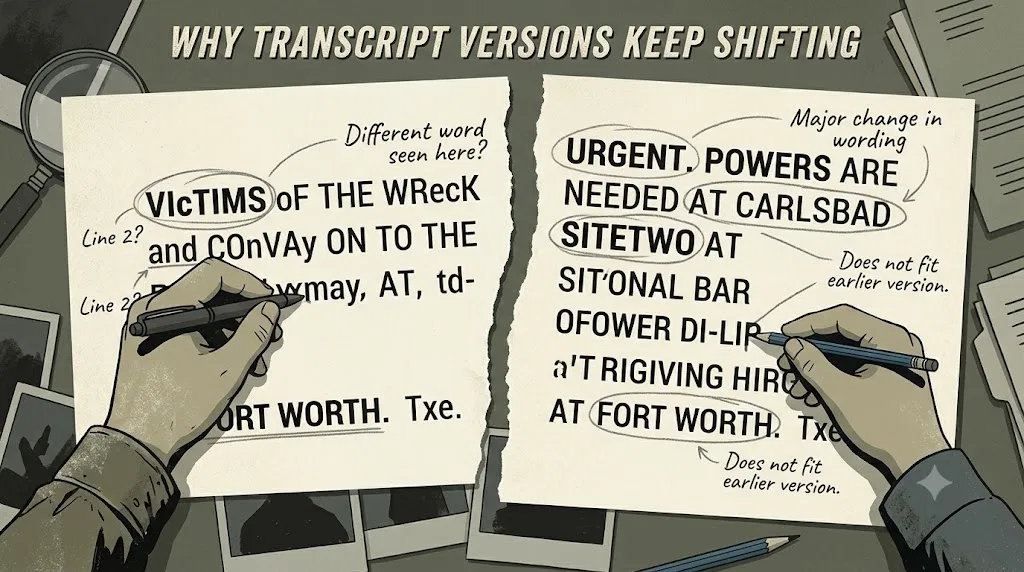
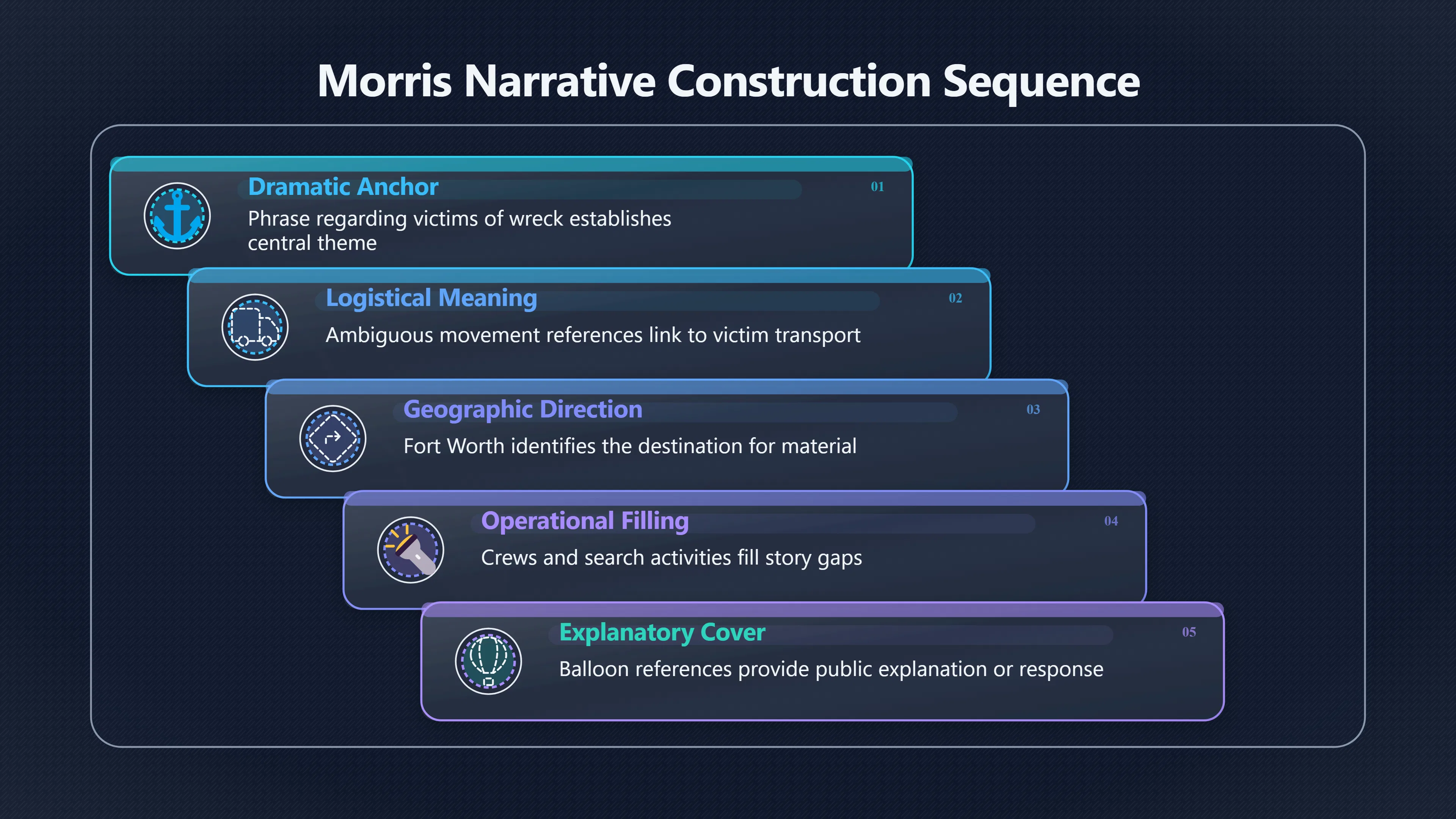
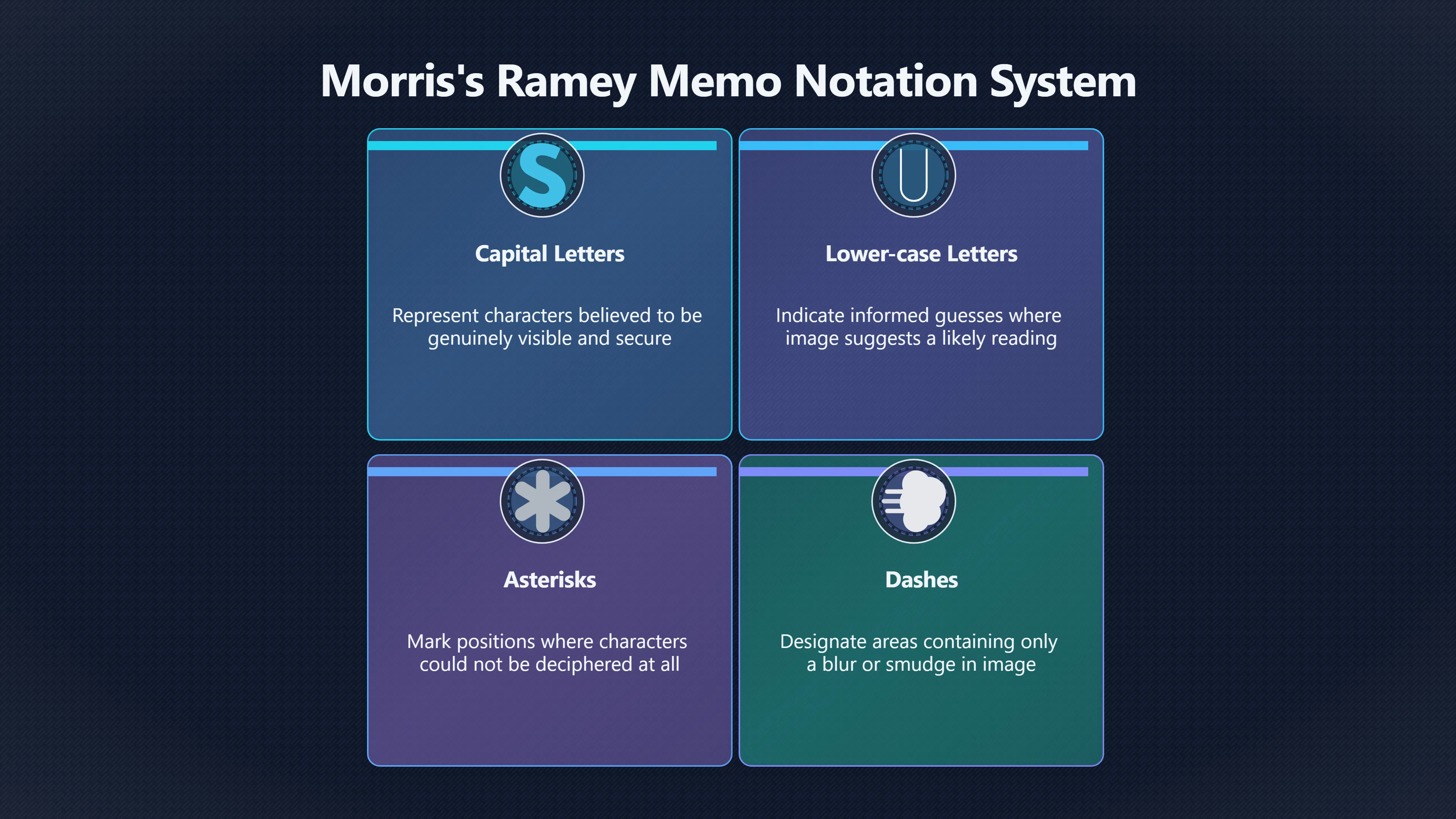
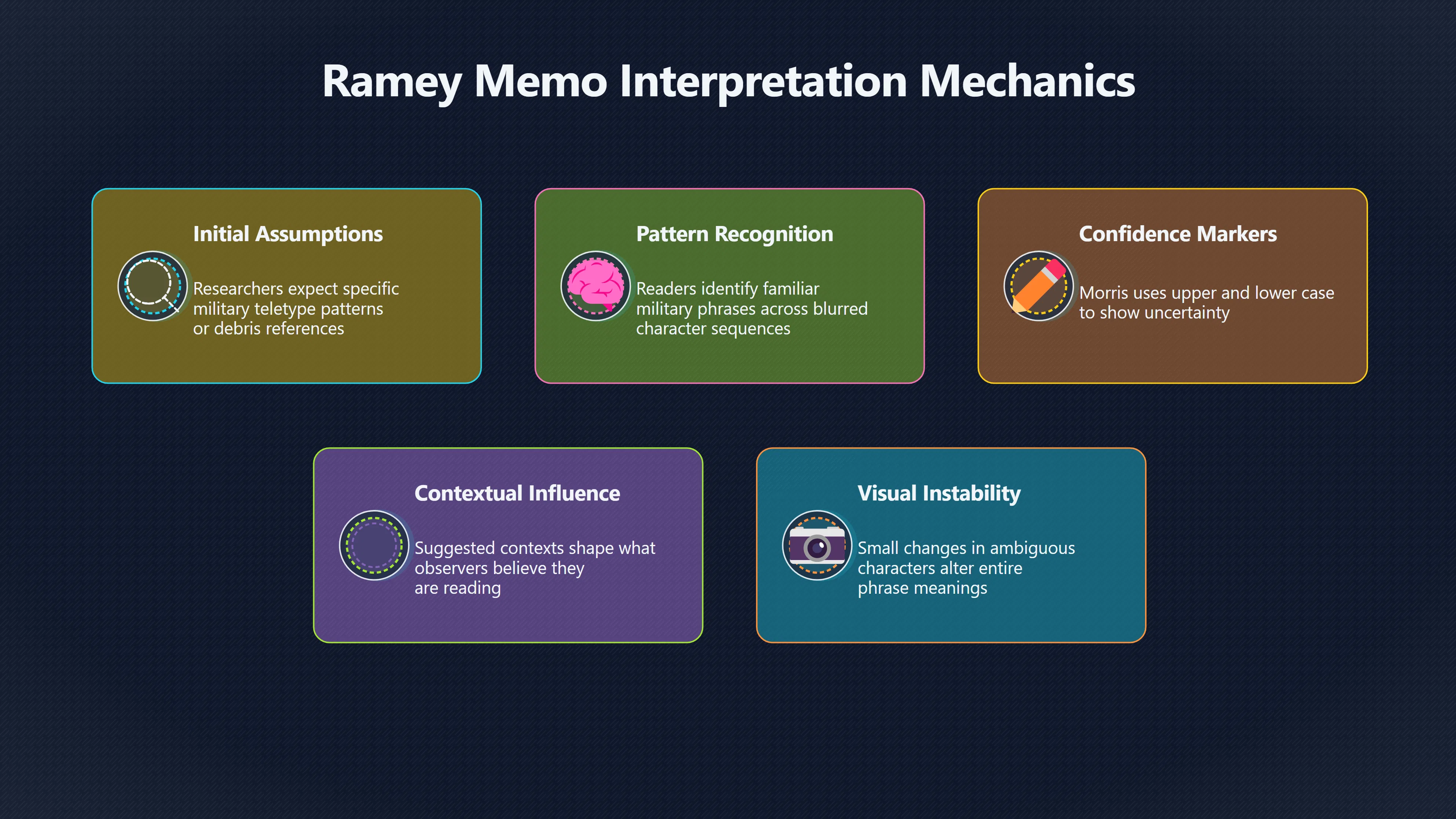
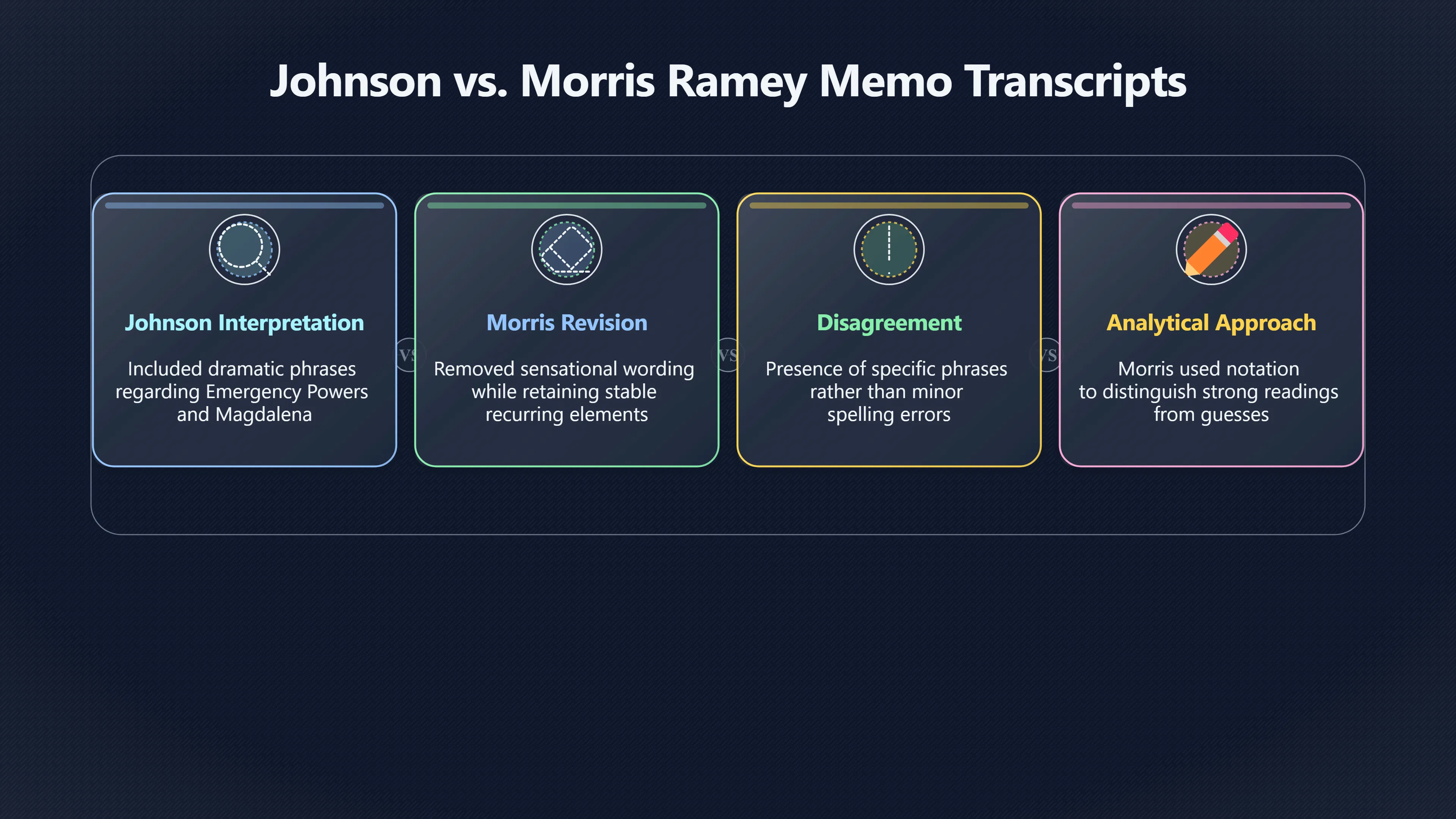
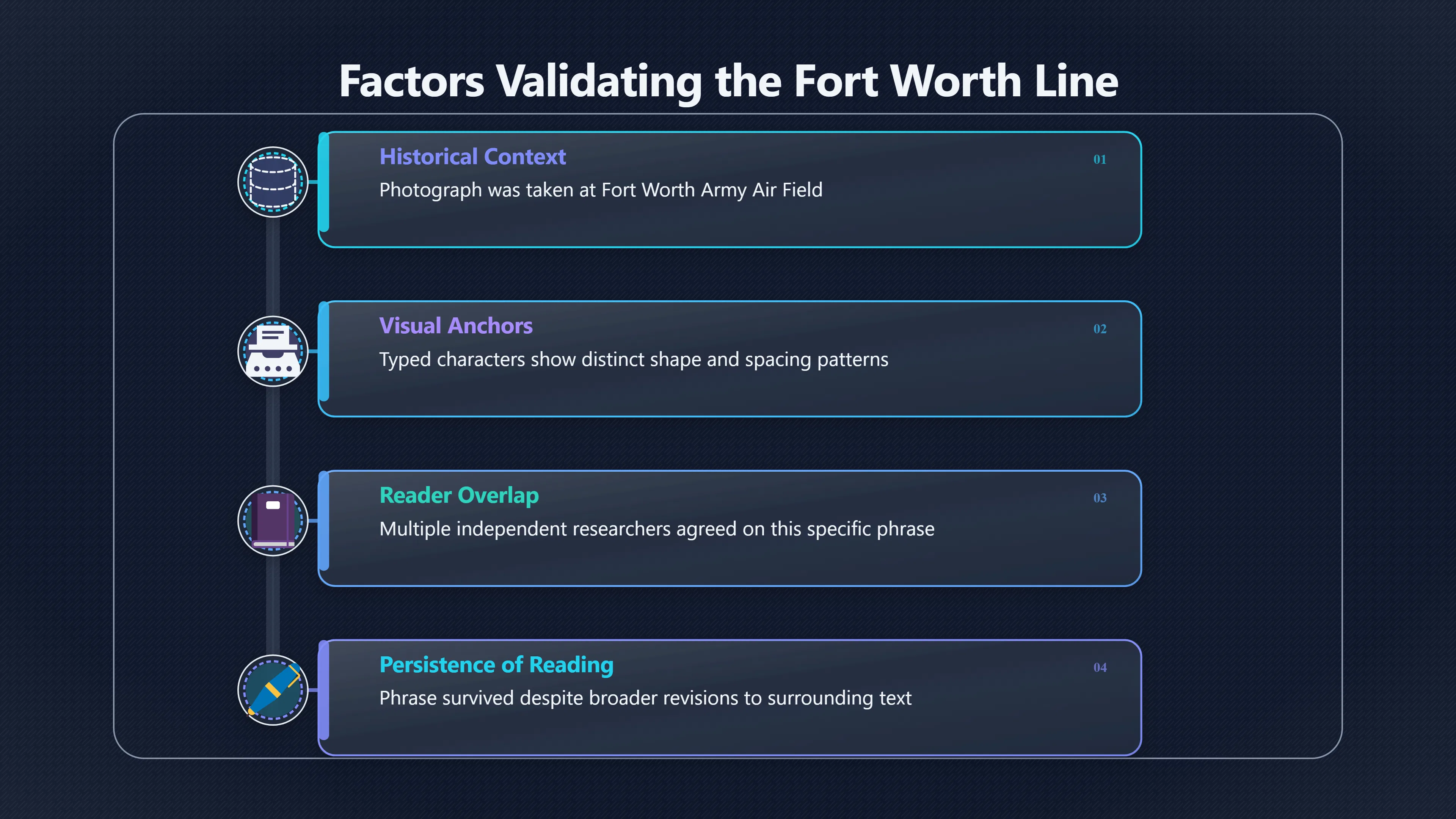
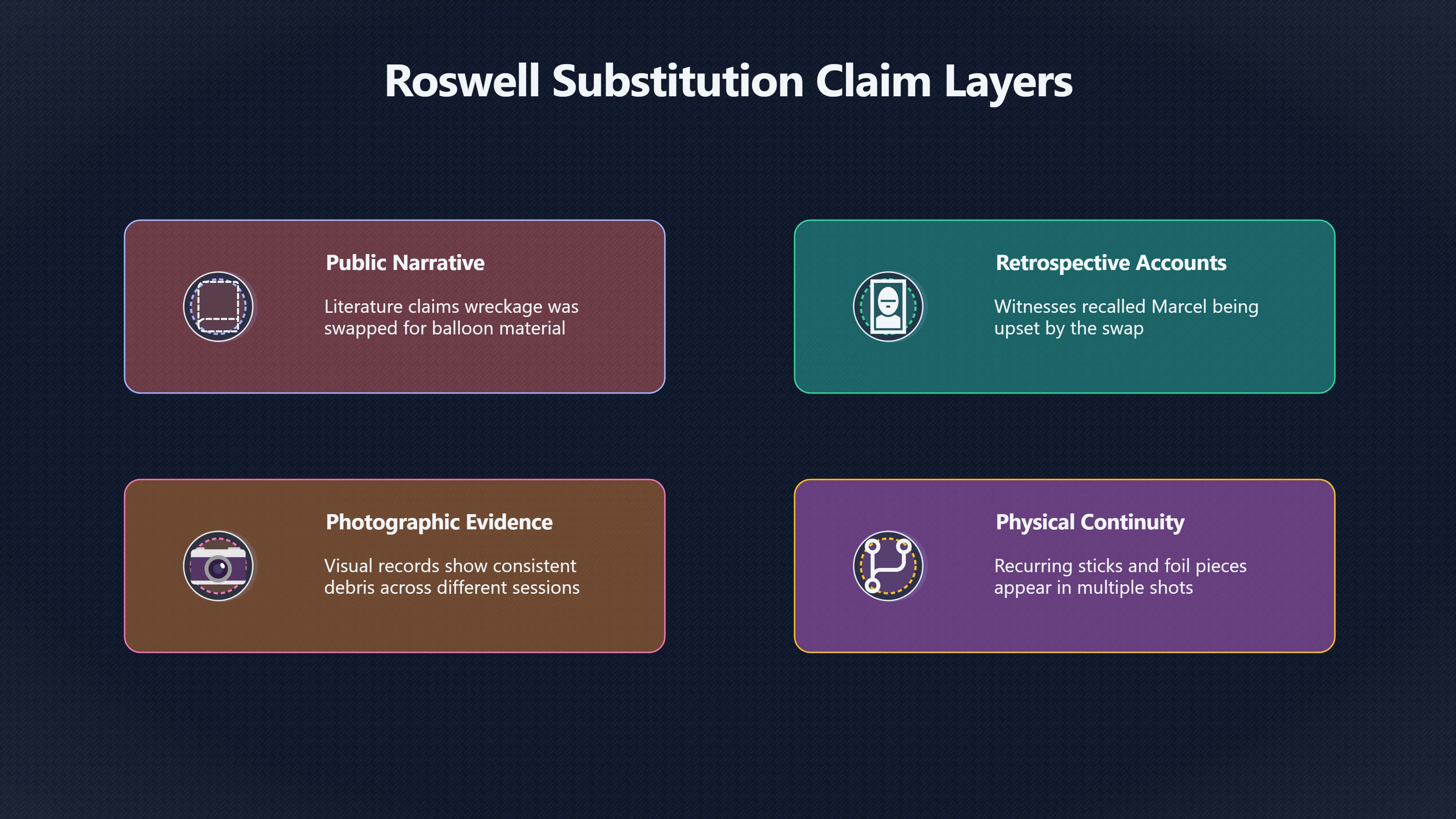
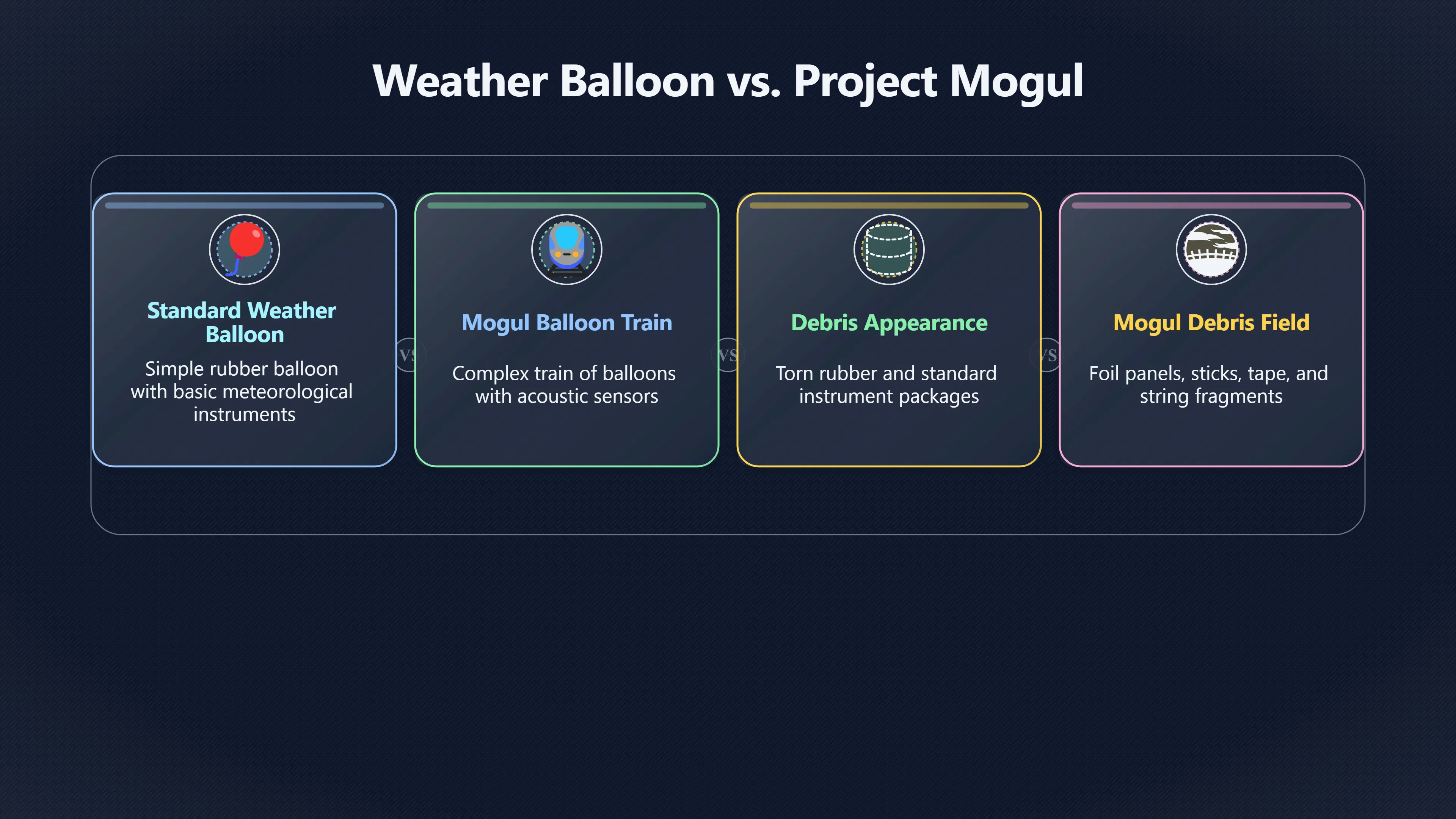
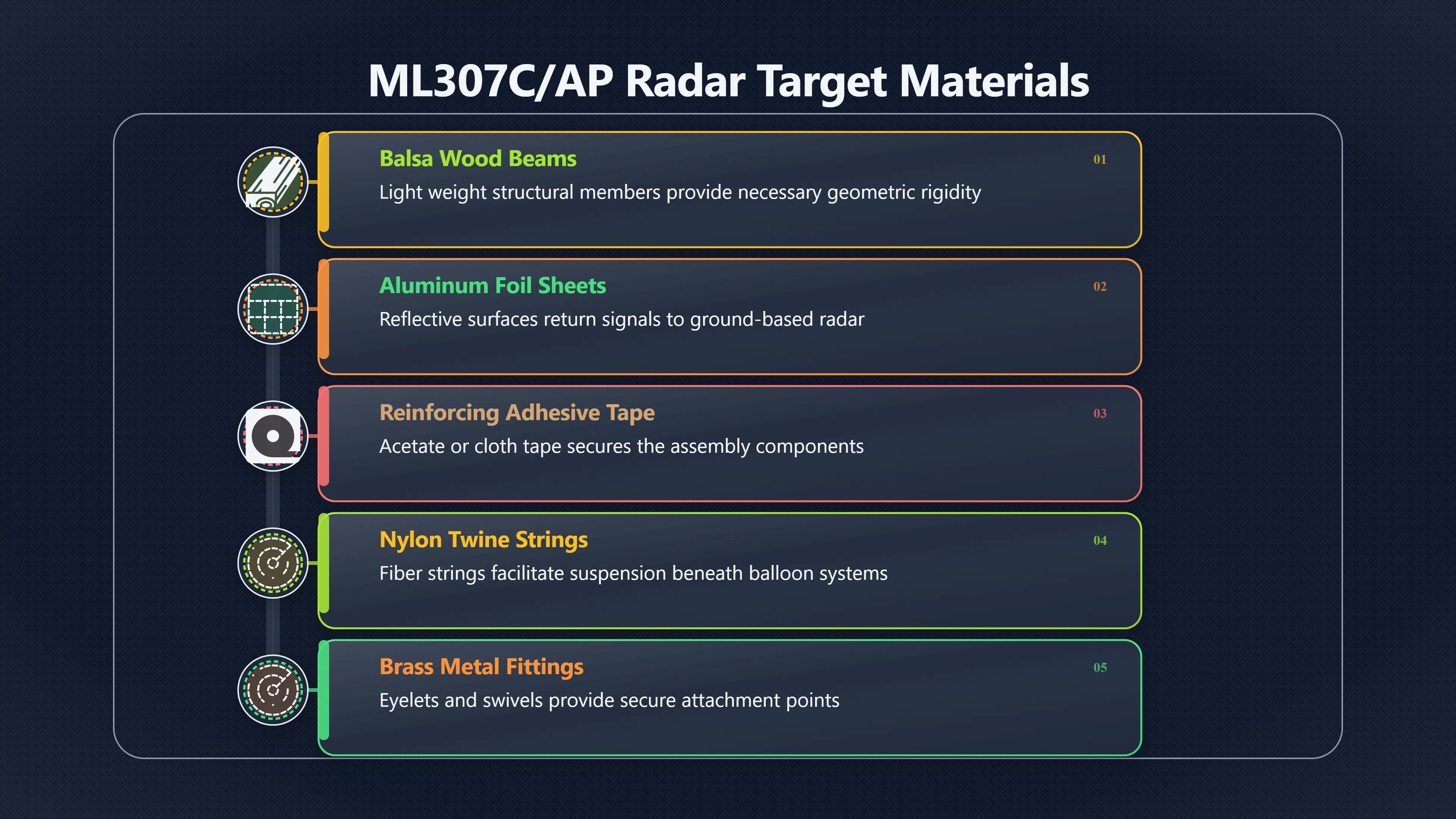
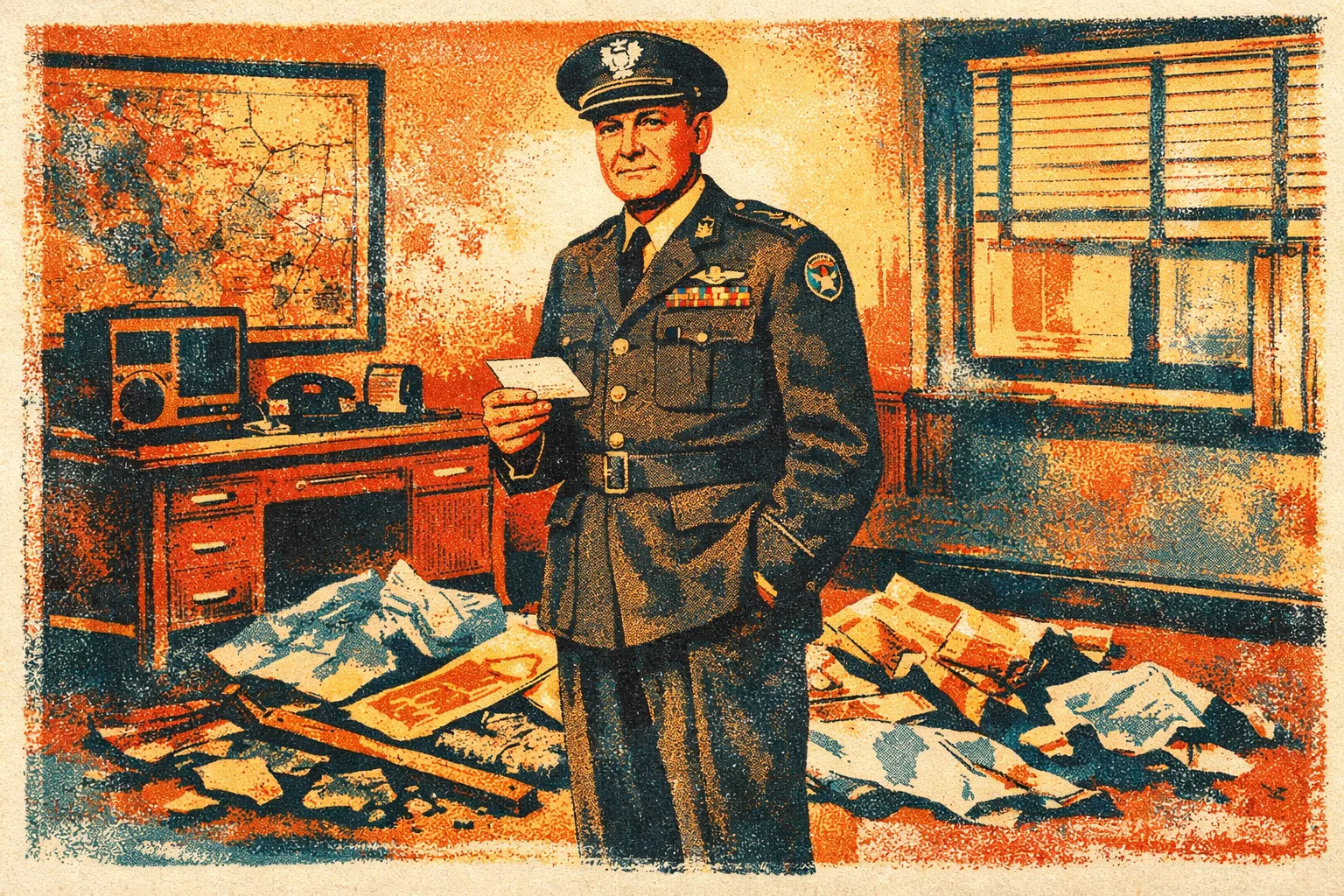
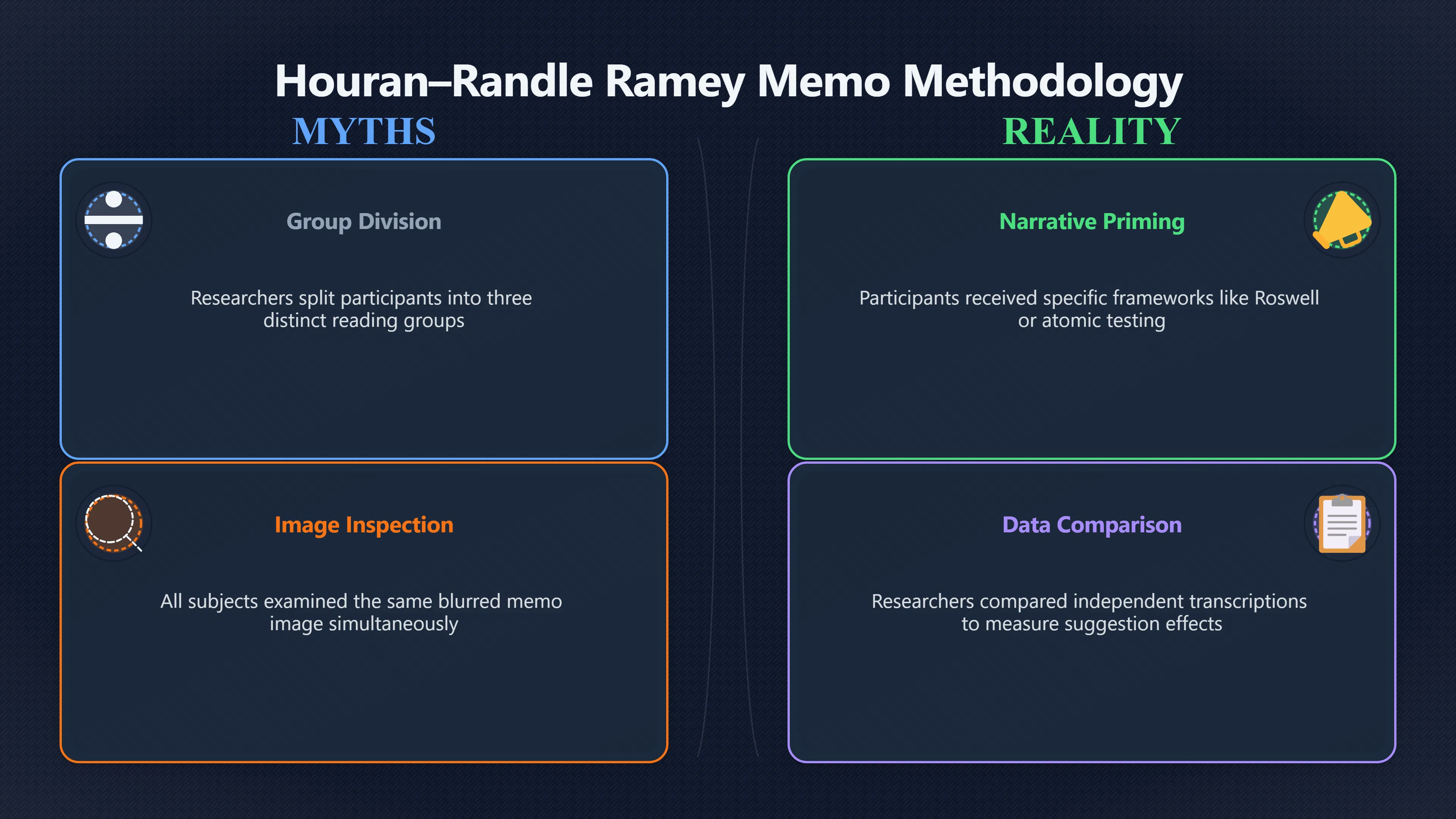
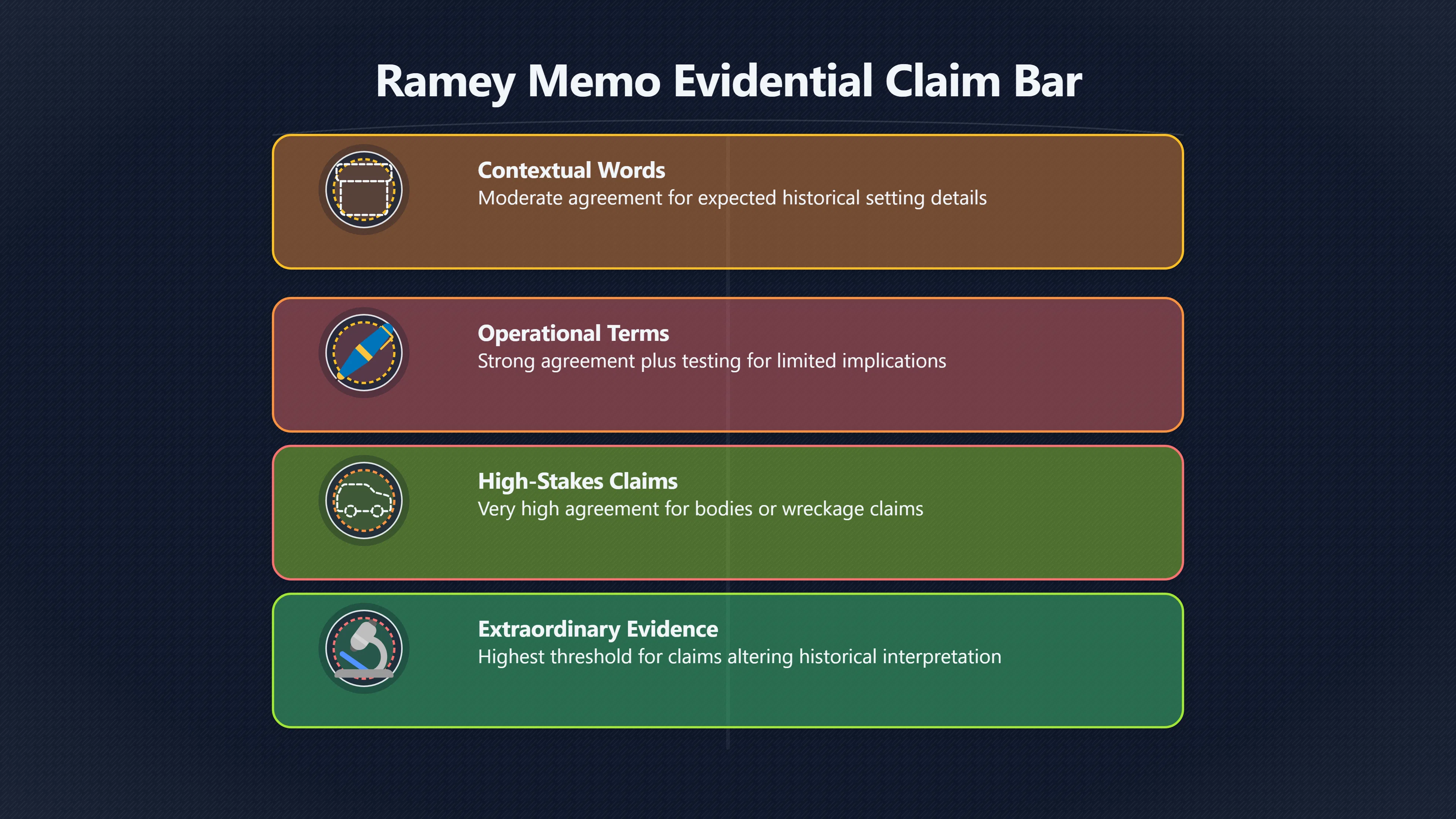
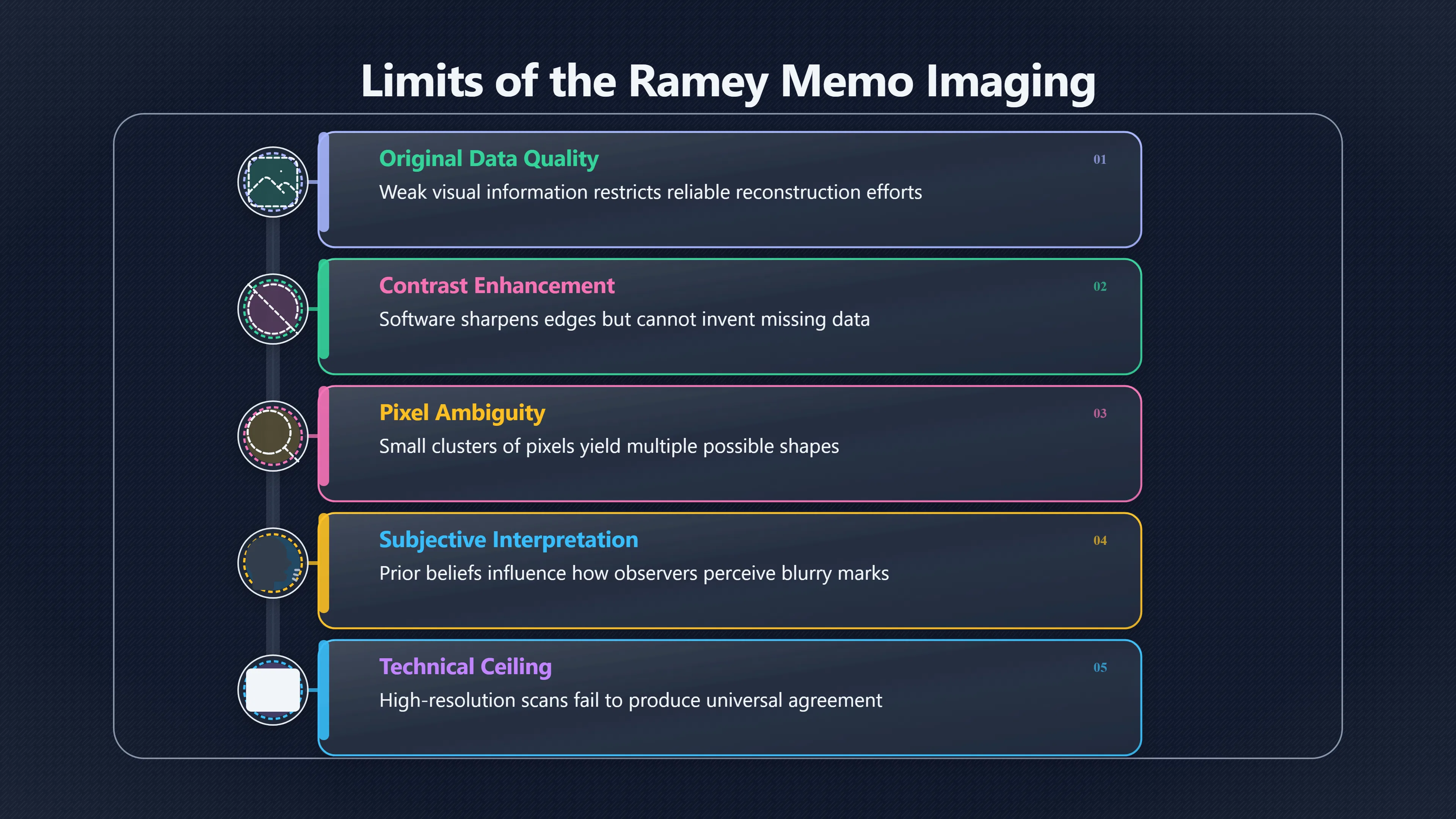
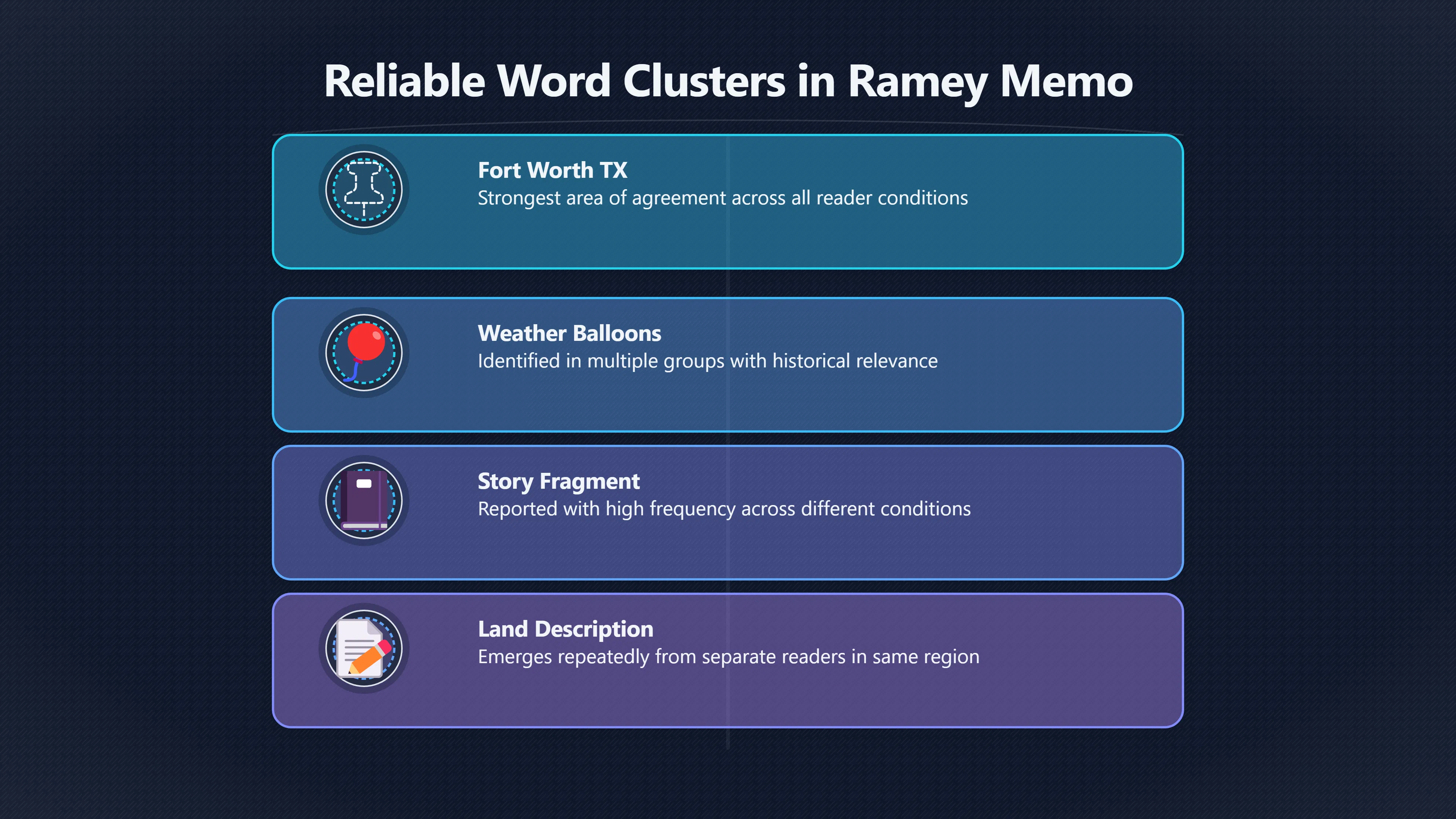
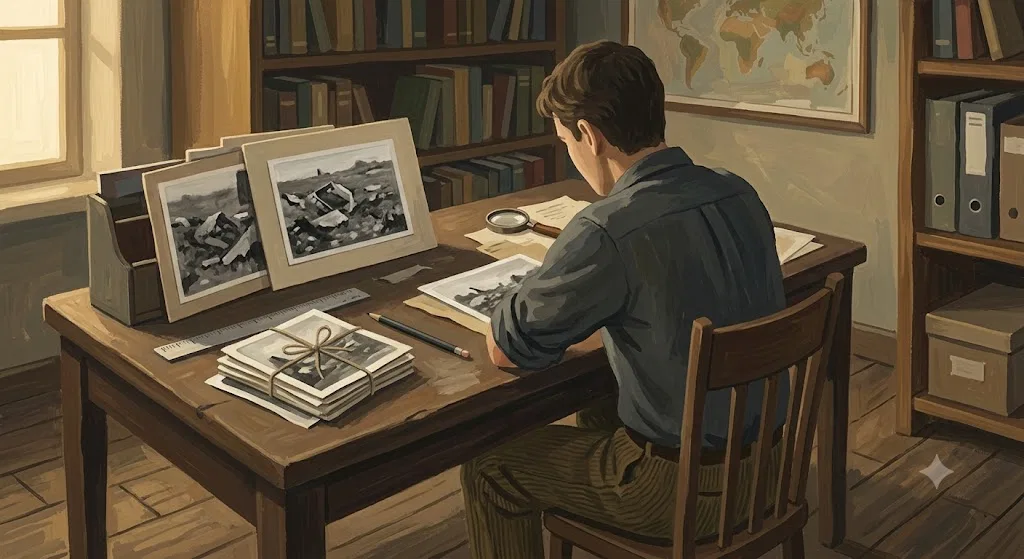
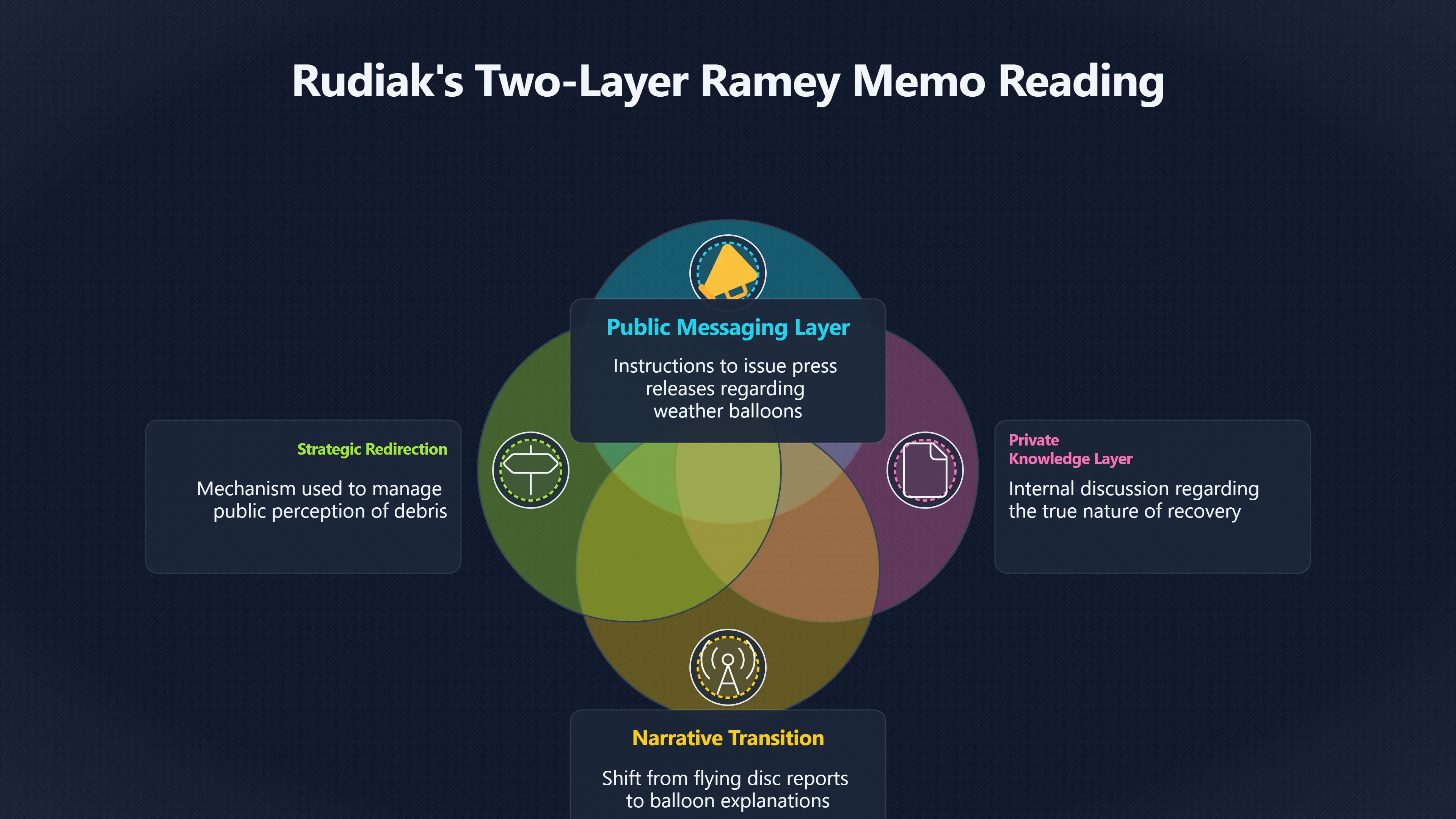
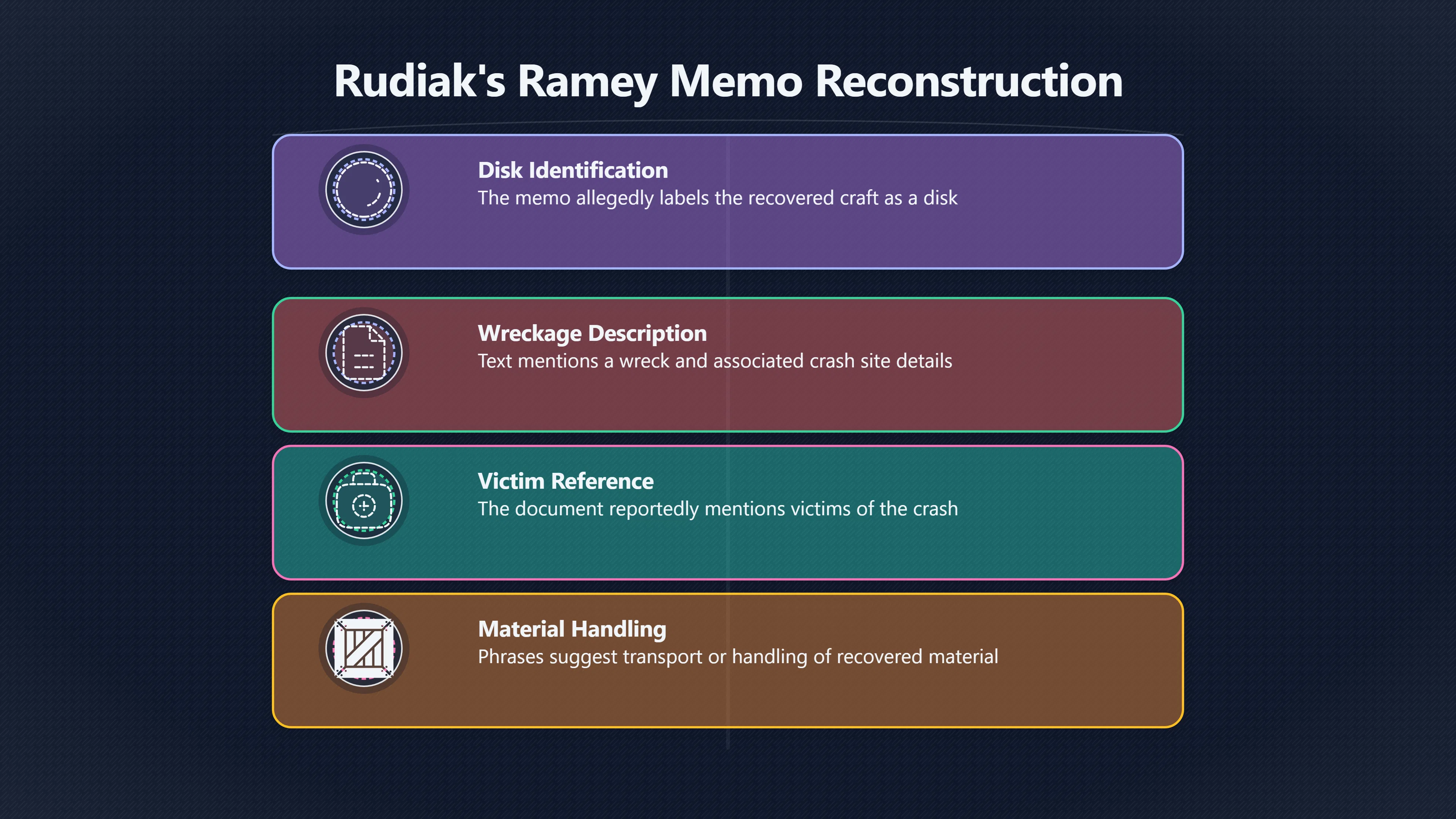
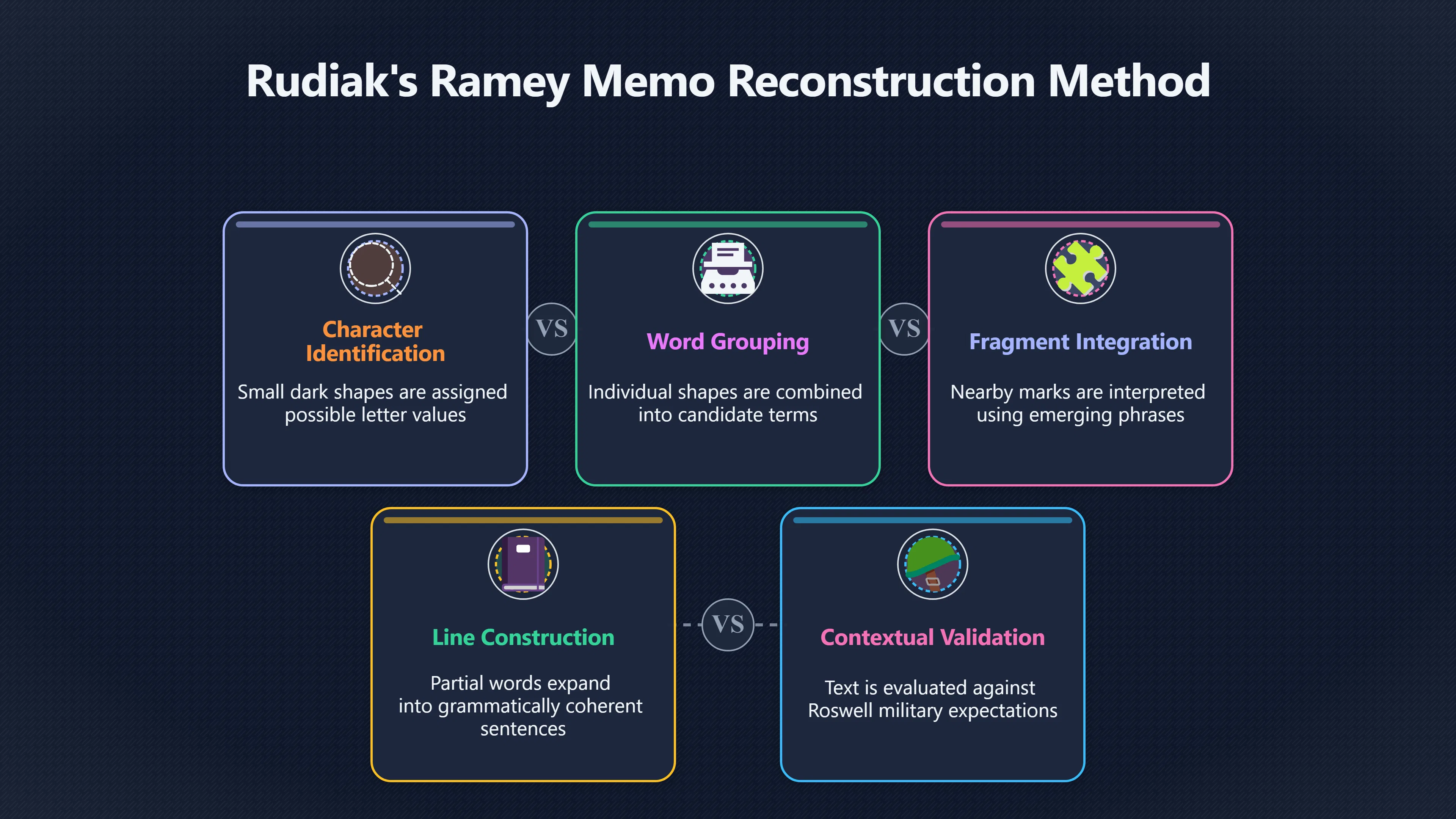
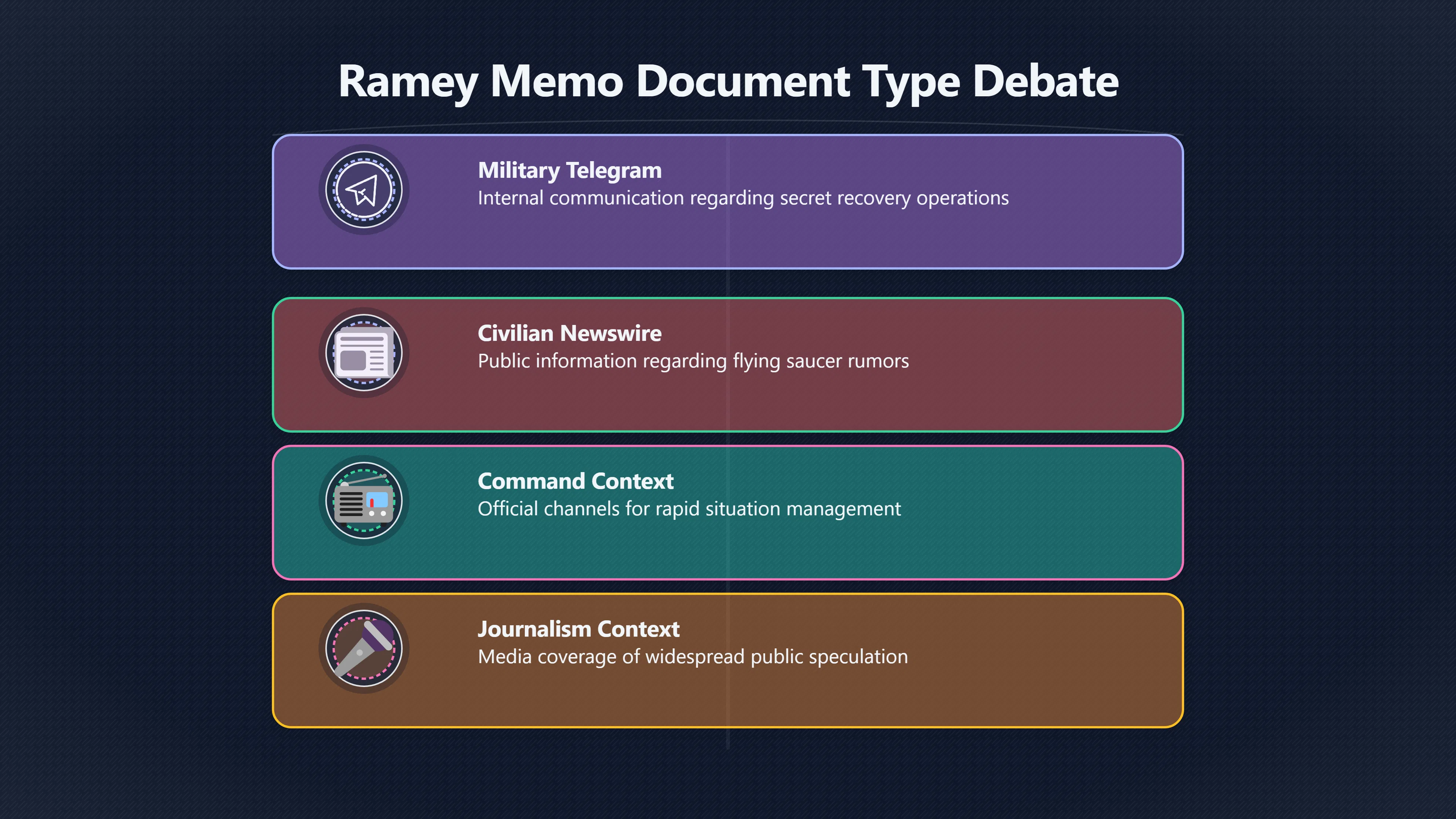
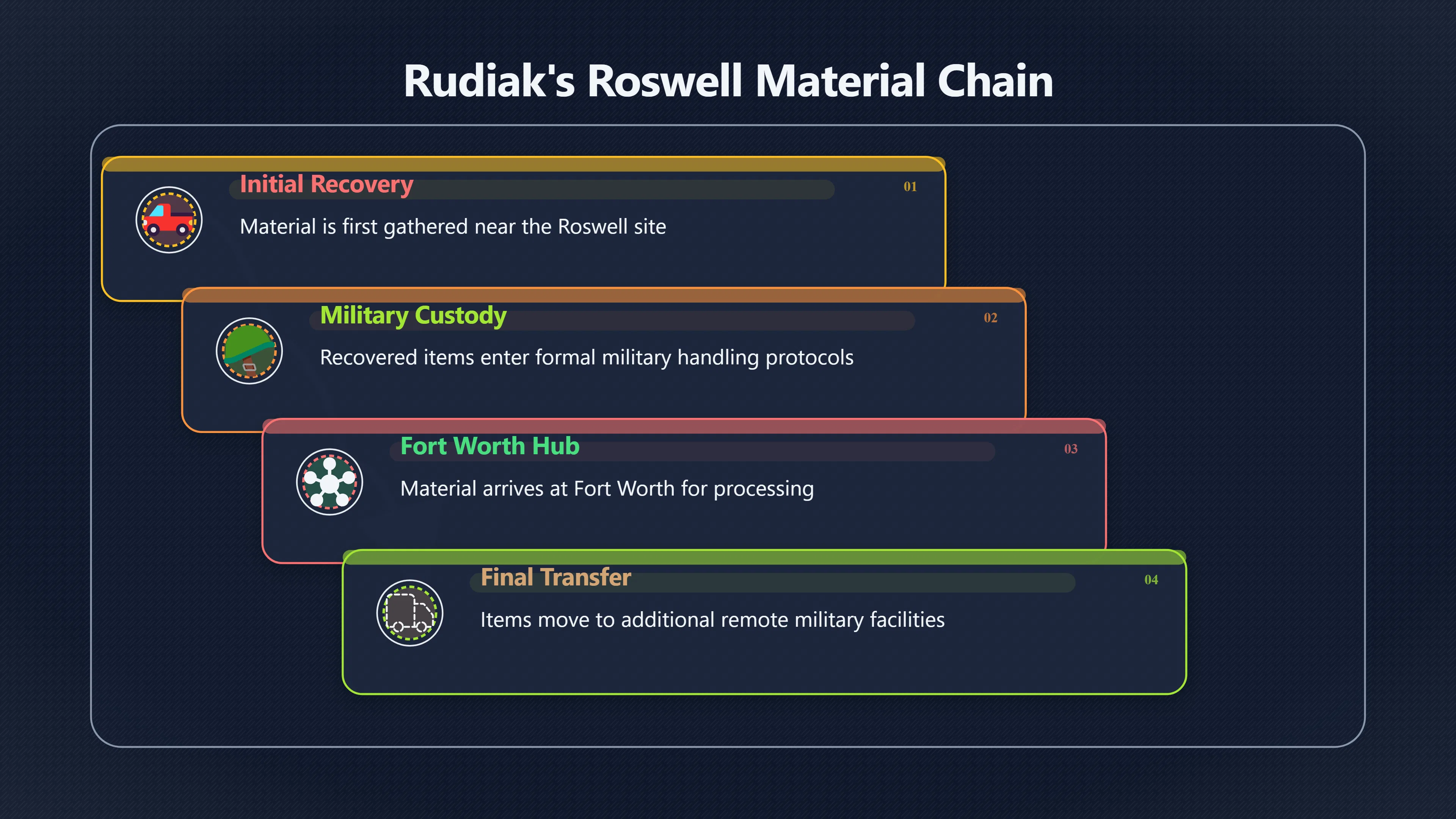
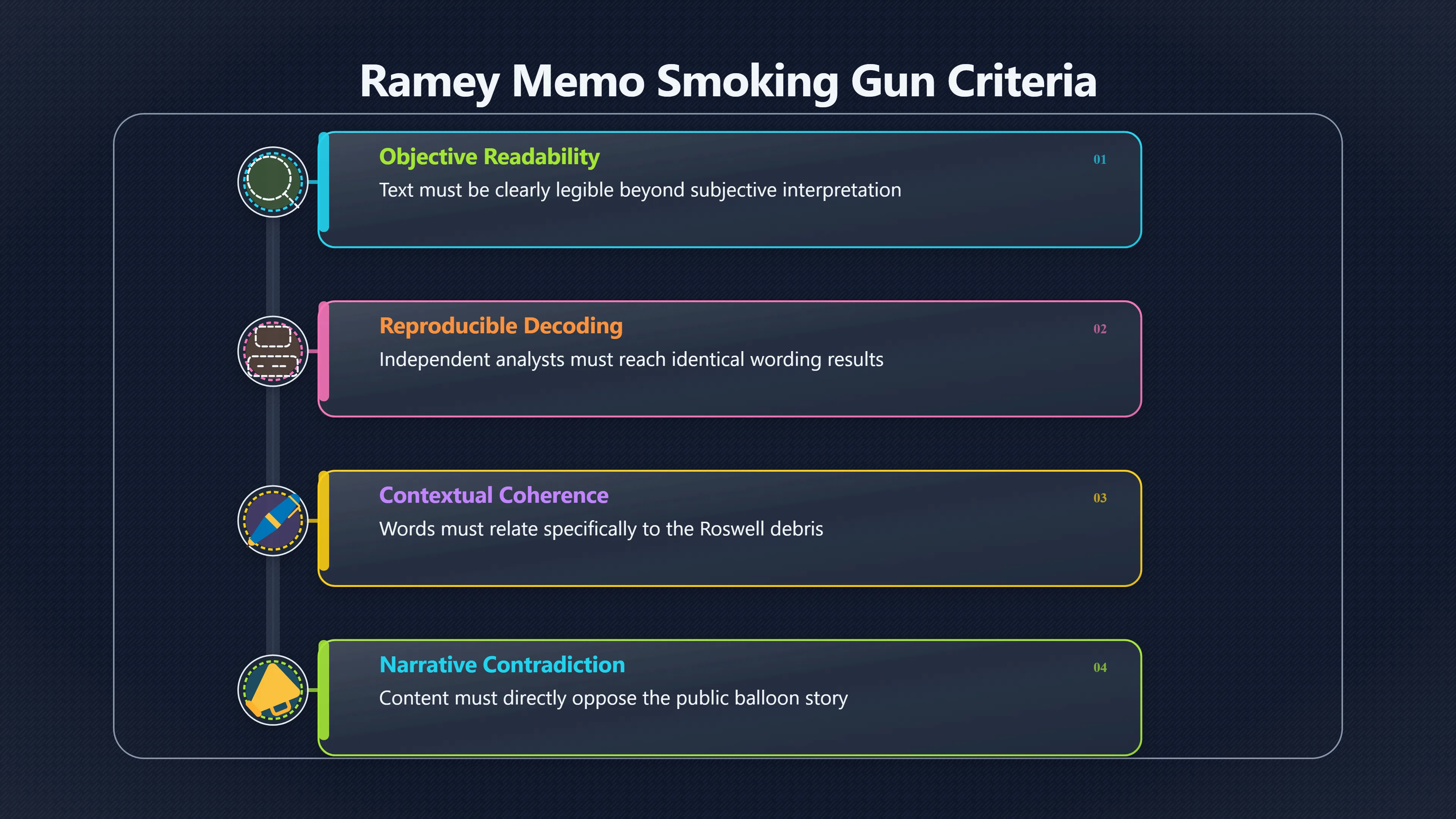
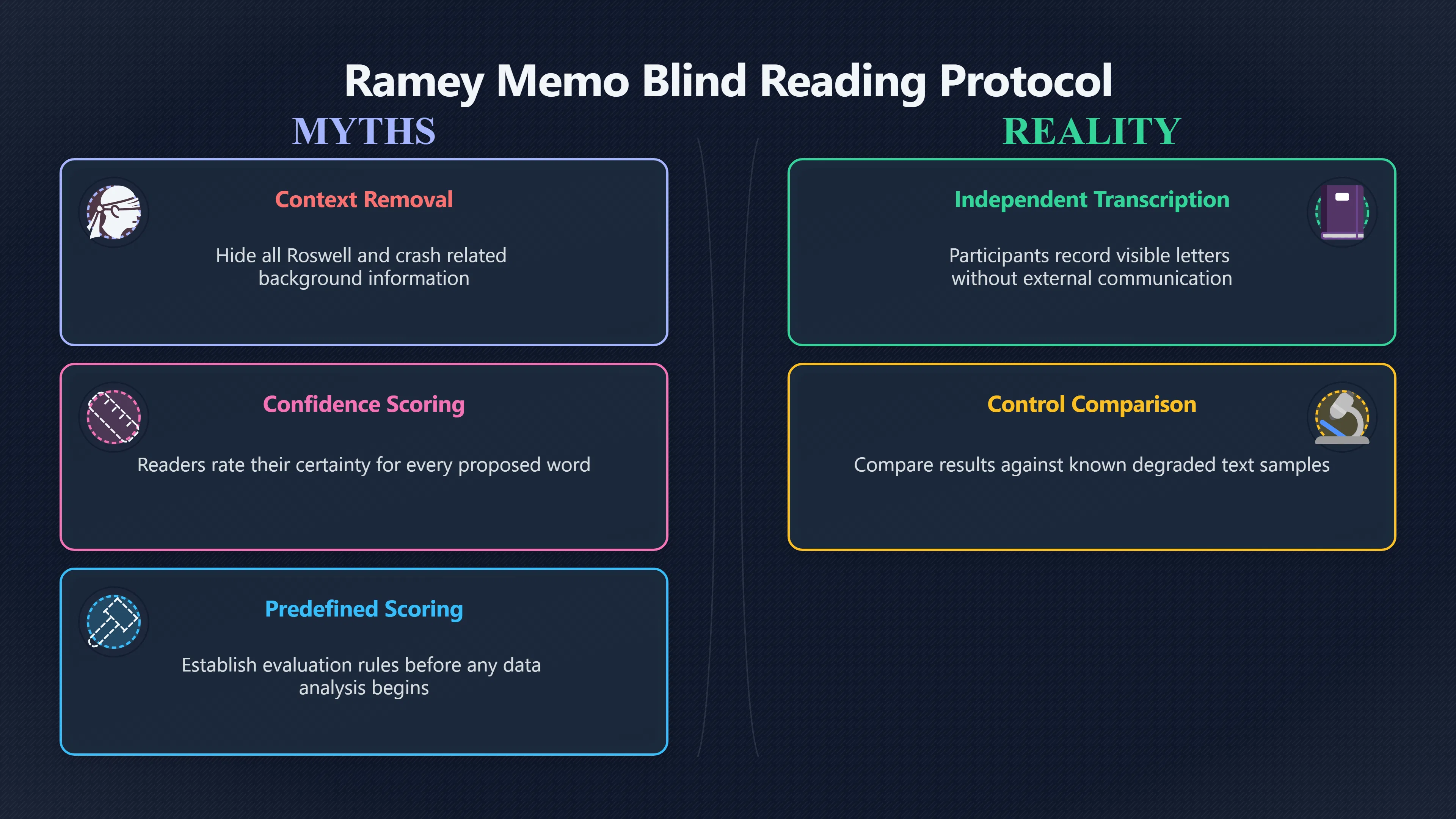
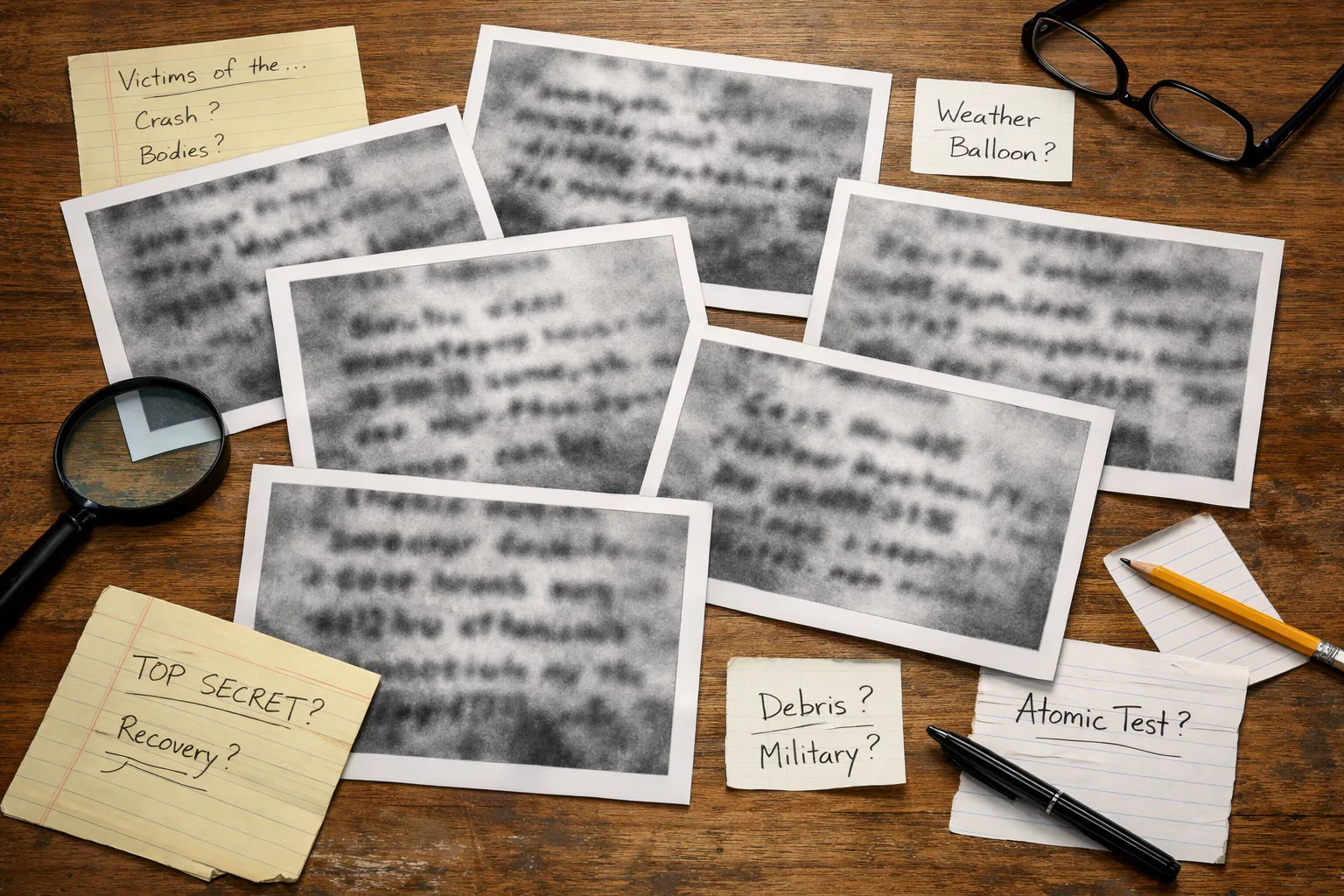
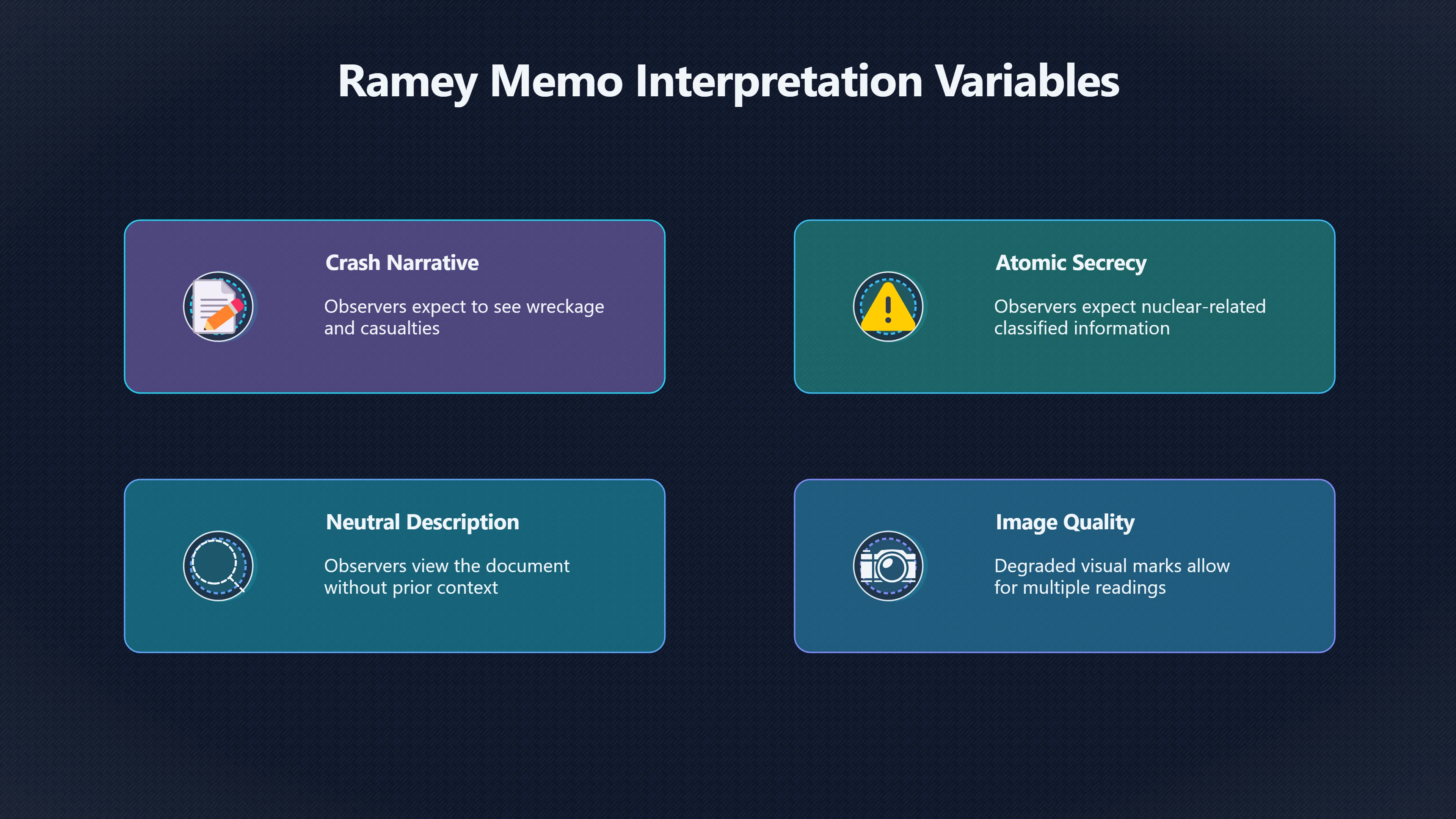
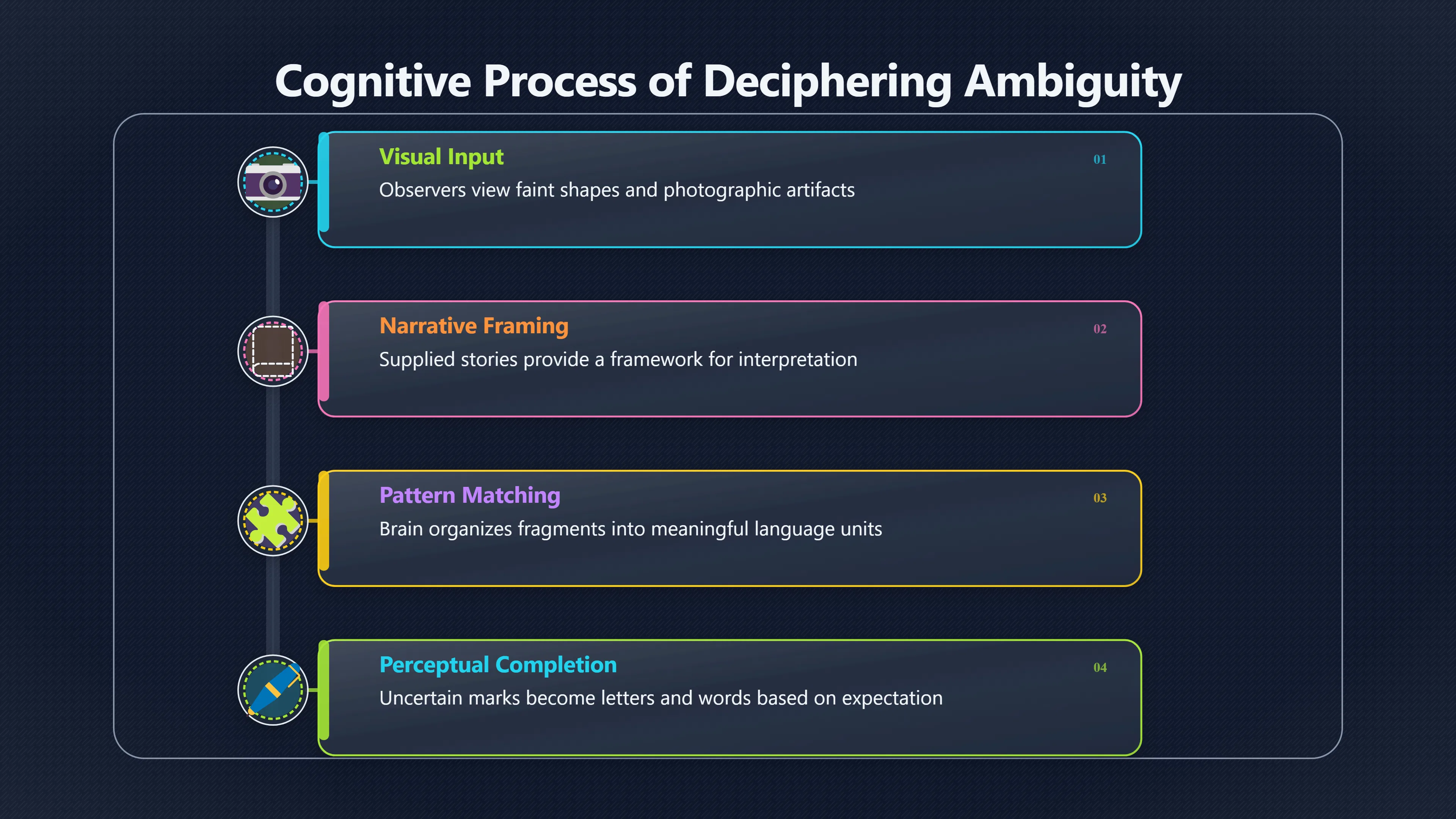
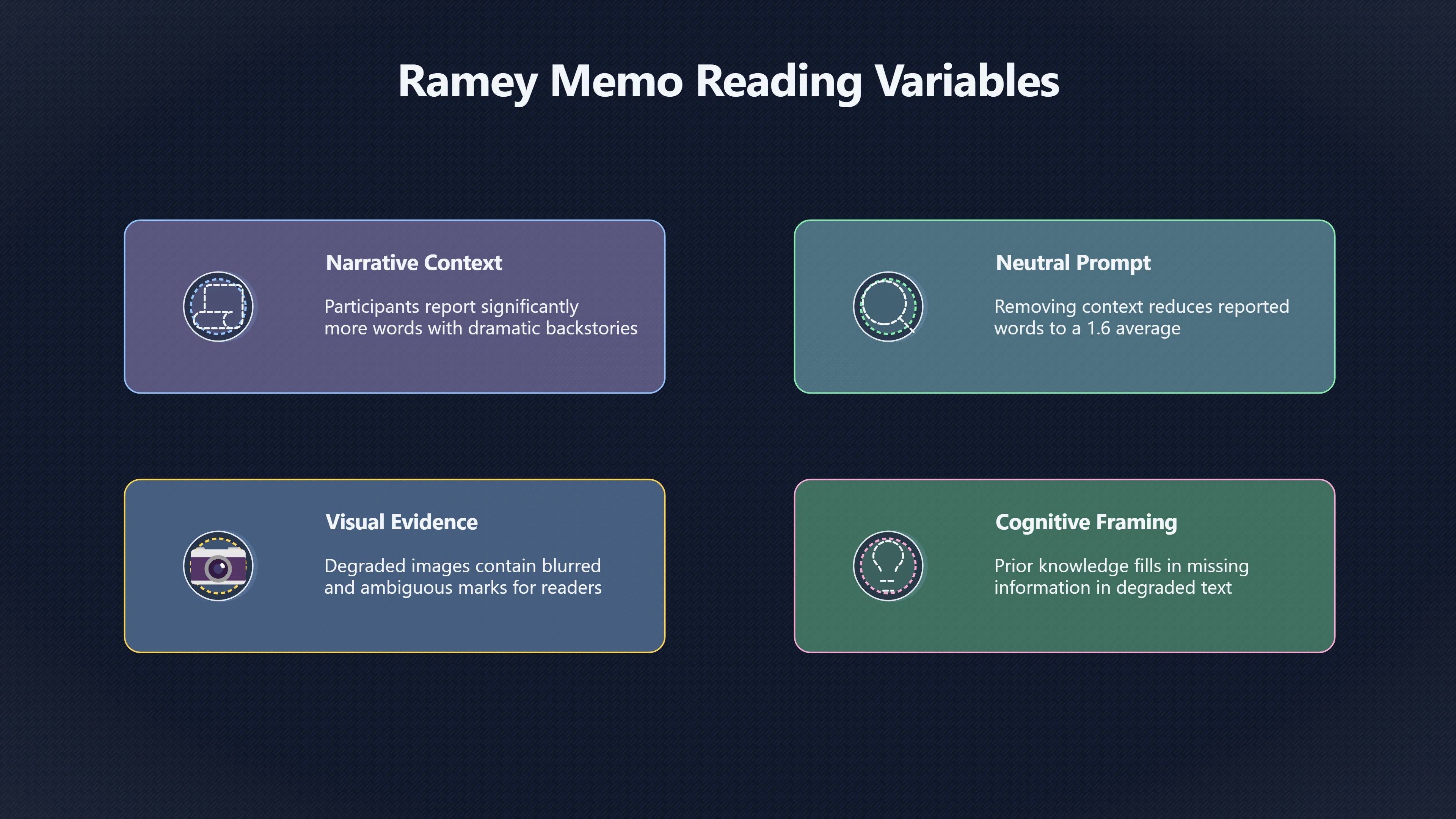
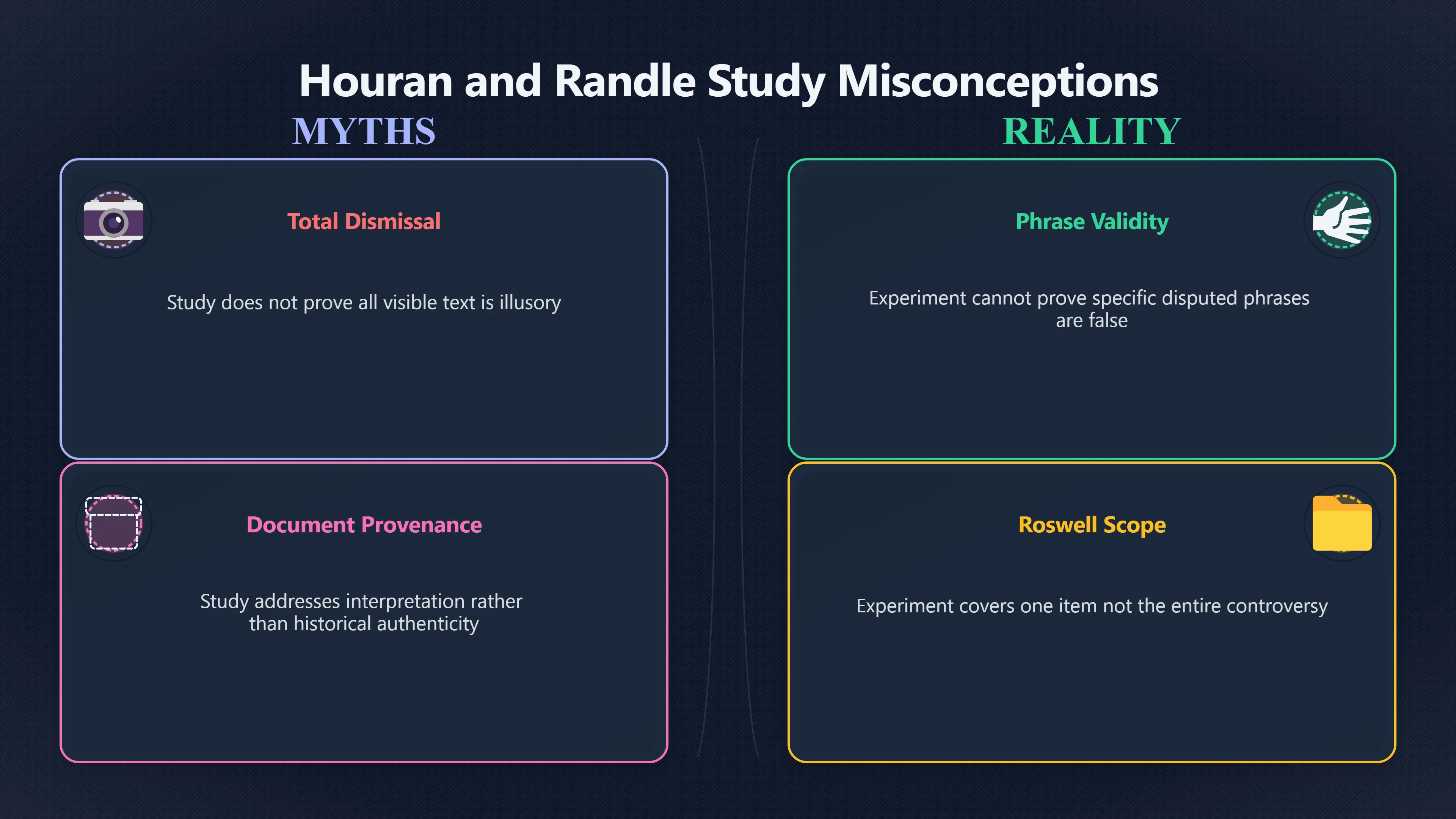
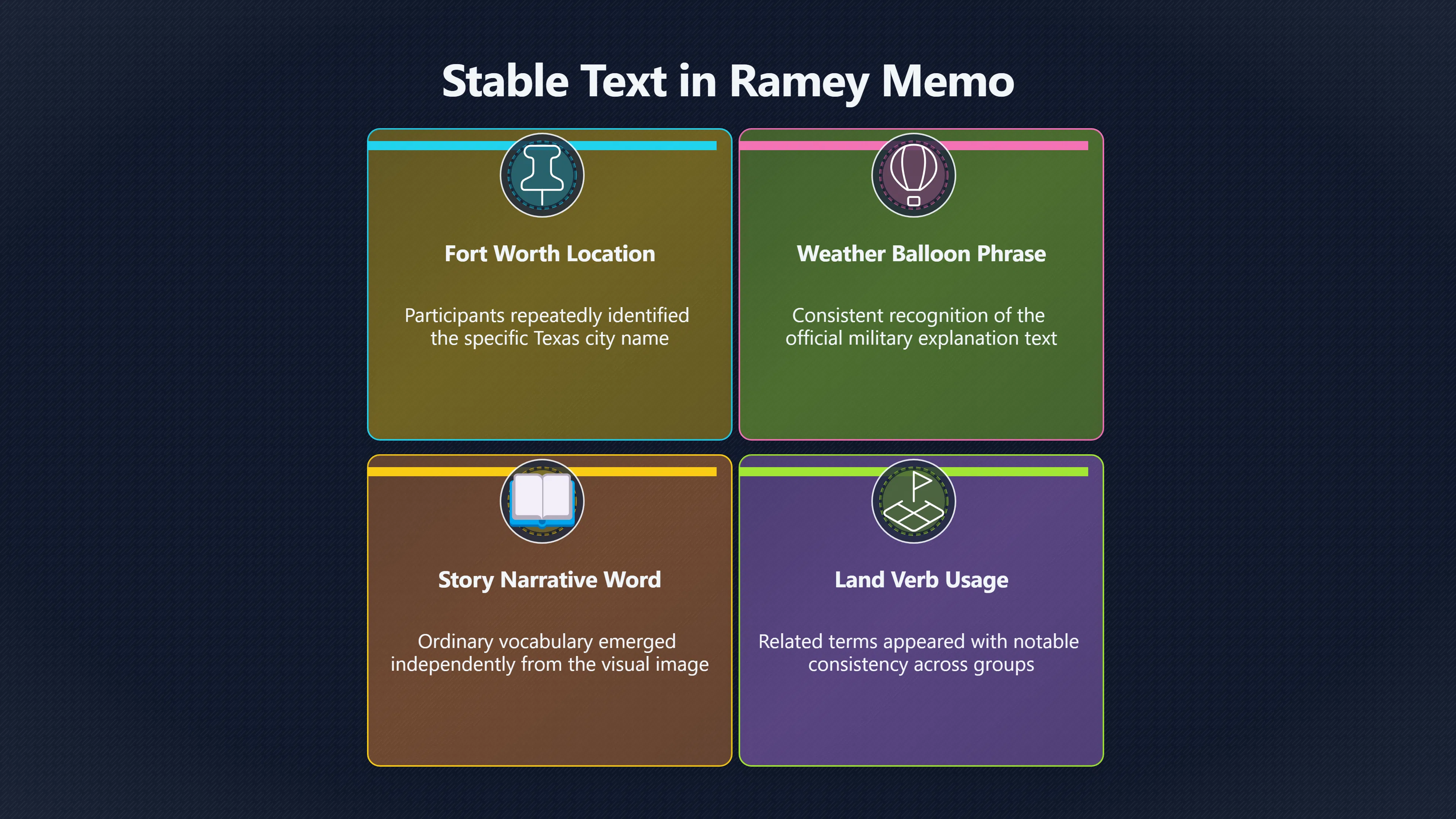
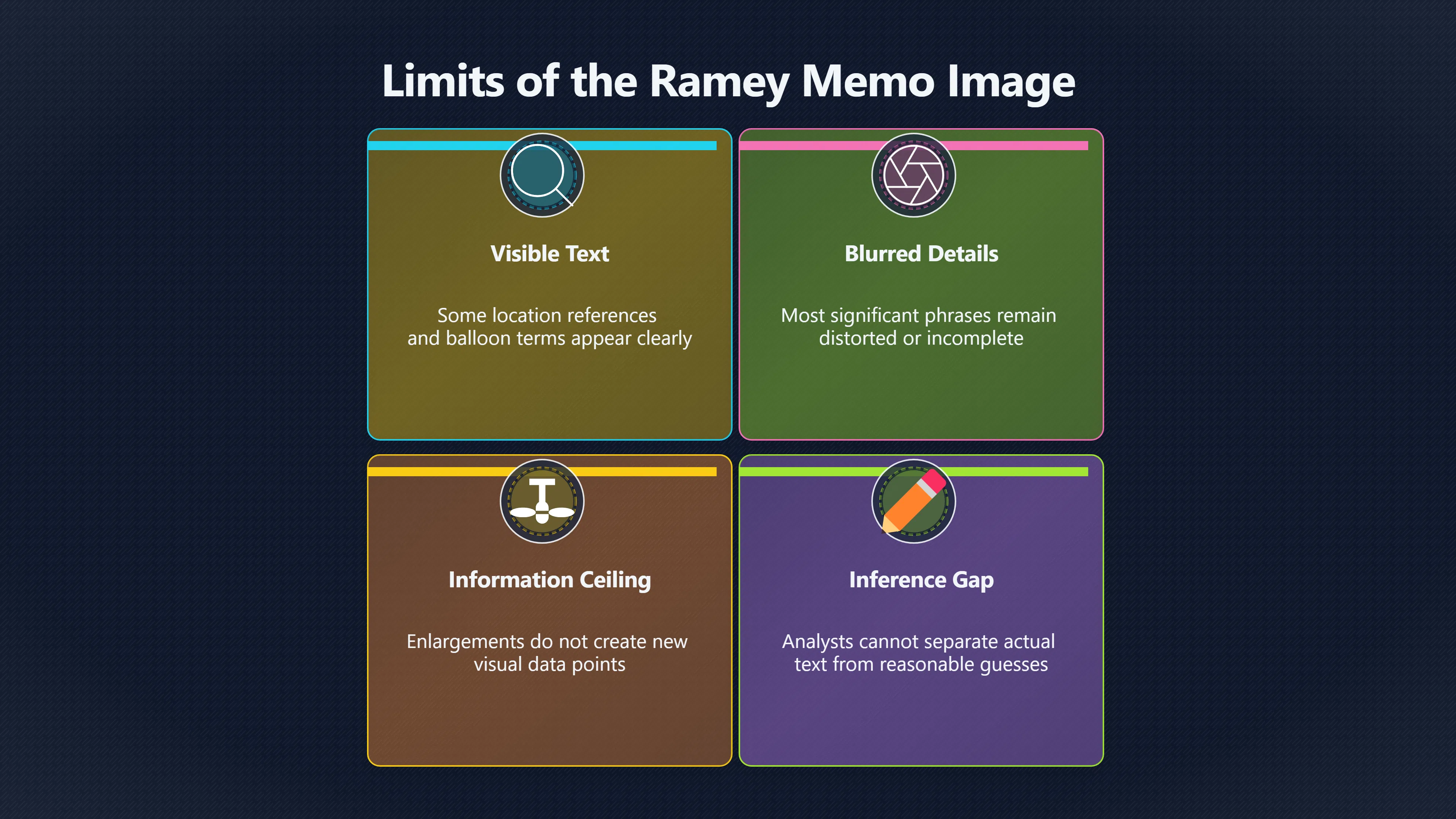
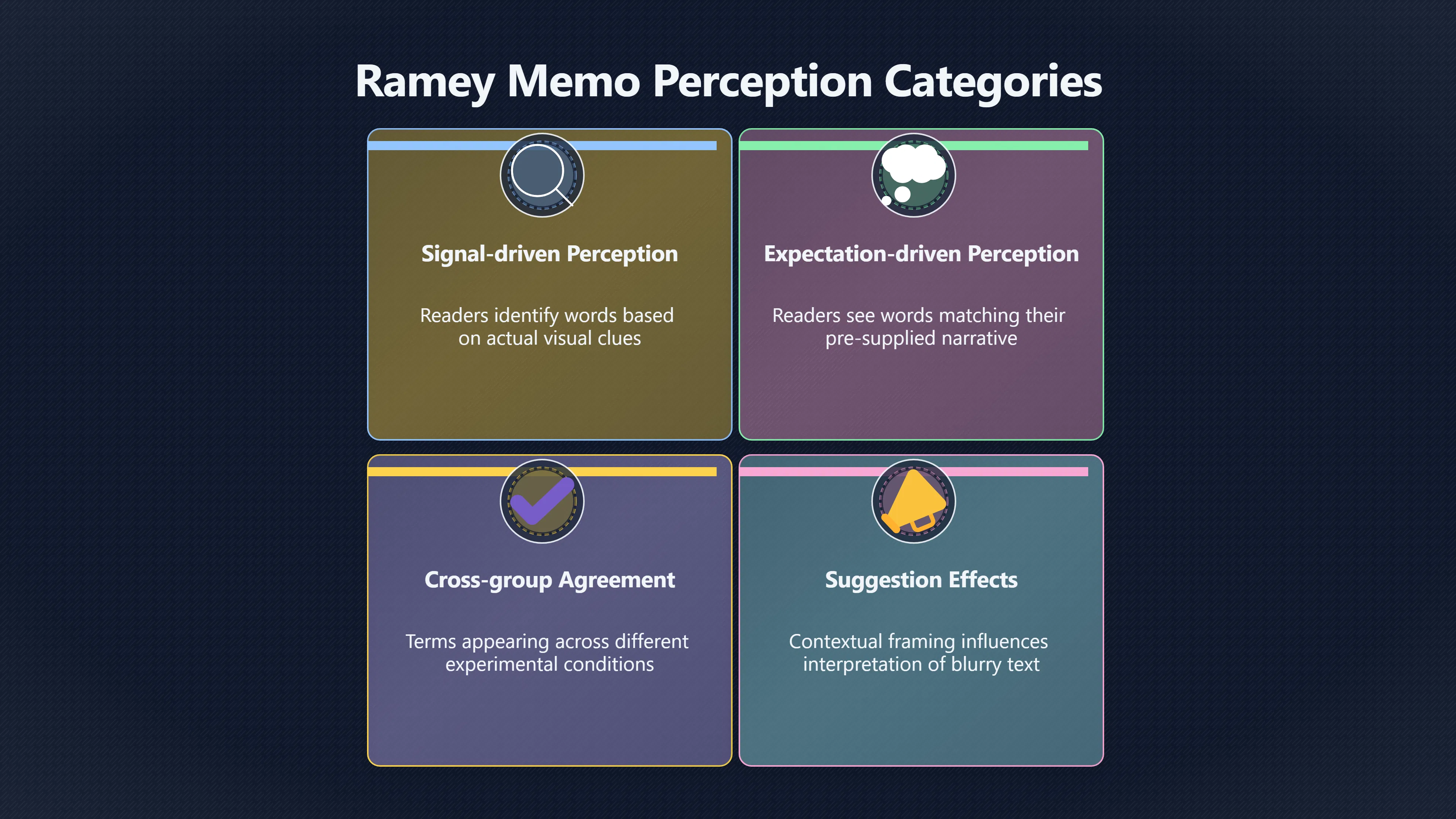
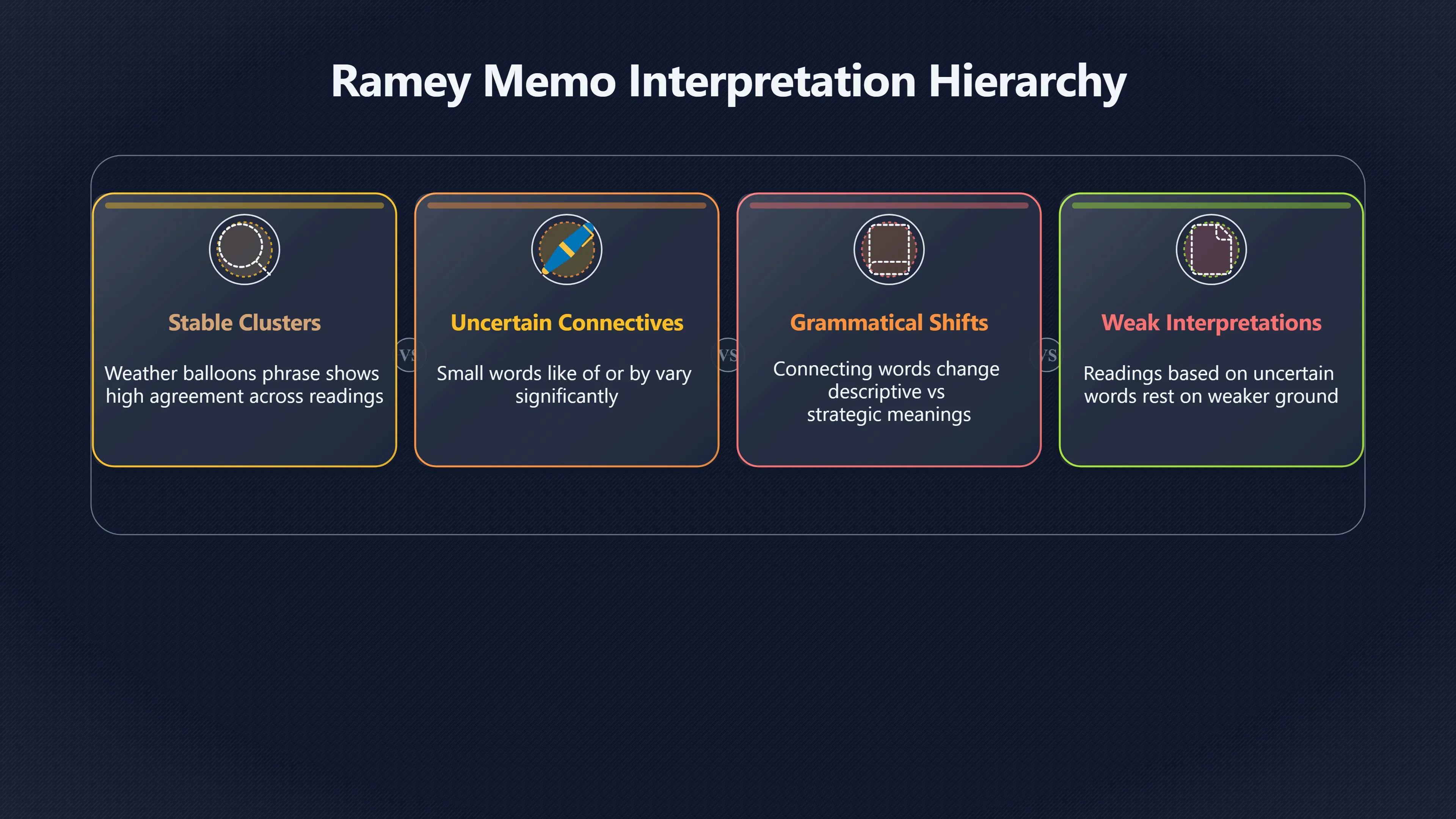
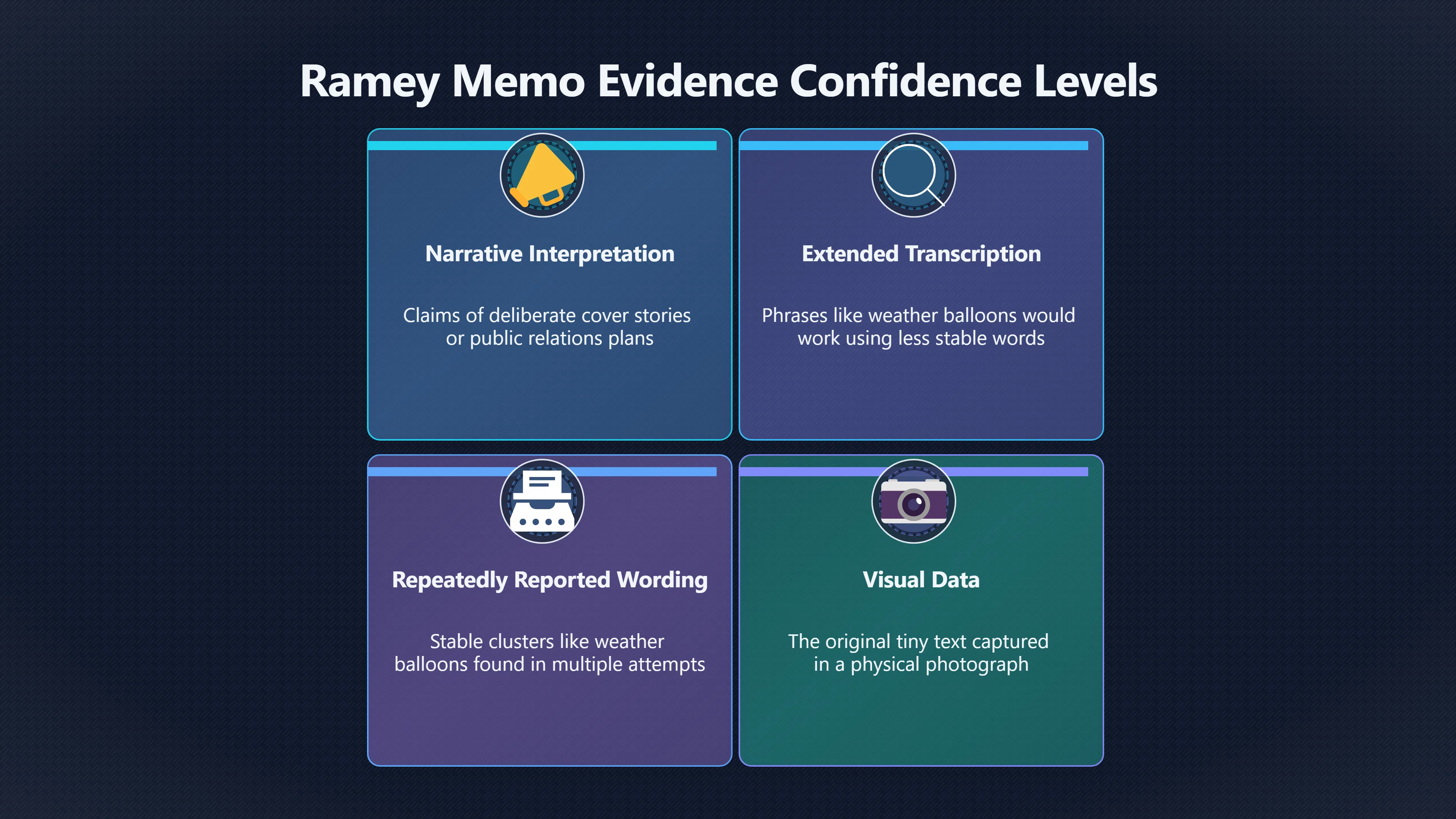
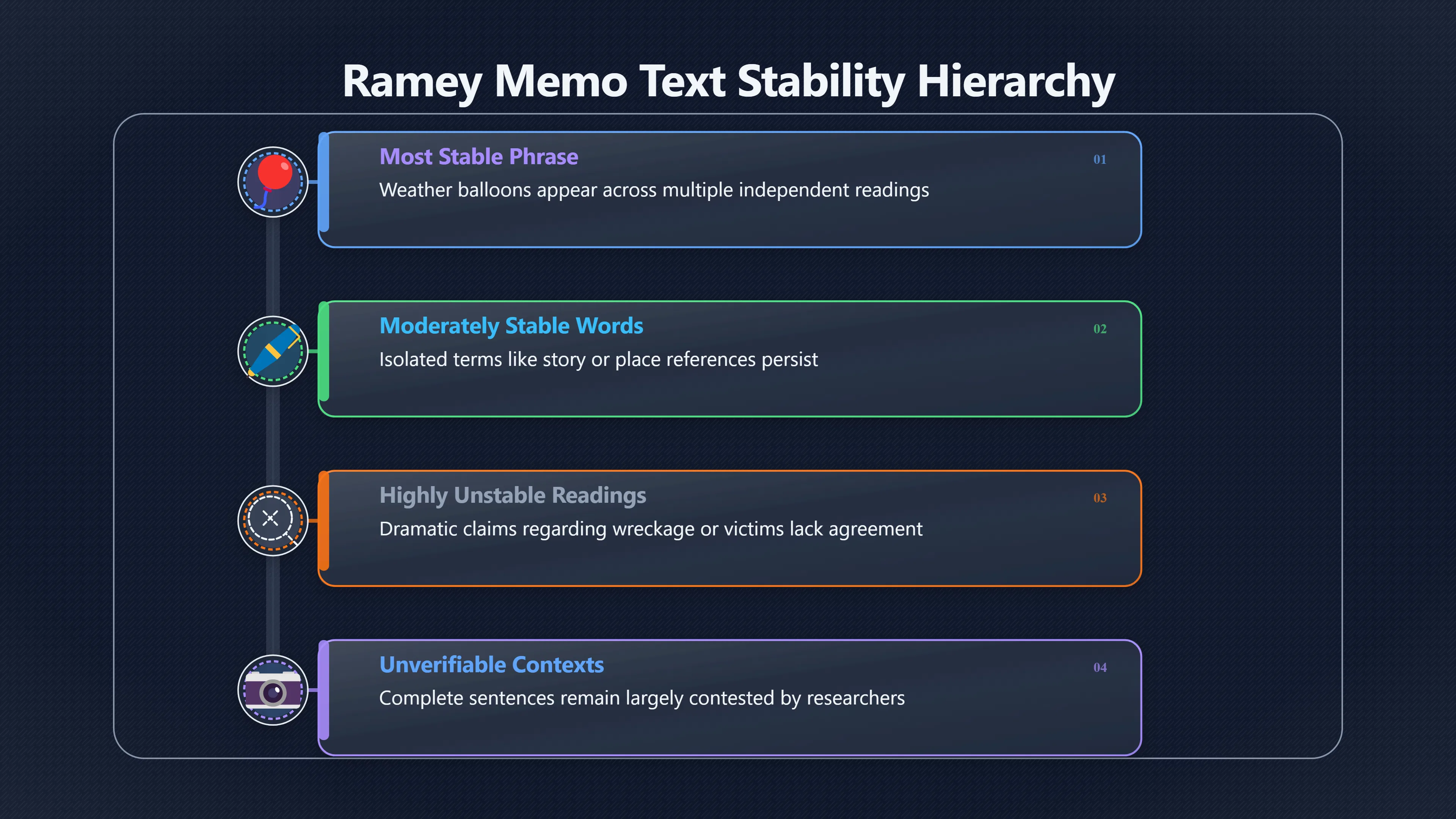
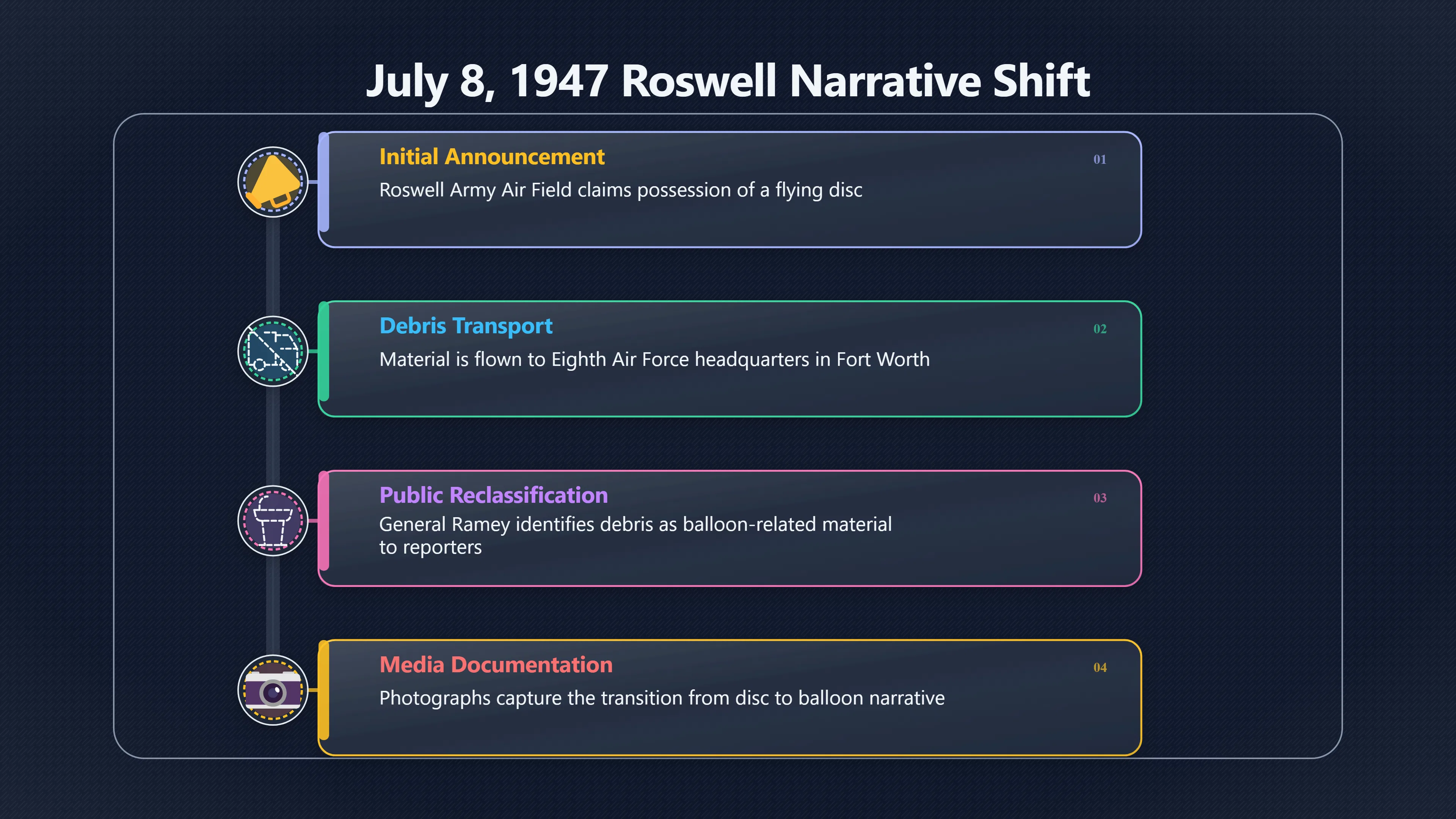
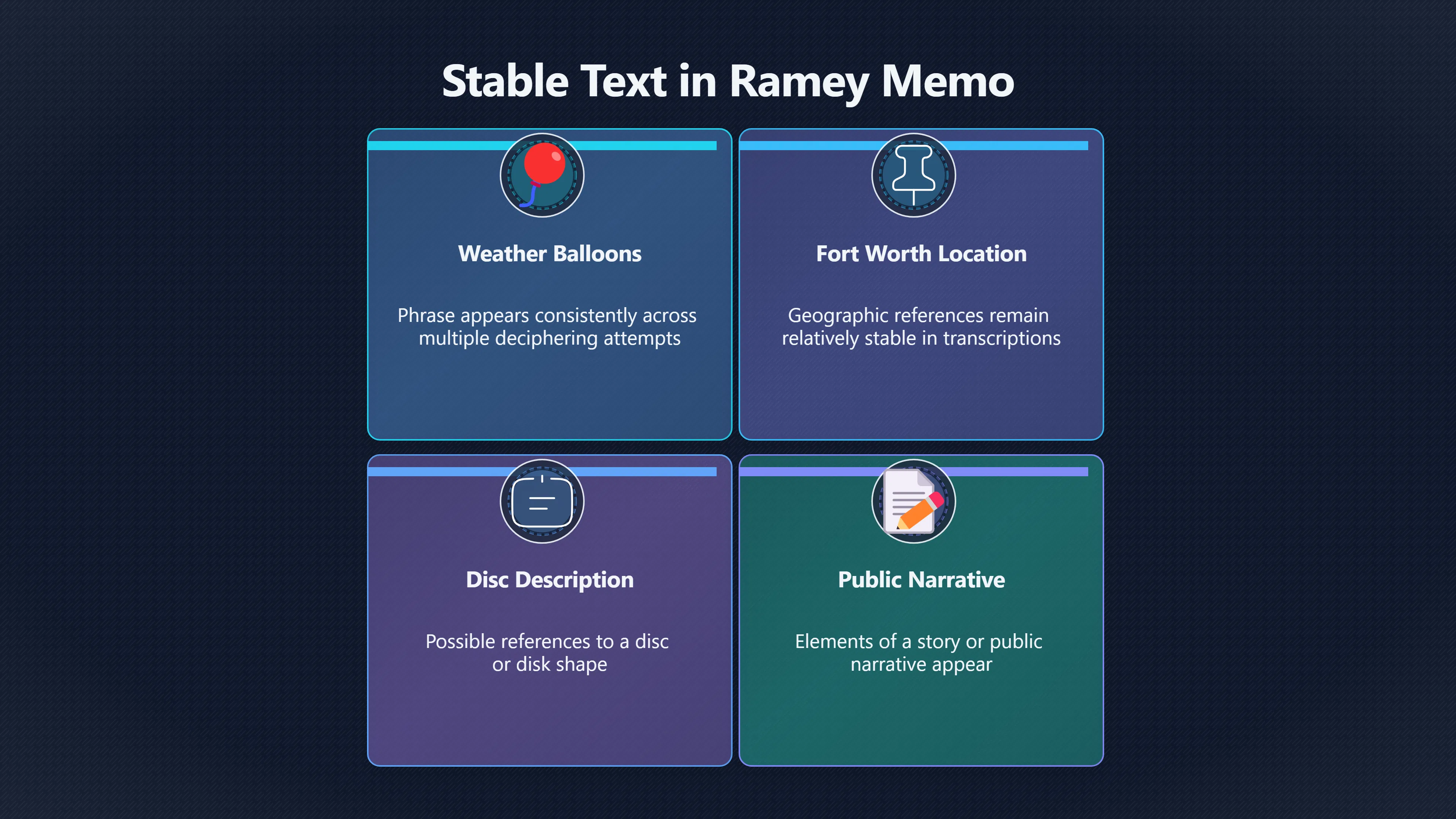
Expand all Collapse all Ramey Memo Can Roswell's Tiny Memo Be Trusted? The “Ramey memo” is a small piece of paper visible in a 8 July 1947 press photograph of Brigadier General Roger M. Ramey at Fort Worth Army Air Field, beside debris presented to reporters as the answer to the Roswell “flying disc” story. 211 pages Read more Believer Focus Why This Tiny Paper Became So Important The memo attracts attention because it offers a rare contemporary artifact in a case dominated by later testimony and retellings. 7 pages +Show subtopics Read more Missing Files Did Missing Records Make the Memo Bigger? The fewer original Roswell records survive, the more weight believers place on one photographed sheet in Ramey's hand. Read more Fort Worth Was the Memo a Private Message in Public? Believers focus on the memo because it appears beside the public debris display at the moment officials changed the story. Read more 1947 Records Why 1947 Evidence Matters So Much A 1947 document carries a different evidentiary weight than memories recorded decades after the Roswell story grew. Read more Empirical Test Why Believers Think the Memo Can Be Tested The memo appeals to believers because it seems like a problem that scanning, comparison, and image work might someday solve. Read more Balloon Clash Why One Word Could Change the Stakes Believers care about the memo's possible wording because a single clear reference to people or wreckage would clash with a balloon account. Read more Unresolved Text Why the Memo Still Has Not Gone Away The memo remains powerful because it is neither clearly readable nor clearly meaningless, leaving room for competing interpretations. Read more Blind Tests How to Test a Mystery Photo Fairly The Ramey memo shows why blind methods matter when a researcher already knows the story they hope to confirm. 7 pages +Show subtopics Read more Neutral Prompts Can a Prompt Change the Memo? Small changes in setup can steer what readers think they see in the blurred Ramey memo photograph. Read more Known Texts Can the Method Recover Real Words? A stronger test would photograph known period-style messages and see whether readers can recover the real text. Read more Word Scoring How Should Memo Words Be Scored? A fair Ramey memo test should score each word location before anyone sees a polished transcript. Read more Blind Study What Did the Blind Test Find? The best-known blind-style Ramey memo study found both priming risk and a few limited recurring fragments. Read more Stable Fragments Which Memo Fragments Actually Hold Up? Only fragments that appear across independent blind readings should carry serious weight in the Roswell debate. Read more False Confidence Why Seeing Words Is Not Enough A confident reading of a degraded image can feel persuasive even when independent readers cannot repeat it. Read more Case Closed The Official Answer to Body Stories The Air Force's body-story explanation matters because the memo's alleged 'victims' wording is often used against it. 7 pages +Show subtopics Read more Date Gap Can a 1950 s memory explain 1947? The dummy-drop theory depends on memory shifting later Cold War events back into the July 1947 Roswell frame. Read more Dummy Drops Did test dummies become alien bodies? The Air Force argued that later memories of human-shaped test dummies helped create sincere but misdated Roswell body stories. Read more Kittinger The recovery stories behind the dummy theory Joseph Kittinger's recollections gave the Air Force a concrete example of how dummy recoveries could alarm civilian witnesses. Read more Hospital Claims Were hospital body stories from later accidents? For some hospital and autopsy claims, the Air Force pointed beyond dummies to a 1956 crash and a 1959 balloon mishap. Read more Matched Details Which body details helped the dummy theory? Some body accounts included plastic skin, missing limbs, military vehicles and stretchers, all details the Air Force linked to dummy recovery work. Read more Counter Narrative Why Case Closed changed the body debate The 1997 report tried to replace the alien-body story with a folklore model built from real events, mistaken dates and later retellings. Read more Crash Story Did the Memo Mention the Story? Possible wording about a 'crash story' may reveal message handling, but it can be read in more than one direction. 7 pages +Show subtopics Read more Quote Marks Do the Quotation Marks Really Matter? Quotation marks around words like 'crash' or 'disc' can look meaningful, but they may also reflect uncertain reading of damaged photo detail. Read more Balloon Clue Does 'Weather Balloons' Help or Hurt? A readable 'weather balloons' phrase could support several interpretations, from cover story to simplified public explanation. Read more 1998 Reading The Reconstruction That Made 'Crash Story' Famous The best-known 'crash story' wording comes from one influential reconstruction rather than a clean document reading. Read more Press Language Was the Memo Talking About the News? Words like 'story' may point to newspaper handling, public messaging, or a wire-service correction rather than a hidden confession. Read more Proof Limits What the 'Crash Story' Clue Can Prove The memo may show active public-story handling, but that is not the same as proof of alien bodies or a hidden craft. Read more Story Clue Why 'Story' Matters More Than 'Crash Story' The word 'story' appears more consistently than the full dramatic phrase, making it the safer clue to examine. Read more Emergency Powers The Dramatic Phrase Nobody Can Secure The alleged 'emergency powers' wording sounds dramatic, but its value depends entirely on whether the letters are really there. 7 pages +Show subtopics Read more Readable Words Can the memo really say powers are needed? The strongest version of the claim depends on whether the marks support 'powers are needed' without adding the word 'emergency'. Read more Magdalena Site Did the phrase point to a second site? The proposed location southwest of Magdalena gives the phrase narrative force, but it rests on the same fragile line of marks. Read more Official Records Do official records back emergency powers? FBI, GAO, and Air Force records frame Roswell around balloon debris, not a documented emergency-powers response. Read more Crisis Stakes What emergency powers would actually change If the phrase were secure, it would make the official balloon framing look less routine, but it would not prove an alien crash. Read more Expectation Effects Why readers see a crisis in blur The Ramey memo study suggests that context can make readers see scenario-fitting words in ambiguous marks. Read more Missing Emergency Why the word emergency is the weak link Several published readings preserve urgency or powers language, but the exact word 'emergency' does not survive comparison well. Read more Estes When Better Scans Still Failed Estes' inability to read the memo reliably is important because better equipment did not produce a decisive transcript. 7 pages +Show subtopics Read more Cloud effect Seeing Words That May Not Be There Estes' comparison warns that determined readers can turn ambiguous photo texture into words that the evidence cannot support. Read more Fort Work Tex The Best Reading Was Still Unsteady The near-readable location line matters because even the strongest Estes impression remained tentative rather than decisive. Read more Macro setup When Better Gear Meets a Bad Source Estes' professional camera and macro lens showed that the main obstacle was the source photograph, not simply weak equipment. Read more ELA marks When Letter Shapes Do Not Become Words Estes' unclear 'ELA' impression shows how a visible shape can look letter-like without forming a useful reading. Read more 9000 Dpi Scan Why a Huge Scan Still Could Not Read It A huge scan can enlarge the Ramey memo, but it cannot create clean letters where the photograph preserves only ambiguous marks. Read more Reader split Why the Transcripts Split Instead of Converging Comparing Estes with Johnson, Morris and Kirby shows why better tools did not produce convergence on the memo's key words. Read more FBI Teletype The 1947 Document We Can Actually Read The FBI teletype gives the contemporary official description most often compared with the uncertain memo text. 7 pages +Show subtopics Read more Victims Claim Can 'Victims' Beat a Clear Teletype? The legible balloon-and-reflector message forces any 'victims of the wreck' reading to meet a much stronger proof standard. Read more Hexagonal Disc Was the Disc Really Balloon Equipment? The teletype's hexagonal disc language fits radar-reflector equipment better than a simple rubber weather balloon. Read more GAO Records What the GAO Found in the Paper Trail The GAO review found the FBI teletype and a Roswell unit history as the key 1947 government records on the crash story. Read more Readable Record Why a Readable Teletype Matters More A same-day readable record sets a higher evidential bar than a tiny, degraded photographed memo in Ramey's hand. Read more FBI Follow up Why the FBI Stopped Looking The teletype closed with no FBI follow-up, which narrows what the Bureau record can responsibly support. Read more Wright Field Why Wright Field Kept the Question Open The message sent debris to Wright Field while admitting the balloon explanation had not yet been fully borne out. Read more Fort Worth The Word Almost Everyone Can See Fort Worth' is one of the few readings with some agreement, but it mainly confirms location rather than secret content. 7 pages +Show subtopics Read more Expectation Can Knowing Fort Worth Change What You See? Even a relatively safe phrase can be influenced by prior knowledge of Roswell, Fort Worth, and published readings. Read more Official View Does Fort Worth Challenge the Balloon Explanation? The Fort Worth wording can coexist with official balloon-related explanations because it only anchors place, not object identity. Read more Provenance The Fort Worth Trail Behind the Memo The photo archive, press setting, and debris movement make Fort Worth a practical check on proposed memo readings. Read more Claim Limits What Fort Worth Can and Cannot Prove The Fort Worth reading fits the known photo setting, but it cannot identify the debris or prove a cover-up. Read more Calibration Why One Place Name Matters So Much A readable place name gives interpreters one safer test before trusting more dramatic Ramey memo claims. Read more Readings Why Transcribers Agree on Fort Worth Several transcribers disagreed on most of the memo but repeatedly landed on some version of Fort Worth. Read more GAO Search Why So Few Roswell Records Remain The GAO search shows how little clearly linked 1947 documentation survived, making the memo more tempting but not more legible. 7 pages +Show subtopics Read more Mogul Context How Project Mogul Framed the Records Project Mogul gives the balloon explanation a classified Cold War context, but it does not make the Ramey memo photograph readable. Read more Search Scope How Wide Was GAO's Roswell Search? GAO searched beyond a single Roswell file for the wider bureaucratic traces a major military incident should have left behind. Read more Missing Messages The Missing Messages That Could Have Helped The missing outgoing messages matter because they could have shown how Roswell officers described the incident to higher commands. Read more Recordkeeping Was Bad Recordkeeping Mistaken for a Cover Up? GAO showed an archival failure, not a simple smoking gun, making both cover-up and debunking claims harder to state cleanly. Read more Two Records What the Two 1947 Records Really Prove The two clear 1947 records GAO found point to balloon-related material, but they cannot answer every Ramey memo claim. Read more Schiff Audit Why Congress Pushed GAO Into Roswell Schiff's pressure turned Roswell from a local UFO controversy into a formal records accountability problem for GAO. Read more Johnson The Photographer Behind the Memo Johnson matters twice: as the 1947 photographer and as a later participant in attempts to read the paper in Ramey's hand. 7 pages +Show subtopics Read more Wire Flash Did Johnson Hand Ramey a News Wire Flash? Johnson's claim that he brought a Star-Telegram wire message to Ramey would make the paper less mysterious, but it raises its own timing and practice... Read more Desk Prop Was the Memo Just a Photo Prop? If Johnson handed Ramey a paper already on the desk, the memo may reveal more about photo staging than secret military communication. Read more Accidental Frame Was the Ramey Memo an Accidental Leak? Johnson's camera caught the paper incidentally, making the memo debate depend on a small background detail rather than a preserved document. Read more Photo Sequence What Johnson's Photo Sequence Can Still Tell US The order of Johnson's Fort Worth photographs may help test whether the memo was already in Ramey's hand, picked up, or staged for the camera. Read more Memory Shift When the Photographer Becomes a Witness Johnson is unusually important because his authenticated photograph is strong evidence, while his later memory of the paper's origin is much weaker. Read more Victims Reading Why Johnson's 'Victims' Reading Remains Disputed Johnson helped popularize a dramatic memo reading, but competing transcriptions and missing words make his interpretation difficult to treat as... Read more Kirby The Reading That Points Back to Debris Kirby's reading matters because it interprets the same critical area as conventional debris language rather than victims. 7 pages +Show subtopics Read more Suggestion Risk Can Expectations Create Memo Words? Expectation effects help explain why different readers can see different words, making Kirby's non-body reading a warning against overconfidence. Read more Remains Claim Does 'Remains' Mean Debris, Not Bodies? Kirby's wording matters because it turns the disputed line from alleged casualties into recovered material and changes the memo's evidential stakes. Read more Reading Table The Table That Complicates 'Victims' The Houran-Randle comparison table is important because it places Kirby's material-remains wording beside rival 'victims' readings of the same line. Read more Kirby Method What Could Kirby's Equipment Really Reveal? Kirby's technical approach gives his reading more weight than a casual guess, but image enhancement cannot recover words the photo never captured... Read more Stable Words Which Memo Words Are Actually Strongest? Shared fragments such as 'Fort Worth, Tex.' are more persuasive than complete sentence reconstructions because multiple readers saw them... Read more Debris Frame Why Kirby Fits the Debris Story Kirby's material-remains phrase fits more naturally with the early debris and balloon records than with later body-centred Roswell claims. Read more Legibility Can This Memo Be Read? The central debate is whether magnification reveals words or mostly turns photographic noise into tempting patterns. 7 pages +Show subtopics Read more Victims Phrase Can 'Victims of the Wreck' Be Trusted? The famous phrase would be explosive if secure, but it remains a contested reading of a tiny noisy part of the image. Read more Claim Check How to Spot an Overconfident Memo Reading A careful reader can separate visible marks, plausible fragments, speculative words and overconfident full reconstructions. Read more Fort Worth What the Memo May Actually Let US Read Short location-like fragments may be more plausible than full-message reconstructions because they require fewer uncertain letters. Read more Air Force Test When Official Analysts Tried to Read It The 1994 Air Force review tried digital interpretation but reported that the photos were too poor to reveal the details sought. Read more Photo Illusions Why Blurry Marks Start Looking Like Words The Ramey memo shows how blur, grain, copying and expectation can turn small marks into convincing but unstable words. Read more Reading Disputes Why the Transcriptions Do Not Match If the memo were clearly legible, independent readers would likely converge, but the major readings split on the crucial lines. Read more Magdalena The Place Name That Changes the Story The claimed 'Magdalena' reading is useful because it shows how place names can steer a whole Roswell interpretation. 7 pages +Show subtopics Read more Letter Fit Did Magdalena Even Fit the Line? Letter spacing and line length became central when Rudiak and Sparks argued that the marks fit Roswell better than Magdalena. Read more Johnson Reading How Magdalena Entered the Ramey Debate The Johnson/RPIT transcript made Magdalena famous by placing it beside charged phrases such as victims, crash story, and weather balloons. Read more Second Site Why Magdalena Changes the Roswell Map A single place name can turn the Ramey memo from a debris-transfer note into a claim about a second New Mexico recovery site. Read more Official Trail Why Official Records Push Back The FBI teletype and Air Force report keep the official trail near balloon debris, making any Magdalena reading carry a much heavier burden. Read more Expectation Why Readers Start Seeing Magdalena Once readers are told to look for Magdalena, ambiguous strokes can begin to organize themselves around that place name. Read more Western NM Why Western New Mexico Mattered Magdalena gained narrative force because it sits near the western New Mexico geography later linked to second-crash and body-recovery stories. Read more Marcel Why Marcel in the Photo Matters Marcel's presence beside the displayed debris keeps the Fort Worth images central to arguments about what was really recovered. 7 pages +Show subtopics Read more Debris Match Does the Fort Worth debris match the ranch find? The central question is whether the Fort Worth debris plausibly matches what Brazel found and Marcel helped move from New Mexico. Read more Photo Test The photo test that narrowed the debris switch theory The Air Force review challenged a simple debris-switch story by arguing that Marcel and Ramey were photographed with the same material. Read more Marcel Display Was Marcel shown the real Roswell debris? Marcel's Fort Worth appearance matters because it tests whether the material on Ramey's floor continued the ranch recovery or replaced it. Read more Later Memory Why Marcel's later story is hard to weigh Marcel's late-1970s claims revived Roswell, but they sit in tension with the earlier photographs and news accounts. Read more Balloon Debris Why the debris looked like balloon equipment The visible foil, sticks, paper, and backing material make the balloon-and-radar-target explanation the strongest contemporary reading. Read more Memo Context Why the debris shapes every memo reading The memo's disputed words cannot be judged apart from the debris display that framed the same Fort Worth press session. Read more Memo vs Witnesses Photo Evidence Versus Later Memories The memo differs from witness testimony because it is contemporary, but testimony often supplies the dramatic claims the image cannot prove. 7 pages +Show subtopics Read more Dennis Claims Can the Memo Support Glenn Dennis's Story? Glenn Dennis's mortician story is vivid, but the Ramey memo is too unclear to independently confirm its body claims. Read more Body Stories Did Body Stories Change How People Read the Memo? Later alien-body testimony can make ambiguous memo marks look more meaningful than the photograph alone can support. Read more Record Gaps Do Missing Files Make Witnesses More Believable? Missing or sparse official records made witness testimony more tempting, but archival gaps do not make later memories reliable by themselves. Read more Compare Evidence Photo Evidence or Witness Memory: Which Carries More? A fair Roswell reading separates provenance, legibility, timing, and corroboration instead of blending every claim into one story. Read more Haut Shift Why Did Walter Haut's Story Grow Later? Walter Haut's later statements show how a key 1947 press figure became part of a much larger post-legend narrative. Read more Late Testimony Why Timing Matters in Roswell Testimony Roswell testimony collected after the UFO revival must be judged against the legend, media coverage, and retelling that preceded it. Read more Morris Why Transcript Versions Keep Shifting Morris shows how even researchers working from similar premises could preserve a few words while changing much else. 7 pages +Show subtopics Read more Narrative How Fragments Became a Roswell Narrative Morris's later summary shows how partial words became a story about transfer, search units, media handling, and balloons. Read more Notation The Transcript That Showed Its Own Doubt Morris's capitals, lower-case guesses, asterisks, and dashes turned a smooth transcript into a visible map of doubt. Read more Compared Three Readers, One Photo, Different Messages The April 2000 comparison exposed how Morris, Burleson, and Rudiak built different line-by-line messages from the same image. Read more Johnson Split When Two Transcripts Told Different Stories Johnson's dramatic Emergency Powers and Magdalena wording did not survive in Morris's substantially different reading. Read more Fort Worth Why Fort Worth Became the Safer Reading Fort Worth persisted across competing readings because the photo setting and visible marks gave interpreters a rare stable anchor. Read more Victims Shift Why One Word Survived a Shifting Transcript Morris preserved the charged word victims even as his wider transcript shifted, making the fragment both important and fragile. Read more Negatives Why the Negatives Matter The strongest fact about the memo is not what it says, but where the image came from and how securely it is tied to 1947. 7 pages +Show subtopics Read more Hi Res Scans Can High Resolution Scans Solve It? High-resolution and tonal work improve access to the surviving image data, but they do not turn ambiguous marks into settled text. Read more July 8 Event The Day the Photo Became Evidence The July 8 Fort Worth event is the time window that makes the memo photograph historically important even without a settled reading. Read more Catalog Clues The Paper Trail Around the Photo Soundphoto copies, catalog identifiers, and archive metadata help date and trace the image without deciding what the memo says. Read more Unreadable Words Why Better Copies May Still Fail Original negatives can authenticate the photograph, but blur, angle, grain, and small lettering can still leave the memo unreadable. Read more Johnson Role Why Johnson's Photo Carries Weight Johnson's role as the Fort Worth Star-Telegram photographer gives the image a firmer origin than most later Roswell claims. Read more UTA Negatives Why the UTA Negatives Matter The UTA negatives anchor the Ramey memo image to a named photographer, newspaper collection, archive, and date. Read more Pattern Finding Why Ambiguous Marks Become Words The memo is a classic case of how expectation can turn faint marks into meaningful-looking text. 7 pages +Show subtopics Read more Blind Tests Can Readers See UFO Text Without Hints? Blind reading tests show how much a claimed UFO-document transcript depends on what readers are told before they look. Read more Convergence Do Independent Readers Find the Same Words? When independent readers do not converge on the same sentence, a dramatic transcript should be treated as provisional. Read more Prompt Bias How Roswell Prompts Change What People Read Roswell cover-up framing can turn uncertain marks into familiar words before the evidence itself has done enough work. Read more Atomic Prompt The Control Prompt That Changed the Memo The atomic-test prompt is useful because it shows that non-Roswell suggestions can also steer what readers think they see. Read more Mars Analogy What Mars Teaches About the Ramey Memo The Face on Mars shows why better imaging can dissolve a famous pattern that once seemed meaningful. Read more Partial Letters Why Smudges Turn Into UFO Words Broken strokes and gaps can feel like words when readers complete them with the story they already expect. Read more Photo Session The Photo That Changed Roswell The Fort Worth photographs mark the moment Roswell shifted from a flying-disc headline to a balloon-debris story. 7 pages +Show subtopics Read more Office Display How One Office Changed the Roswell Story Ramey's Fort Worth office display gave the balloon explanation a visible stage at the moment Roswell's flying-disc story was being reversed. Read more News Pivot How Roswell's Headline Was Rewritten Overnight The Fort Worth press event worked because newspapers, television and official channels all shifted language within a single news day. Read more FBI Teletype What the FBI File Adds to Fort Worth The FBI file shows that balloon-and-radar-target language was circulating inside government channels as the Fort Worth photos were staged. Read more Ramey Memo Why a Small Paper Became a Big Roswell Fight The memo matters because a tiny paper in a real 1947 photograph became a contested clue about what Ramey may have been reading. Read more Marcel Why Jesse Marcel's Photo Role Became So Contested Marcel's appearance beside the debris linked Roswell's recovery officer to the official balloon account before his later claims revived the... Read more Photo Trail Why the Fort Worth Negatives Still Matter The Star-Telegram negatives matter because they tie the Fort Worth debris images to a named photographer, a date and an original news assignment. Read more Project Mogul The Balloon Program Behind the Official Story Project Mogul is the later Air Force explanation that connects Roswell debris to a classified balloon-borne detection program. 7 pages +Show subtopics Read more Flight 4 Was NYU Flight 4 the Roswell Debris? NYU Flight 4 matters because the official Roswell account ties the ranch debris to a June 1947 balloon train that was never recovered. Read more FBI Teletype What the FBI Teletype Really Supports The 8 July 1947 FBI teletype is important because balloon-and-reflector language appeared during the original Roswell news cycle. Read more Weak Spots Where the Mogul Explanation Runs Out The official story explains the early debris record well, but it is weaker when stretched to every later Roswell claim. Read more Debris Match Why Mogul Debris Looked Stranger Than Weather Gear Mogul balloon trains were larger, stranger, and more complex than a small weather balloon, which helps explain confusing witness descriptions. Read more Test Range Why New Mexico Fit the Mogul Story Alamogordo, White Sands, and nearby military-scientific sites made New Mexico a plausible place for secret balloon surveillance experiments. Read more Cover Story Why Say Weather Balloon If It Was Mogul? The weather balloon label was a public simplification of classified acoustic-surveillance work, not the full official explanation. Read more Radar Reflectors The Debris That Fits the Paper Trail Radar-reflector material links the visible debris, the FBI teletype, and the balloon explanation in one testable comparison. 7 pages +Show subtopics Read more Floor Debris Did the Floor Debris Fit a Radar Target? The office-floor wreckage matches the light, collapsible materials expected from a broken balloon-borne radar reflector. Read more Disc Shape How Could a Reflector Look Like a Disc? A faceted reflector under a balloon could be described as angular or disc-like without being a solid aircraft. Read more FBI Teletype The Same Day Document Behind the Debris The FBI's balloon-and-reflector description gives the Fort Worth debris a same-day documentary cross-check. Read more Substitution Claim Was the Wreckage Swapped Before the Photos? The substitution claim can be tested by comparing the Marcel and Ramey photo debris rather than relying on later memories alone. Read more Mogul Targets Why Mogul Was More Than a Weather Balloon Mogul helps explain why witnesses could reject a simple weather balloon while still describing balloon-target materials. Read more Material Clues Why the Small Materials Matter Most The low-mass material list matters because it points away from a machine-like craft and toward a broken target assembly. Read more Ramey Ramey's Place in the Roswell Pivot Ramey's handling of the paper and debris made him the public hinge between the Roswell press release and the balloon account. 7 pages +Show subtopics Read more Substitution Was the Fort Worth Debris the Same? Ramey's office remains controversial because the displayed material raises the question of whether the public saw the recovered debris or a... Read more Newton ID Who Identified the Debris as a Balloon? Weather officer Irving Newton gave Ramey's correction a technical witness, turning scattered debris into a publicly named balloon explanation. Read more NBC Claim Why Ramey's Broadcast Mattered Ramey's reported local NBC appearance helped carry the balloon explanation beyond the office floor into a wider public message. Read more Command Weight Why Ramey's Rank Changed the Story Ramey's command position made the Fort Worth statement more than a local rebuttal to Roswell's flying-disc release. Read more Photo Invite Why Show the Debris to Reporters? The Fort Worth photo opportunity turned Ramey's explanation into something newspapers could show, not just quote. Read more Three Officers Why Three Officers in One Room Matter The photographs place Ramey, Jesse Marcel, and Thomas DuBose inside one correction scene, but each figure carried a different evidentiary role. Read more Reader Agreement Why Agreement Matters More Than Confidence If the memo clearly contained decisive words, independent readers should see the same words in the same places. 7 pages +Show subtopics Read more Priming Can Expectations Make Words Appear? Priming readers with a UFO or atomic-bomb story shows how context can become part of what people think they see. Read more Reader Test What the Reader Test Really Showed The 2002 reader experiment shows why agreement matters more than confident individual claims about the Ramey memo. Read more Claim Bar What Would Make a Memo Reading Strong? A stronger reading would need independent agreement on the same words, positions, and alternatives before changing the Roswell evidence stakes. Read more Estes Case When Better Imaging Still Falls Short Russ Estes' limited-confidence reading is a useful case study in why better equipment does not guarantee reliable text. Read more Shared Words Which Memo Words Readers Actually Share Words like Fort Worth, story, land, and weather balloons matter because they show partial legibility without proving the explosive claims. Read more Expert Split Why Experts Still Read It Differently Specialists using scans and software still produced different readings, which is the central warning sign for reliability. Read more Roswell Culture The Memo as Roswell's Perfect Mystery The disputed paper became a symbol of Roswell itself: a tiny artifact that seems close to an answer but never quite delivers one. 7 pages +Show subtopics Read more Suggestion Test Do We Read What We Expect? Houran and Randle's study showed that expectations could shape what people thought they read in the blurred document. Read more Digital Sleuthing How Screens Made the Memo Famous Online scans and image tools made the memo feel like a puzzle ordinary readers could test for themselves. Read more Mogul Tension Where the Memo Meets the Balloon Story The memo remains culturally potent because it appears to come from the same moment later official balloon explanations tried to clarify. Read more Phrase Claims Why Four Blurred Words Still Matter Alleged words such as 'victims of the wreck' became memorable because they condensed Roswell's whole dispute into a few blurred marks. Read more Useful Ambiguity Why the Memo Never Quite Ends The memo survives because it is visible enough to invite interpretation but too blurred to end the argument. Read more Fort Worth Photo Why This One Photo Changed Roswell The Ramey memo became powerful because it was embedded in a real 1947 press photo from the Fort Worth debris display. Read more Rudiak The Most Famous Crash Reading Rudiak's reconstruction is the best-known crash-supporting reading, but it depends on contested line-by-line interpretation. 7 pages +Show subtopics Read more Balloon Story Cover Story or Plain Balloon Memo? Rudiak's interpretation depends on weather-balloon wording appearing as public messaging rather than the real explanation. Read more Disk Claim Did the Memo Really Say Disk? The alleged word Disk matters because Rudiak treats it as the memo's private label for the recovered object. Read more Reading Method How Blurred Strokes Become Rudiak's Sentences The reconstruction relies on matching partial letter shapes to a coherent sentence, which is exactly where uncertainty enters. Read more Telegram Assumption Was Ramey Holding a Secret Military Message? Rudiak's case grows stronger if the paper was a military communication and weaker if it was another document type. Read more Forwarding Was the Memo Tracking Roswell Material? The supposed transfer wording is important because it links the memo to military handling of material after Roswell. Read more Smoking Gun What Would Make Rudiak's Reading a Smoking Gun? Rudiak's reading became famous because it turns a blurred paper into a claimed private contradiction of the balloon story. Read more Skeptic View Why the Memo Falls Short as Proof Skeptics do not need to prove the memo is meaningless; they only need to show that decisive words are not reliably readable. 7 pages +Show subtopics Read more Proof burden Can a blur carry the whole Roswell case? The memo claim asks a blurred photo detail to outweigh ordinary records, so skeptics judge it by a very high evidential standard. Read more Newswire Was the memo even a military secret? If the paper was a press teletype or newswire copy, Roswell-related words would not automatically reveal a secret admission. Read more Proven photo What provenance can and cannot prove Strong provenance can show Ramey held a real paper without proving that modern readers can recover its disputed words. Read more Ordinary words When Roswell words prove less than they seem Words like disc, balloon, Fort Worth, or Roswell may show topic relevance without proving the memo mentioned recovered victims. Read more Lab limits Why better tools did not settle the memo Advanced deblurring and filtering efforts did not produce clearly interpretable text, strengthening the skeptical case for caution. Read more Convergence Why readers still do not agree Skeptics argue that a truly clear reading should make independent transcriptions converge rather than split on the crucial phrase. Read more Stronger Proof What Would Actually Settle the Memo? A stronger case would need independent agreement, reproducible imaging, and a reading that does not depend on Roswell expectations. 7 pages +Show subtopics Read more 1947 Records Can the Memo Beat the 1947 Record? Any dramatic memo reading has to be clear enough to outweigh the FBI teletype, GAO review, and balloon-related official records from 1947. Read more Original Memo Could the Original Memo Still Settle It? The strongest Ramey memo evidence would be the paper itself, a first-generation copy, or an archived image that bypasses guesswork from a press photo. Read more Better Scans What Better Ramey Scans Would Need A serious re-test of the memo would need the best negative scans, raw files, metadata, and documented custody rather than another enlarged JPEG. Read more Mark Maps Where Do Marks Become Words? A stronger transcript would separate visible strokes, uncertain letters, and plain-English reconstruction so readers can see where interpretation... Read more Rival Readings Why Ramey Memo Readings Keep Splitting The spread between 'victims,' 'remains,' and unreadable-text interpretations shows why the memo has not become settled evidence. Read more Blind Reading Would Blind Readers See the Same Words? The memo reading becomes much stronger only if independent readers find the same words without being told to expect Roswell crash language. Read more Suggestion Study When Context Creates Words The peer-reviewed experiment is key because it tested how context can shape what people think they read in the memo. 7 pages +Show subtopics Read more Victims Test Can suggestion explain the victims reading? The disputed victims line is the clearest example of how rival readings can occupy the same damaged visual space. Read more Story Framing Did the story frame create extra words? Houran and Randle found that Roswell and atomic-bomb framing led participants to report far more words than a neutral prompt. Read more Blind Control What changed when the story disappeared? The neutral control group reported only 1.6 words on average, making it central to judging how much context shaped perception. Read more Cautious Use What the experiment really proves The study supports caution about confident transcriptions, but it does not prove that every visible word is imagined. Read more Agreed Words Which words survived the blur? Agreement on words like Fort Worth TX, story, and weather balloons suggests the image was not just meaningless noise. Read more Test Images Why better images still failed Even enlarged prints, negatives, and CD-ROM scans left the central problem intact: better copies did not guarantee secure words. Read more Victims Claim Did It Say Victims? The alleged phrase 'victims of the wreck' matters because it would point toward bodies, but the reading has never gained reliable agreement. 7 pages +Show subtopics Read more Victims vs Remains Did the Line Say Victims or Remains? The most important competing readings turn on whether the line describes crash occupants or recovered material. Read more Proof Standard What Would Make 'Victims' Convincing? A persuasive claim would need blind readers, shared source images, and a declared method before interpretation begins. Read more Expectation Effects Why Blurred Words Invite Certainty The memo shows how prior beliefs and suggested scenarios can shape what people think they see in blurred text. Read more Official Frame Why Official Records Raise the Bar Official records make the 'victims' reading more consequential but also raise the evidential bar for accepting it. Read more Victims Stakes Why One Word Would Change the Case A clear 1947 reading of 'victims' would shift the memo from debris handling toward a claim about crash occupants. Read more Folded Memo Why the Photo Makes the Word So Hard The disputed line sits on a curved, partly obscured sheet where lighting, folds, and hand placement affect every letter. Read more Weather Words The Words That Fit the Balloon Story Possible words such as 'weather balloons' pull the memo toward the official explanation rather than away from it. 7 pages +Show subtopics Read more 2002 Study Did Readers Really See 'Weather Balloons'? The 2002 study shows why 'weather balloons' looks more stable than many readings but still remains vulnerable to suggestion. Read more Of Balloons Does 'Of Weather Balloons' Matter? Adding 'of' can make the phrase sound descriptive rather than strategic, which changes how readers use it in Roswell arguments. Read more Would Work The Risk in Longer Balloon Readings Longer reconstructions can turn a modest word cluster into a cover-story claim, but the surrounding words are far less stable. Read more Shared Phrase Why 'Weather Balloons' Stands Out The phrase matters because several rival readings converge on it while the rest of the Ramey memo stays unstable. Read more Press Pivot Why Balloons Fit the July 8 Pivot The phrase fits the same-day shift from a Roswell 'flying disc' announcement to a Fort Worth balloon explanation. Read more Skeptic Use Why Skeptics Point to 'Weather Balloons' Skeptical readings treat 'weather balloons' as evidence of ordinary press coordination, not proof of alien bodies. Read more Search pages Search topic, branch, or keyword... Scope 211 pages Search pages Clear